

447
Despite the subtle difference, males have callosities in greater quantity and size
than females. It is believed that the callosities are used for recognition among individuals and, based on the higher amount of scars and temporary scratches on the
back of males compared to females, it is suggested that the callosities function as a
tool for intraspecific aggression (Payne and Dorsey 1983).
In addition to the callosities on their head, right whales may have natural markings or spots on the back and belly (Fig. 16.7). These markings are white or grayish
and can also be used for individual identification. These marks can occur throughout
the body, resulting in partial albino individuals, also called grey-morph animals
(Fig. 16.8) (Best 1990; Payne et al. 1983; Schaeff et al. 1999). A few anomalously
Fig. 16.3 Schematic
drawing with location and
name of callosities on a
right whale head. They
occur on the anterior and
posterior margin of the
blowholes, along the
rostrum, on the upper
margin of the lower lip, on
eyebrows, on the chin, and
along the mandible
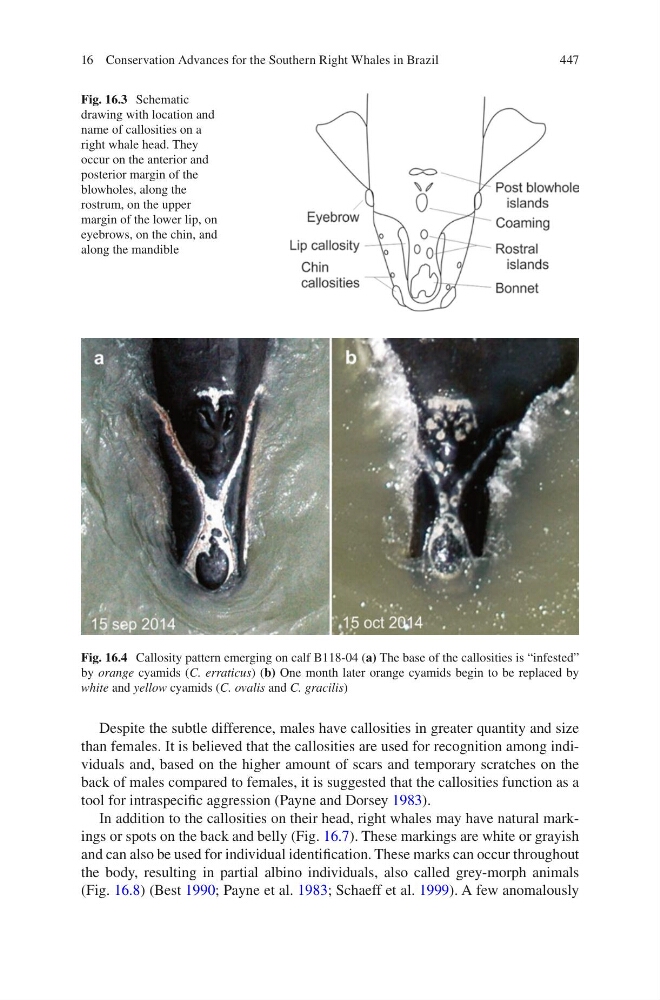
Fig. 16.4 Callosity pattern emerging on calf B118-04 (a) The base of the callosities is “infested”
by orange cyamids (C. erraticus) (b) One month later orange cyamids begin to be replaced by
white and yellow cyamids (C. ovalis and C. gracilis)
16 Conservation Advances for the Southern Right Whales in Brazil
Despite the subtle difference, males have callosities in greater quantity and size
than females. It is believed that the callosities are used for recognition among individuals and, based on the higher amount of scars and temporary scratches on the
back of males compared to females, it is suggested that the callosities function as a
tool for intraspecific aggression (Payne and Dorsey 1983).
In addition to the callosities on their head, right whales may have natural markings or spots on the back and belly (Fig. 16.7). These markings are white or grayish
and can also be used for individual identification. These marks can occur throughout
the body, resulting in partial albino individuals, also called grey-morph animals
(Fig. 16.8) (Best 1990; Payne et al. 1983; Schaeff et al. 1999). A few anomalously
Fig. 16.3 Schematic
drawing with location and
name of callosities on a
right whale head. They
occur on the anterior and
posterior margin of the
blowholes, along the
rostrum, on the upper
margin of the lower lip, on
eyebrows, on the chin, and
along the mandible
Fig. 16.4 Callosity pattern emerging on calf B118-04 (a) The base of the callosities is “infested”
by orange cyamids (C. erraticus) (b) One month later orange cyamids begin to be replaced by
white and yellow cyamids (C. ovalis and C. gracilis)
16 Conservation Advances for the Southern Right Whales in Brazil