

426
15.3.6 Environmental Features
15.3.6.1 Depth
Sightings of humpback groups with singer males occurred between 16 and 173 m
(mean = 54,6; ±34,2 SD). Depth values were grouped into different classes
(Fig. 15.19). For depth range 1 (0–20 m), only one competitive group of 4 animals
was found at a 16 m location. For depth range 2 (21–30 m) 3 whale groups were
sighted, for depth range 3 (31–40 m) 5 groups were registered, for depth range 4
(41–50 m) 7 whale groups were sighted, while for depth range 5 (51–70 m) 3 groups
were registered. For depth range 6 (71–100 m) 3 whale groups were observed and,
for depth range 7 (>100 m) 2 groups were sighted, being one with a alone individual
at 126 m and a competitive group of 4 animals at 173 m deep.
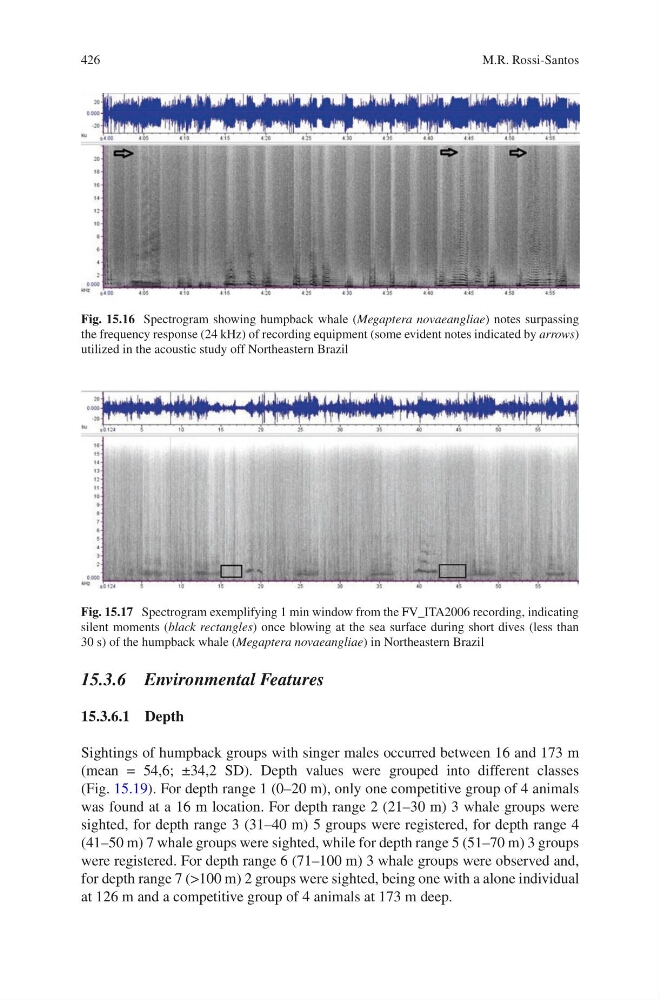
Fig. 15.16 Spectrogram showing humpback whale (Megaptera novaeangliae) notes surpassing
the frequency response (24 kHz) of recording equipment (some evident notes indicated by arrows)
utilized in the acoustic study off Northeastern Brazil
Fig. 15.17 Spectrogram exemplifying 1 min window from the FV_ITA2006 recording, indicating
silent moments (black rectangles) once blowing at the sea surface during short dives (less than
30 s) of the humpback whale (Megaptera novaeangliae) in Northeastern Brazil
M.R. Rossi-Santos
15.3.6 Environmental Features
15.3.6.1 Depth
Sightings of humpback groups with singer males occurred between 16 and 173 m
(mean = 54,6; ±34,2 SD). Depth values were grouped into different classes
(Fig. 15.19). For depth range 1 (0–20 m), only one competitive group of 4 animals
was found at a 16 m location. For depth range 2 (21–30 m) 3 whale groups were
sighted, for depth range 3 (31–40 m) 5 groups were registered, for depth range 4
(41–50 m) 7 whale groups were sighted, while for depth range 5 (51–70 m) 3 groups
were registered. For depth range 6 (71–100 m) 3 whale groups were observed and,
for depth range 7 (>100 m) 2 groups were sighted, being one with a alone individual
at 126 m and a competitive group of 4 animals at 173 m deep.
Fig. 15.16 Spectrogram showing humpback whale (Megaptera novaeangliae) notes surpassing
the frequency response (24 kHz) of recording equipment (some evident notes indicated by arrows)
utilized in the acoustic study off Northeastern Brazil
Fig. 15.17 Spectrogram exemplifying 1 min window from the FV_ITA2006 recording, indicating
silent moments (black rectangles) once blowing at the sea surface during short dives (less than
30 s) of the humpback whale (Megaptera novaeangliae) in Northeastern Brazil
M.R. Rossi-Santos