

409
15.1.3 Occurrence and Distribution
Nowadays, there are seven humpback whale sub-populations (or stocks) in the
southern hemisphere (IWC 1998), one of those, named by IWC “Breeding Stock A/
BSA” to migrate to the Brazilian coast, where they breed from July to November.
Despite their occurrence along a large range in Brazil, from Rio Grande do Sul
state, southern Brazil, to the Fernando de Noronha Archipelago, northeastern Brazil,
(Towsend 1935; Lodi 1994), its core breeding area is the Abrolhos Bank (Fig. 15.2),
Bahia state (Wedekin et al. 2010). However, the increase of humpback whale sightings northwards from the Abrolhos Bank, including the Bahia state capital, Salvador
and the north coast of the state (Fig. 15.3), suggest the population recovery in this
historical area, occupied by the whales prior the whaling period (Tavares 1916;
Tollenare 1961; Rossi-Santos et al. 2008).
15.1.4 Ecology and Acoustic Behavior
The humpback whale is also known as singer whale because its unique characteristic of to exhibit a singing behavior, performed only by males, during their breeding
season. Since the 1970ths, many studies described the physic structure of the songs
(eg. Payne and McVay 1971; Helweg et al. 1998; Maeda et al. 2000; Arraut and
Vielliard 2004) and even their probable functions at the population ecology level,
such as female attraction, male-male competition and cultural exchange (eg.
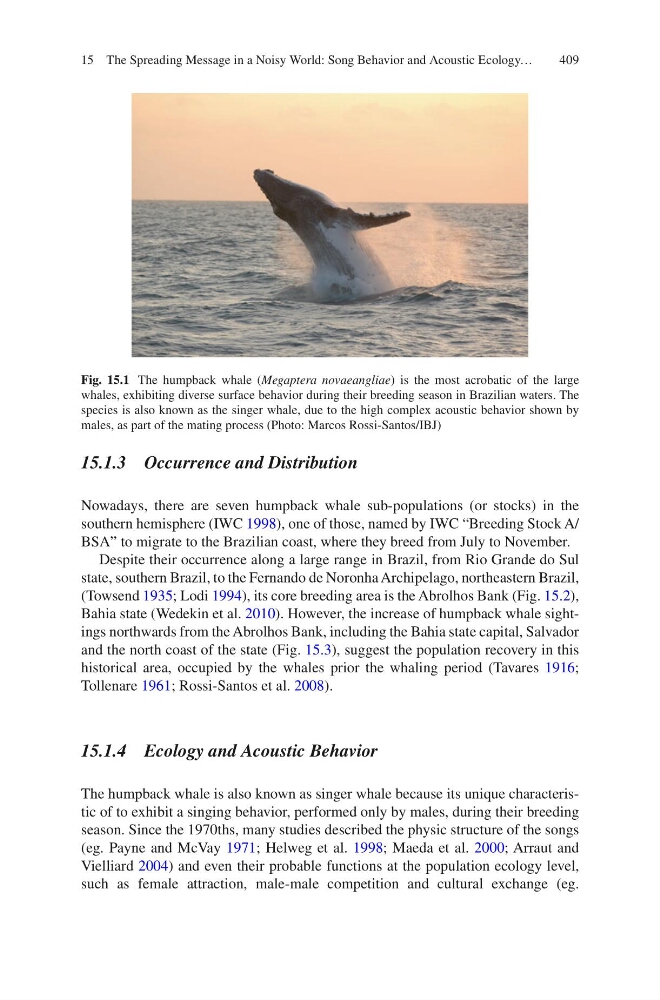
Fig. 15.1 The humpback whale (Megaptera novaeangliae) is the most acrobatic of the large
whales, exhibiting diverse surface behavior during their breeding season in Brazilian waters. The
species is also known as the singer whale, due to the high complex acoustic behavior shown by
males, as part of the mating process (Photo: Marcos Rossi-Santos/IBJ)
15 The Spreading Message in a Noisy World: Song Behavior and Acoustic Ecology…
15.1.3 Occurrence and Distribution
Nowadays, there are seven humpback whale sub-populations (or stocks) in the
southern hemisphere (IWC 1998), one of those, named by IWC “Breeding Stock A/
BSA” to migrate to the Brazilian coast, where they breed from July to November.
Despite their occurrence along a large range in Brazil, from Rio Grande do Sul
state, southern Brazil, to the Fernando de Noronha Archipelago, northeastern Brazil,
(Towsend 1935; Lodi 1994), its core breeding area is the Abrolhos Bank (Fig. 15.2),
Bahia state (Wedekin et al. 2010). However, the increase of humpback whale sightings northwards from the Abrolhos Bank, including the Bahia state capital, Salvador
and the north coast of the state (Fig. 15.3), suggest the population recovery in this
historical area, occupied by the whales prior the whaling period (Tavares 1916;
Tollenare 1961; Rossi-Santos et al. 2008).
15.1.4 Ecology and Acoustic Behavior
The humpback whale is also known as singer whale because its unique characteristic of to exhibit a singing behavior, performed only by males, during their breeding
season. Since the 1970ths, many studies described the physic structure of the songs
(eg. Payne and McVay 1971; Helweg et al. 1998; Maeda et al. 2000; Arraut and
Vielliard 2004) and even their probable functions at the population ecology level,
such as female attraction, male-male competition and cultural exchange (eg.
Fig. 15.1 The humpback whale (Megaptera novaeangliae) is the most acrobatic of the large
whales, exhibiting diverse surface behavior during their breeding season in Brazilian waters. The
species is also known as the singer whale, due to the high complex acoustic behavior shown by
males, as part of the mating process (Photo: Marcos Rossi-Santos/IBJ)
15 The Spreading Message in a Noisy World: Song Behavior and Acoustic Ecology…