

311
etiological agents like fungi, protozoans and bacteria. More exhaustive studies are
needed to rule out viral agents like herpes and pox virus. These lesions appear to be
traumatic in origin but the exact etiology has not been confirmed. There is no tendency for the presentation of these scars and active lesions between gender, age or
time of the year of the stranding.
In Costa Rica the incidence of Brucella ceti in stranded cetaceans, particularly
striped dolphins is considered high. Brucellosis is a zoonotic disease caused by
bacteria of the Brucella genera. Traditionally, this bacterial disease has been associated in terrestrial animals such as ruminants, with reproductive problems such as
abortions, testicular inflammation, lower milk productivity, and partial or complete
infertility. Marine brucellosis was first described affecting stranded cetaceans in
1996 in the Scottish coast in United Kingdom (Foster et al. 1996). First, this bacterium was named as Brucella maris, then B. cetaceae and by 2007, B. ceti was recognized as a novel species of the genera affecting cetaceans. In 2004, this bacterial
disease was identified as an important causing agent of meningoencephalomyelitis
in striped dolphins stranded along the Pacific coast of Costa Rica. Isolation of B.
ceti was first obtained in the country from a stranded striped dolphin in 2006 from
cerebrospinal fluid (CSF), but the presence of this bacterium since then, has been
also demonstrated from placenta, umbilical cord, amniotic and allantoic fluids, multiple fetal organs, milk, cardiac valve, atlanto occipital joint fluid, lung and lung
nematodes (Halocercus spp.) (Hernández-Mora et al. 2008; González-Barrientos
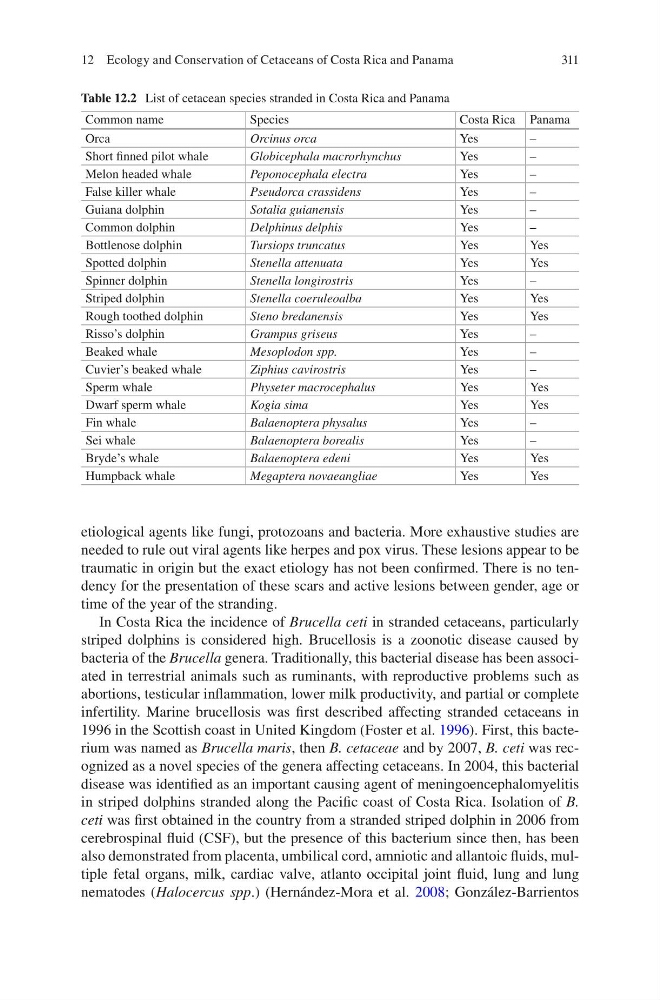
Table 12.2 List of cetacean species stranded in Costa Rica and Panama
Common name
Species
Costa Rica Panama
Orca
Orcinus orca
Yes
–
Short finned pilot whale
Globicephala macrorhynchus
Yes
–
Melon headed whale
Peponocephala electra
Yes
–
False killer whale
Pseudorca crassidens
Yes
–
Guiana dolphin
Sotalia guianensis
Yes
–
Common dolphin
Delphinus delphis
Yes
–
Bottlenose dolphin
Tursiops truncatus
Yes
Yes
Spotted dolphin
Stenella attenuata
Yes
Yes
Spinner dolphin
Stenella longirostris
Yes
–
Striped dolphin
Stenella coeruleoalba
Yes
Yes
Rough toothed dolphin
Steno bredanensis
Yes
Yes
Risso’s dolphin
Grampus griseus
Yes
–
Beaked whale
Mesoplodon spp.
Yes
–
Cuvier’s beaked whale
Ziphius cavirostris
Yes
–
Sperm whale
Physeter macrocephalus
Yes
Yes
Dwarf sperm whale
Kogia sima
Yes
Yes
Fin whale
Balaenoptera physalus
Yes
–
Sei whale
Balaenoptera borealis
Yes
–
Bryde’s whale
Balaenoptera edeni
Yes
Yes
Humpback whale
Megaptera novaeangliae
Yes
Yes
12 Ecology and Conservation of Cetaceans of Costa Rica and Panama
etiological agents like fungi, protozoans and bacteria. More exhaustive studies are
needed to rule out viral agents like herpes and pox virus. These lesions appear to be
traumatic in origin but the exact etiology has not been confirmed. There is no tendency for the presentation of these scars and active lesions between gender, age or
time of the year of the stranding.
In Costa Rica the incidence of Brucella ceti in stranded cetaceans, particularly
striped dolphins is considered high. Brucellosis is a zoonotic disease caused by
bacteria of the Brucella genera. Traditionally, this bacterial disease has been associated in terrestrial animals such as ruminants, with reproductive problems such as
abortions, testicular inflammation, lower milk productivity, and partial or complete
infertility. Marine brucellosis was first described affecting stranded cetaceans in
1996 in the Scottish coast in United Kingdom (Foster et al. 1996). First, this bacterium was named as Brucella maris, then B. cetaceae and by 2007, B. ceti was recognized as a novel species of the genera affecting cetaceans. In 2004, this bacterial
disease was identified as an important causing agent of meningoencephalomyelitis
in striped dolphins stranded along the Pacific coast of Costa Rica. Isolation of B.
ceti was first obtained in the country from a stranded striped dolphin in 2006 from
cerebrospinal fluid (CSF), but the presence of this bacterium since then, has been
also demonstrated from placenta, umbilical cord, amniotic and allantoic fluids, multiple fetal organs, milk, cardiac valve, atlanto occipital joint fluid, lung and lung
nematodes (Halocercus spp.) (Hernández-Mora et al. 2008; González-Barrientos
Table 12.2 List of cetacean species stranded in Costa Rica and Panama
Common name
Species
Costa Rica Panama
Orca
Orcinus orca
Yes
–
Short finned pilot whale
Globicephala macrorhynchus
Yes
–
Melon headed whale
Peponocephala electra
Yes
–
False killer whale
Pseudorca crassidens
Yes
–
Guiana dolphin
Sotalia guianensis
Yes
–
Common dolphin
Delphinus delphis
Yes
–
Bottlenose dolphin
Tursiops truncatus
Yes
Yes
Spotted dolphin
Stenella attenuata
Yes
Yes
Spinner dolphin
Stenella longirostris
Yes
–
Striped dolphin
Stenella coeruleoalba
Yes
Yes
Rough toothed dolphin
Steno bredanensis
Yes
Yes
Risso’s dolphin
Grampus griseus
Yes
–
Beaked whale
Mesoplodon spp.
Yes
–
Cuvier’s beaked whale
Ziphius cavirostris
Yes
–
Sperm whale
Physeter macrocephalus
Yes
Yes
Dwarf sperm whale
Kogia sima
Yes
Yes
Fin whale
Balaenoptera physalus
Yes
–
Sei whale
Balaenoptera borealis
Yes
–
Bryde’s whale
Balaenoptera edeni
Yes
Yes
Humpback whale
Megaptera novaeangliae
Yes
Yes
12 Ecology and Conservation of Cetaceans of Costa Rica and Panama