

308
primarily during socializing activities (Forestell et al. 1999; Acevedo-Gutierrez
et al. 2005; Gamboa-Poveda 2009; May-Collado 2010). Because of the commonality of these social associations and the intermedia morphological characteristics of
the dorsal fin of some individuals, Forestell et al. (1999) hypothesized that hybridization between the species might be occurring. However, to this point not genetic
study has taken place to determine if such hybrids exist. Another interesting aspect
of these mixed species groups, is that sometimes, social interactions between species turned into aggressive interactions. This happens when bottlenose dolphins target one or two Guiana dolphins by separating them from the rest of the group and
by chasing them and forcing them into intercourse activities. It is during these
antagonistic events that ‘hybrid’ whistles are produced presumably by the Guiana
dolphin as an attempt to match the whistles of its attackers and maybe reduce the
intensity of the attack (May-Collado 2010).
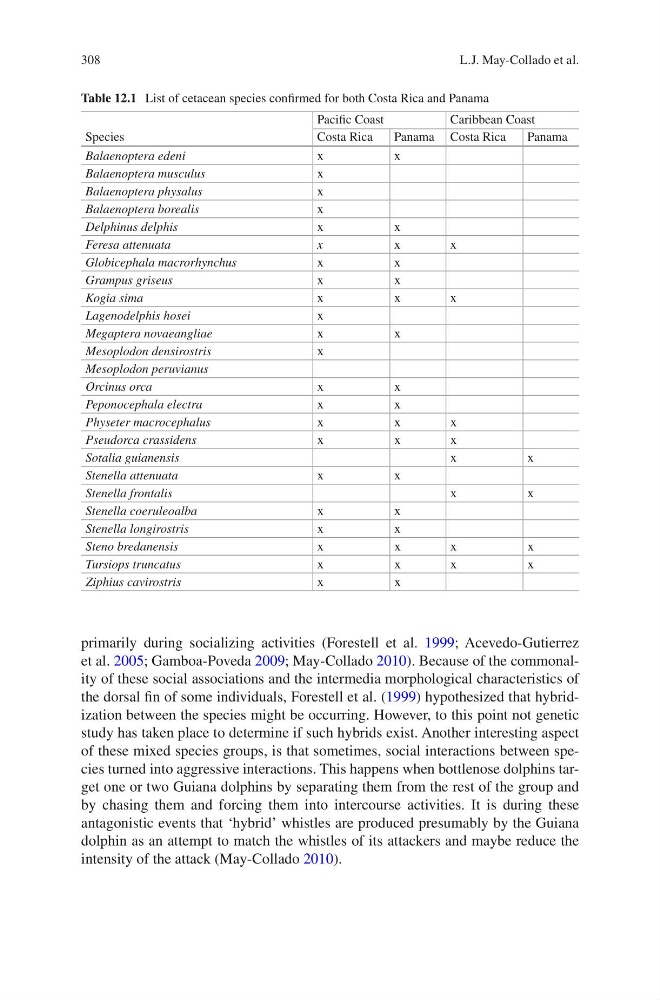
Table 12.1 List of cetacean species confirmed for both Costa Rica and Panama
Species
Pacific Coast
Caribbean Coast
Costa Rica
Panama Costa Rica
Panama
Balaenoptera edeni
x
x
Balaenoptera musculus
x
Balaenoptera physalus
x
Balaenoptera borealis
x
Delphinus delphis
x
x
Feresa attenuata
x
x
x
Globicephala macrorhynchus
x
x
Grampus griseus
x
x
Kogia sima
x
x
x
Lagenodelphis hosei
x
Megaptera novaeangliae
x
x
Mesoplodon densirostris
x
Mesoplodon peruvianus
Orcinus orca
x
x
Peponocephala electra
x
x
Physeter macrocephalus
x
x
x
Pseudorca crassidens
x
x
x
Sotalia guianensis
x
x
Stenella attenuata
x
x
Stenella frontalis
x
x
Stenella coeruleoalba
x
x
Stenella longirostris
x
x
Steno bredanensis
x
x
x
x
Tursiops truncatus
x
x
x
x
Ziphius cavirostris
x
x
L.J. May-Collado et al.
primarily during socializing activities (Forestell et al. 1999; Acevedo-Gutierrez
et al. 2005; Gamboa-Poveda 2009; May-Collado 2010). Because of the commonality of these social associations and the intermedia morphological characteristics of
the dorsal fin of some individuals, Forestell et al. (1999) hypothesized that hybridization between the species might be occurring. However, to this point not genetic
study has taken place to determine if such hybrids exist. Another interesting aspect
of these mixed species groups, is that sometimes, social interactions between species turned into aggressive interactions. This happens when bottlenose dolphins target one or two Guiana dolphins by separating them from the rest of the group and
by chasing them and forcing them into intercourse activities. It is during these
antagonistic events that ‘hybrid’ whistles are produced presumably by the Guiana
dolphin as an attempt to match the whistles of its attackers and maybe reduce the
intensity of the attack (May-Collado 2010).
Table 12.1 List of cetacean species confirmed for both Costa Rica and Panama
Species
Pacific Coast
Caribbean Coast
Costa Rica
Panama Costa Rica
Panama
Balaenoptera edeni
x
x
Balaenoptera musculus
x
Balaenoptera physalus
x
Balaenoptera borealis
x
Delphinus delphis
x
x
Feresa attenuata
x
x
x
Globicephala macrorhynchus
x
x
Grampus griseus
x
x
Kogia sima
x
x
x
Lagenodelphis hosei
x
Megaptera novaeangliae
x
x
Mesoplodon densirostris
x
Mesoplodon peruvianus
Orcinus orca
x
x
Peponocephala electra
x
x
Physeter macrocephalus
x
x
x
Pseudorca crassidens
x
x
x
Sotalia guianensis
x
x
Stenella attenuata
x
x
Stenella frontalis
x
x
Stenella coeruleoalba
x
x
Stenella longirostris
x
x
Steno bredanensis
x
x
x
x
Tursiops truncatus
x
x
x
x
Ziphius cavirostris
x
x
L.J. May-Collado et al.