

301
species is likely the product of the lack of consistent and standard survey efforts in
these countries for the Caribbean. The diversity is likely higher as suggested stranding data, where an unidentified beaked whale of the genus Mesoplodon and a baleen
whale of the genus Balaenoptera where documented (see the stranding section).
The most commonly observed cetacean in the Caribbean coast of both Costa
Rica and Panama is the bottlenose dolphin. In Costa Rica, bottlenose dolphins have
been documented along the entire Caribbean coast, in the north, sightings of bottlenose dolphins have been made in the mouth of the Colorado River, Samay Lagoon,
and the Parismina River, in the central Caribbean from the Matina River to the
Cieneguita River, and in the south in Gandoca-Manzanillo Wildlife Refuge. In
Panama, it is presumed that the only resident population of bottlenose dolphins is
located in the Archipelago of Bocas del Toro. However, just like in Costa Rica the
Caribbean coast of Panama remains vastly unexplored. Most of what is known
about Caribbean bottlenose dolphins comes from a handful of long-term studies in
Gandoca-Manzanillo, Costa Rica (Gamboa Poveda and May-Collado 2006;
Gamboa-Poveda 2009) and Bocas del Toro, Panama (May-Collado et al. 2012–
2015). However, recent efforts in the central Caribbean coast of Costa Rica are
changing our perception of bottlenose habitat use and residency. Amador-Caballero,
Garita-Alpízar, and Rodríguez-Fonseca surveyed the Central Caribbean between
2015 and 2016. They found that bottlenose dolphins was most commonly foraging
in mouth of the river Matina. The coloration of these dolphins suggests that they
might transient oceanic animals. Of a total of 74 dolphins photographed between
only 7.35% of the animals showed regular use of the area. In this area the second
most sighted species was the Atlantic spotted dolphins, which was observed primarily
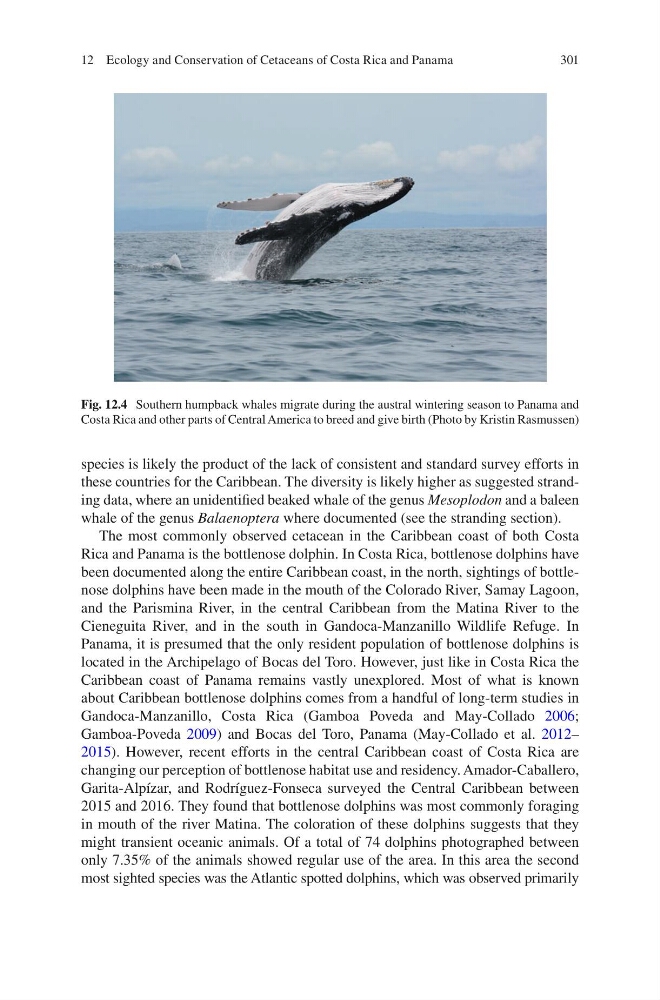
Fig. 12.4 Southern humpback whales migrate during the austral wintering season to Panama and
Costa Rica and other parts of Central America to breed and give birth (Photo by Kristin Rasmussen)
12 Ecology and Conservation of Cetaceans of Costa Rica and Panama
species is likely the product of the lack of consistent and standard survey efforts in
these countries for the Caribbean. The diversity is likely higher as suggested stranding data, where an unidentified beaked whale of the genus Mesoplodon and a baleen
whale of the genus Balaenoptera where documented (see the stranding section).
The most commonly observed cetacean in the Caribbean coast of both Costa
Rica and Panama is the bottlenose dolphin. In Costa Rica, bottlenose dolphins have
been documented along the entire Caribbean coast, in the north, sightings of bottlenose dolphins have been made in the mouth of the Colorado River, Samay Lagoon,
and the Parismina River, in the central Caribbean from the Matina River to the
Cieneguita River, and in the south in Gandoca-Manzanillo Wildlife Refuge. In
Panama, it is presumed that the only resident population of bottlenose dolphins is
located in the Archipelago of Bocas del Toro. However, just like in Costa Rica the
Caribbean coast of Panama remains vastly unexplored. Most of what is known
about Caribbean bottlenose dolphins comes from a handful of long-term studies in
Gandoca-Manzanillo, Costa Rica (Gamboa Poveda and May-Collado 2006;
Gamboa-Poveda 2009) and Bocas del Toro, Panama (May-Collado et al. 2012–
2015). However, recent efforts in the central Caribbean coast of Costa Rica are
changing our perception of bottlenose habitat use and residency. Amador-Caballero,
Garita-Alpízar, and Rodríguez-Fonseca surveyed the Central Caribbean between
2015 and 2016. They found that bottlenose dolphins was most commonly foraging
in mouth of the river Matina. The coloration of these dolphins suggests that they
might transient oceanic animals. Of a total of 74 dolphins photographed between
only 7.35% of the animals showed regular use of the area. In this area the second
most sighted species was the Atlantic spotted dolphins, which was observed primarily
Fig. 12.4 Southern humpback whales migrate during the austral wintering season to Panama and
Costa Rica and other parts of Central America to breed and give birth (Photo by Kristin Rasmussen)
12 Ecology and Conservation of Cetaceans of Costa Rica and Panama