

152
Orcas channel in Punta Norte, Península Valdés, Chubut. They recorded the killer
whales (Orcinus orca) that visit the area from February to May to hunt on South
American sea lions (Otaria flavescens) and Southern elephant seal (Mirounga leonina). They found that these orcas were in complete silence previous to catch a prey
but they vocalized once they succeeded (Iñíguez 1993). Unfortunately, the vocalization repertoires for the three orca’s pod identified in this area were not described.
In the mid 1990s, a Fundación Cethus (Argentine NGO) research team led by C.
de Haro, attempted to record Peale’s dolphins (Lagenorhynchus australis) in Cabo
Vírgenes, Santa Cruz, using a hydrophone deployed from an inflatable boat; however, due to bad weather conditions and facing logistic difficulties the project was
discountinued.
More recently (in 2000), the Instituto de Conservación de Ballenas (ICB)
research team in conjunction with the Bioacoustics Research Program, Cornell
University, USA, conducted a brief study on the acoustic characterization of few
bays in Golfo San José. The objective was to understand if Southern right whales
will prefer those areas where they could hear their predators, such as killer whales,
or improve their own communication, but the project was discontinued.
The Marine Mammals Lab (LAMAMA) of Centro Nacional Patagónico
(CENPAT), working together with Istituto per la Ricerca Scientifica e Tecnologica
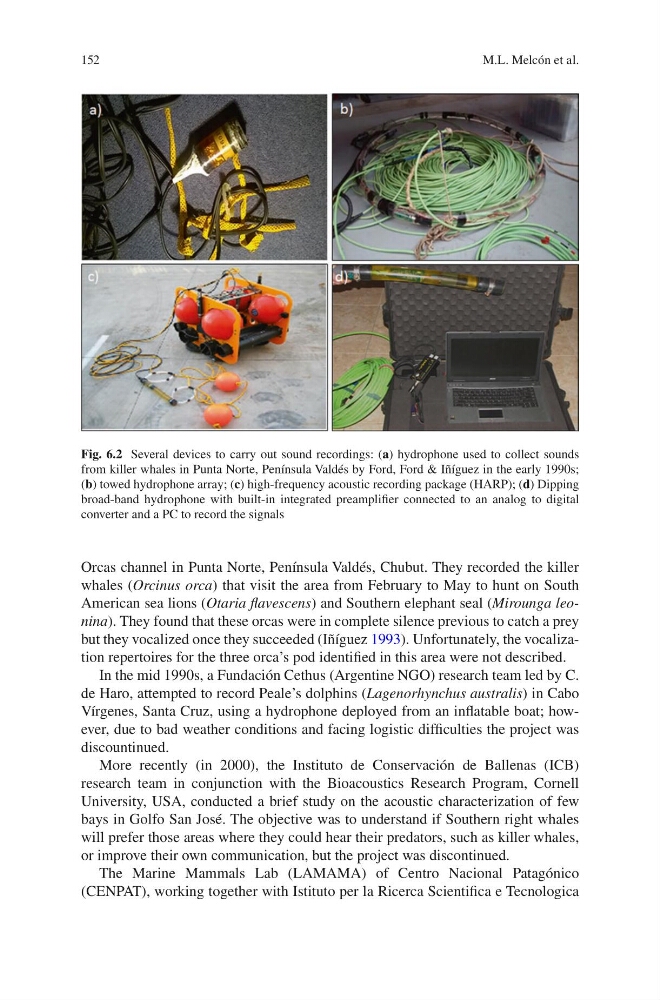
Fig. 6.2 Several devices to carry out sound recordings: (a) hydrophone used to collect sounds
from killer whales in Punta Norte, Península Valdés by Ford, Ford & Iñíguez in the early 1990s;
(b) towed hydrophone array; (c) high-frequency acoustic recording package (HARP); (d) Dipping
broad-band hydrophone with built-in integrated preamplifier connected to an analog to digital
converter and a PC to record the signals
M.L. Melcón et al.
Orcas channel in Punta Norte, Península Valdés, Chubut. They recorded the killer
whales (Orcinus orca) that visit the area from February to May to hunt on South
American sea lions (Otaria flavescens) and Southern elephant seal (Mirounga leonina). They found that these orcas were in complete silence previous to catch a prey
but they vocalized once they succeeded (Iñíguez 1993). Unfortunately, the vocalization repertoires for the three orca’s pod identified in this area were not described.
In the mid 1990s, a Fundación Cethus (Argentine NGO) research team led by C.
de Haro, attempted to record Peale’s dolphins (Lagenorhynchus australis) in Cabo
Vírgenes, Santa Cruz, using a hydrophone deployed from an inflatable boat; however, due to bad weather conditions and facing logistic difficulties the project was
discountinued.
More recently (in 2000), the Instituto de Conservación de Ballenas (ICB)
research team in conjunction with the Bioacoustics Research Program, Cornell
University, USA, conducted a brief study on the acoustic characterization of few
bays in Golfo San José. The objective was to understand if Southern right whales
will prefer those areas where they could hear their predators, such as killer whales,
or improve their own communication, but the project was discontinued.
The Marine Mammals Lab (LAMAMA) of Centro Nacional Patagónico
(CENPAT), working together with Istituto per la Ricerca Scientifica e Tecnologica
Fig. 6.2 Several devices to carry out sound recordings: (a) hydrophone used to collect sounds
from killer whales in Punta Norte, Península Valdés by Ford, Ford & Iñíguez in the early 1990s;
(b) towed hydrophone array; (c) high-frequency acoustic recording package (HARP); (d) Dipping
broad-band hydrophone with built-in integrated preamplifier connected to an analog to digital
converter and a PC to record the signals
M.L. Melcón et al.