

129
The bottlenose dolphin is probably one of the most studied cetacean species,
therefore responsible for much of the knowledge about the dolphins sound emissions. Bottlenose dolphin acoustic repertoire consists of narrowband and modulated
whistles; broadband clicks and pulsed calls (Tyack and Clark 2000). Efforts have
been substantially focused in researches with whistles, mainly that named as signature whistles (e.g. Caldwell and Caldwell 1965; McCowan and Reiss 1995, 2001;
Tyack 1997; Janik and Slater 1998; Sayigh et al. 2007; Harley 2008; Esch et al.
2009; Janik and Sayigh 2013; Kriesell et al. 2014).
So far, little is known about the acoustic of South Atlantic bottlenose dolphin
populations. Azevedo et al. (2007) recorded bottlenose dolphins at Patos Lagoon
estuary, southern Brazil. Lima et al. (2016) described and made a comparison
among whistles emitted by four delphinid species, in the Rio de Janeiro State Coast,
Brazil: Sotalia guianensis, Stenella frontalis, Steno bredanensis and Tursiops truncatus (Fig. 5.16).
5.4.5 Short Beaked Common Dolphin (Delphinus delphis)
The short beaked common dolphin is a small delphinidae, reaching up to approximately 2.60 m, and presents a warm-temperate distribution along the Atlantic and
Pacific oceans (Bastida et al. 2007; Perrin 2009). Along the Brazilian water this
species appears to have an isolated population in northern Brazil; however in the
southeast this species is frequently sighted in shallower waters (18–70 m) and
between southern Brazil and central Argentina this species is commonly found from
the outer continental shelf to upper slope (100–1500 m) (Tavares et al. 2010; Cunha
et al. 2015; Di Tullio et al. 2016) (Fig. 5.17).
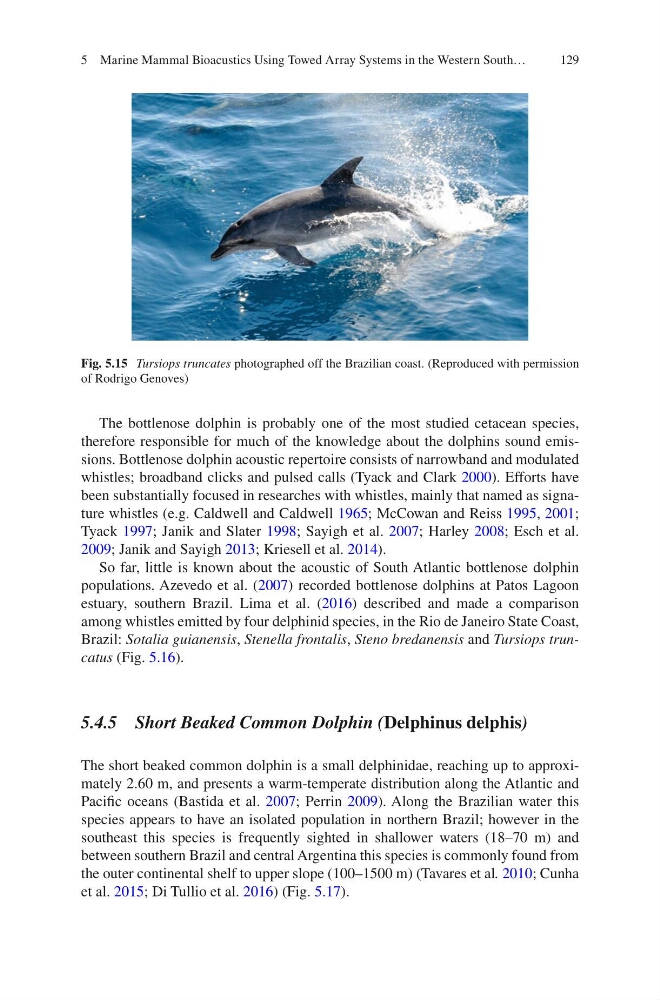
Fig. 5.15 Tursiops truncates photographed off the Brazilian coast. (Reproduced with permission
of Rodrigo Genoves)
5 Marine Mammal Bioacustics Using Towed Array Systems in the Western South…
The bottlenose dolphin is probably one of the most studied cetacean species,
therefore responsible for much of the knowledge about the dolphins sound emissions. Bottlenose dolphin acoustic repertoire consists of narrowband and modulated
whistles; broadband clicks and pulsed calls (Tyack and Clark 2000). Efforts have
been substantially focused in researches with whistles, mainly that named as signature whistles (e.g. Caldwell and Caldwell 1965; McCowan and Reiss 1995, 2001;
Tyack 1997; Janik and Slater 1998; Sayigh et al. 2007; Harley 2008; Esch et al.
2009; Janik and Sayigh 2013; Kriesell et al. 2014).
So far, little is known about the acoustic of South Atlantic bottlenose dolphin
populations. Azevedo et al. (2007) recorded bottlenose dolphins at Patos Lagoon
estuary, southern Brazil. Lima et al. (2016) described and made a comparison
among whistles emitted by four delphinid species, in the Rio de Janeiro State Coast,
Brazil: Sotalia guianensis, Stenella frontalis, Steno bredanensis and Tursiops truncatus (Fig. 5.16).
5.4.5 Short Beaked Common Dolphin (Delphinus delphis)
The short beaked common dolphin is a small delphinidae, reaching up to approximately 2.60 m, and presents a warm-temperate distribution along the Atlantic and
Pacific oceans (Bastida et al. 2007; Perrin 2009). Along the Brazilian water this
species appears to have an isolated population in northern Brazil; however in the
southeast this species is frequently sighted in shallower waters (18–70 m) and
between southern Brazil and central Argentina this species is commonly found from
the outer continental shelf to upper slope (100–1500 m) (Tavares et al. 2010; Cunha
et al. 2015; Di Tullio et al. 2016) (Fig. 5.17).
Fig. 5.15 Tursiops truncates photographed off the Brazilian coast. (Reproduced with permission
of Rodrigo Genoves)
5 Marine Mammal Bioacustics Using Towed Array Systems in the Western South…