

6.8
Flavobacterium psychrophilum
Flavobacterium psychrophilum is the causative agent of
rainbow trout fry syndrome (RTFS) or bacterial cold water
disease (BCW) is responsible for significant economic losses
in salmonid aquaculture in fresh water at cooler temperatures.
The following terms have also been historically used to
describe the disease: fry mortality syndrome, peduncle disease and cold water disease. RTFS is mainly reported from
juvenile fish and initially recognised by caudal or peduncle fin
erosion with increased mucous (Fig. 6.22). Other clinical
signs include increased lethargy and pigmentation, loss of
balance, bilateral exophthalmia, abdominal swelling, pale
gills, spinal deformities and a yellow skin discolouration
(Fig. 6.23). Fish up to ~60 g may display subcutaneous lesions
at one or more sites on the body surface (Fig. 6.24) and an
underlying necrosis often involves the whole tail fin. Internal
signs include ascites, intestinal inflammation, splenomegaly
and liver discolouration.
Histologically a generalised necrosis occurs with filamentous bacteria interspersed throughout fins, gills and skin and
in H&E sections F. psychrophilum shows weak staining
(Fig. 6.25). Bacteria can also occur in the retina with
subsequent inflammation associated with infiltration by
polymorphic granulocytes. An initial infiltrative periportal
response is also recorded in the liver, although recognised as
a feature of other bacterial diseases. The spleen may show
haemosiderosis, haemorrhage and necrosis with loss of definition of the splenic border and replacement by a loosely
structured eosinophilic layer, fibrinous inflammation and
intercellular oedema.
Infected fish shed bacteria into water where they survive
for several months. Vertical transmission is reported and
broodstock may serve as a reservoir for the bacterium. Similarly, dead fish release a large number of bacteria and infect
other fish through tegument lesions. General septicaemia in
trout fry is a differential diagnosis.
There are a number of diagnostic approaches and cultural
methods overall, but are reliable but time-consuming.
Diagnosis is therefore based upon clinical signs, and the
isolation and identification of the bacteria. Flavobacterium
psychrophilum is Gram negative, flexible, weakly retractile,
slender bacteria and can be isolated on media such as Anacker
and Ordal’s medium. After 14 days at 15
C, slightly raised,
yellow-pigmented sticky colonies with thin spreading
margins are recognized. A specific TaqMan polymerase
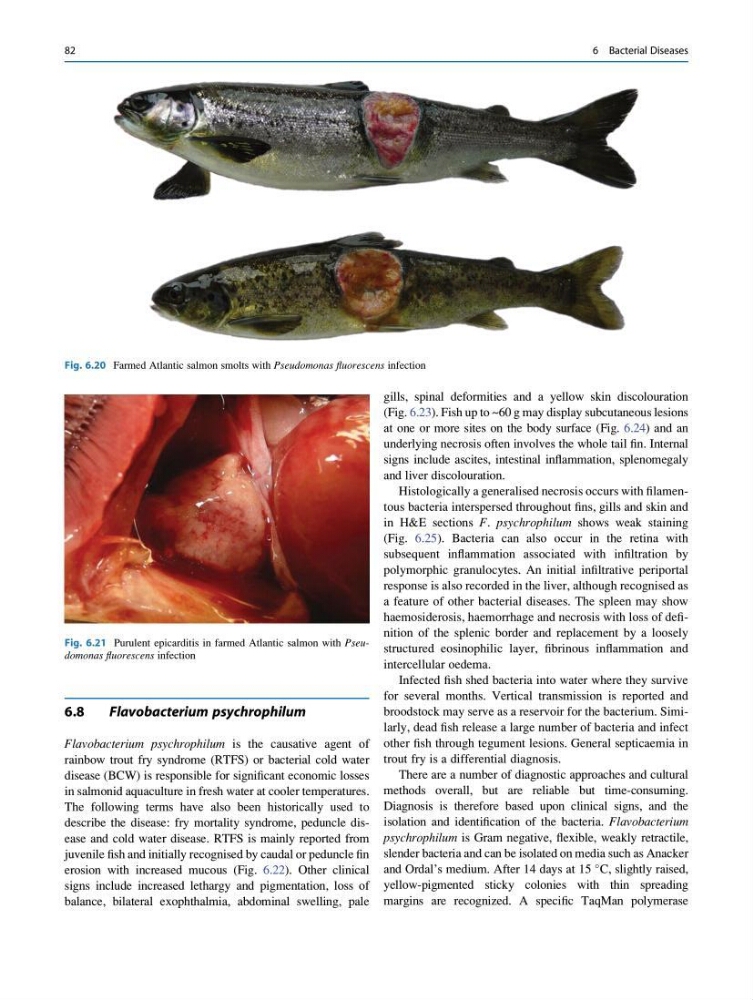
Fig. 6.20 Farmed Atlantic salmon smolts with Pseudomonas fluorescens infection
Fig. 6.21 Purulent epicarditis in farmed Atlantic salmon with Pseudomonas fluorescens infection
82
6 Bacterial Diseases
Flavobacterium psychrophilum
Flavobacterium psychrophilum is the causative agent of
rainbow trout fry syndrome (RTFS) or bacterial cold water
disease (BCW) is responsible for significant economic losses
in salmonid aquaculture in fresh water at cooler temperatures.
The following terms have also been historically used to
describe the disease: fry mortality syndrome, peduncle disease and cold water disease. RTFS is mainly reported from
juvenile fish and initially recognised by caudal or peduncle fin
erosion with increased mucous (Fig. 6.22). Other clinical
signs include increased lethargy and pigmentation, loss of
balance, bilateral exophthalmia, abdominal swelling, pale
gills, spinal deformities and a yellow skin discolouration
(Fig. 6.23). Fish up to ~60 g may display subcutaneous lesions
at one or more sites on the body surface (Fig. 6.24) and an
underlying necrosis often involves the whole tail fin. Internal
signs include ascites, intestinal inflammation, splenomegaly
and liver discolouration.
Histologically a generalised necrosis occurs with filamentous bacteria interspersed throughout fins, gills and skin and
in H&E sections F. psychrophilum shows weak staining
(Fig. 6.25). Bacteria can also occur in the retina with
subsequent inflammation associated with infiltration by
polymorphic granulocytes. An initial infiltrative periportal
response is also recorded in the liver, although recognised as
a feature of other bacterial diseases. The spleen may show
haemosiderosis, haemorrhage and necrosis with loss of definition of the splenic border and replacement by a loosely
structured eosinophilic layer, fibrinous inflammation and
intercellular oedema.
Infected fish shed bacteria into water where they survive
for several months. Vertical transmission is reported and
broodstock may serve as a reservoir for the bacterium. Similarly, dead fish release a large number of bacteria and infect
other fish through tegument lesions. General septicaemia in
trout fry is a differential diagnosis.
There are a number of diagnostic approaches and cultural
methods overall, but are reliable but time-consuming.
Diagnosis is therefore based upon clinical signs, and the
isolation and identification of the bacteria. Flavobacterium
psychrophilum is Gram negative, flexible, weakly retractile,
slender bacteria and can be isolated on media such as Anacker
and Ordal’s medium. After 14 days at 15
C, slightly raised,
yellow-pigmented sticky colonies with thin spreading
margins are recognized. A specific TaqMan polymerase
Fig. 6.20 Farmed Atlantic salmon smolts with Pseudomonas fluorescens infection
Fig. 6.21 Purulent epicarditis in farmed Atlantic salmon with Pseudomonas fluorescens infection
82
6 Bacterial Diseases