

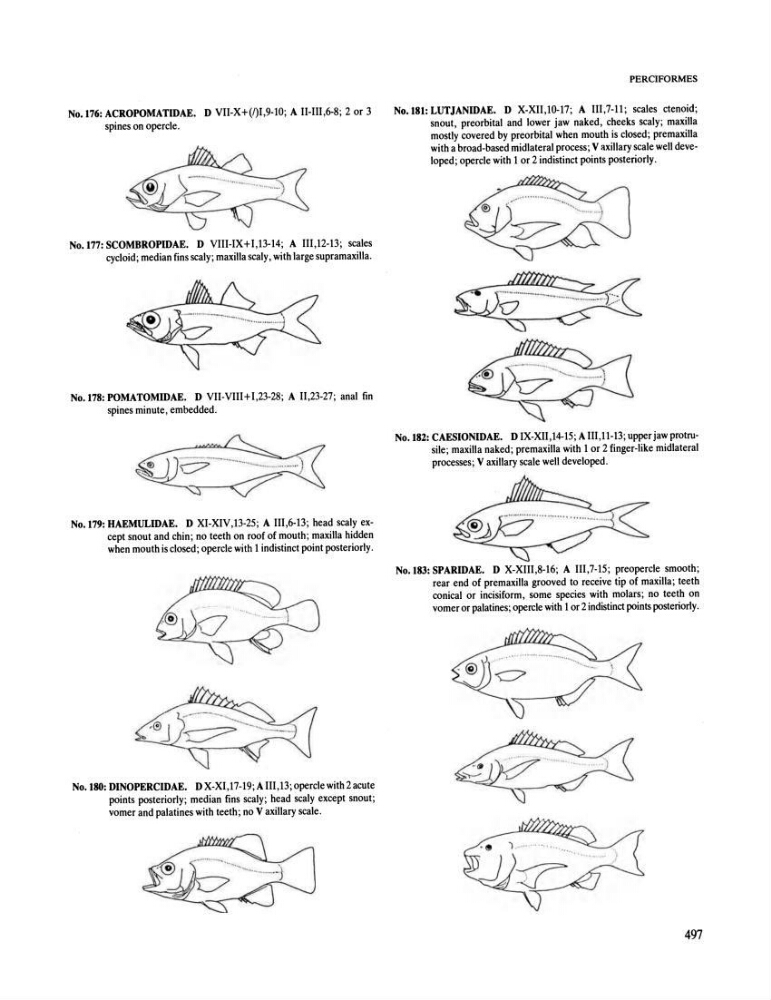
No. 176: ACROPOMATIDAE. D VII-X+(/)I,9-1O; A II-III,6-8; 2 or 3
spines on opercle.
No. 177: SCOMBROPIDAE. D VIII-IX+I,13-14; A III,12-13; scales
cycloid; median fins scaly; maxilla scaly, with large supramaxilla.
No. 178: POMATOMIDAE. D VII-VIII+I,23-28; A 11,23-27; anal fin
spines minute, embedded.
No. 179: HAEMULIDAE. D XI-XIV,13-25; A III,6-13; head scaly except snout and chin; no teeth on roof of mouth; maxilla hidden
when mouth is closed; opercle with 1 indistinct point posteriorly.
No. ISO: DINOPERCIDAE. D X-XI,17-19; A III, 13; opercle with 2 acute
points posteriorly; median fins scaly; head scaly except snout;
vomer and palatines with teeth; no V axillary scale.
PERCIFORMES
No. 181: LUTJANIDAE. D X-XII,10-17; A III,7-11; scales ctenoid;
snout, preorbital and lower jaw naked, cheeks scaly; maxilla
mostly covered by preorbital when mouth is closed; premaxilla
with a broad-based midlateral process; V axillary scale well developed; opercle with 1 or 2 indistinct points posteriorly.
No. 182: CAESIONIDAE. D IX-XII, 14-15; A III, 11-13; upper jaw protrusile; maxilla naked; premaxilla with lor 2 finger-like midlateral
processes; V axillary scale well developed.
No. 183: SPARIDAE. D X-XIII,8-16; A III,7-15; preopercle smooth;
rear end of premaxilla grooved to receive tip of maxilla; teeth
conical or incisiform, some species with molars; no teeth on
vomer or palatines; opercle with 1 or 2 indistinct points posteriorly.
497
spines on opercle.
No. 177: SCOMBROPIDAE. D VIII-IX+I,13-14; A III,12-13; scales
cycloid; median fins scaly; maxilla scaly, with large supramaxilla.
No. 178: POMATOMIDAE. D VII-VIII+I,23-28; A 11,23-27; anal fin
spines minute, embedded.
No. 179: HAEMULIDAE. D XI-XIV,13-25; A III,6-13; head scaly except snout and chin; no teeth on roof of mouth; maxilla hidden
when mouth is closed; opercle with 1 indistinct point posteriorly.
No. ISO: DINOPERCIDAE. D X-XI,17-19; A III, 13; opercle with 2 acute
points posteriorly; median fins scaly; head scaly except snout;
vomer and palatines with teeth; no V axillary scale.
PERCIFORMES
No. 181: LUTJANIDAE. D X-XII,10-17; A III,7-11; scales ctenoid;
snout, preorbital and lower jaw naked, cheeks scaly; maxilla
mostly covered by preorbital when mouth is closed; premaxilla
with a broad-based midlateral process; V axillary scale well developed; opercle with 1 or 2 indistinct points posteriorly.
No. 182: CAESIONIDAE. D IX-XII, 14-15; A III, 11-13; upper jaw protrusile; maxilla naked; premaxilla with lor 2 finger-like midlateral
processes; V axillary scale well developed.
No. 183: SPARIDAE. D X-XIII,8-16; A III,7-15; preopercle smooth;
rear end of premaxilla grooved to receive tip of maxilla; teeth
conical or incisiform, some species with molars; no teeth on
vomer or palatines; opercle with 1 or 2 indistinct points posteriorly.
497