

20 Strand-Specific Fluorescence in Situ Hybridization: CO-FISH and COD-FISH
263
the orientation of repetitive sequences along the chromosome and has
been designated CO-FISH for Chromosome Orientation-FISH (Goodwin
and Meyne, 1993). When combined with a telomere sequence probe, the
procedure can be used to determine both the orientation and the short
a
Incorporate BrdU
in one strand of
DNA helix
Remove substituted
strand of DNA
helix
b
~
. .
Hybridize singleDetect
•
stranded probe
hybridization site
3'
-
C
~
~
. .
Hybridize singleDetect
stranded telomere
hybridization sites
and interstitial
probes
5'
-
-
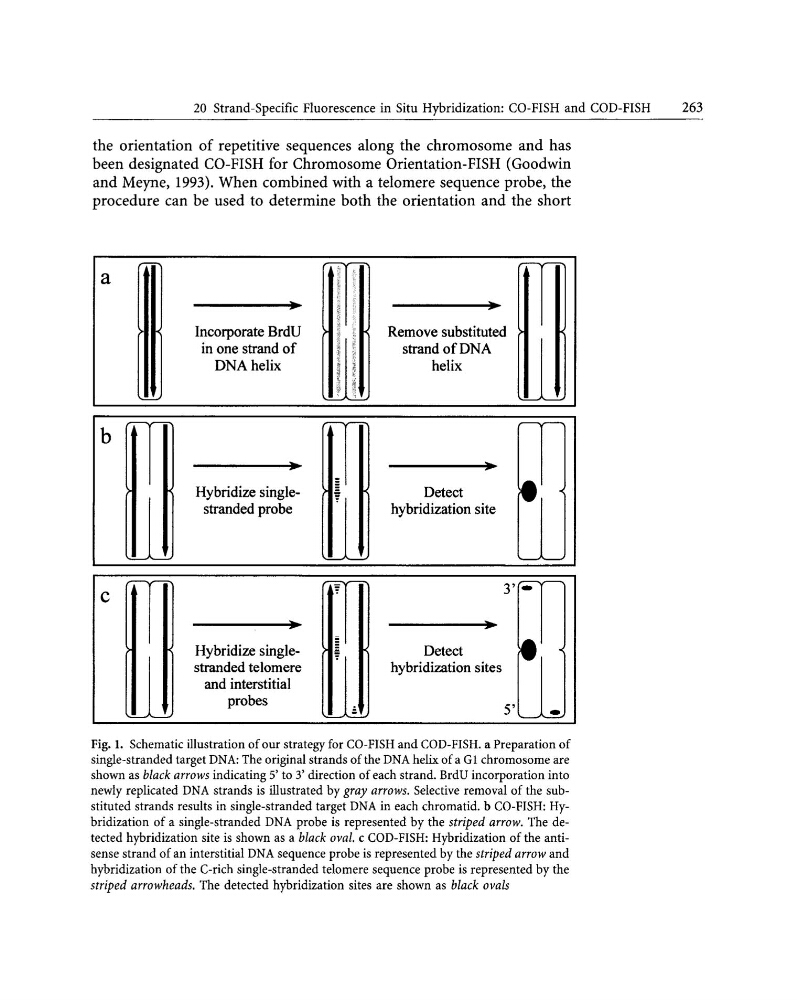
Fig. I. Schematic illustration of our strategy for CO-FISH and COD-FISH. a Preparation of
single-stranded target DNA: The original strands of the DNA helix of a G1chromosome are
shown as black arrows indicating 5' to 3' direction of each strand. BrdU incorporation into
newly replicated DNA strands is illustrated by gray arrows. Selective removal of the substituted strands results in single-stranded target DNA in each chromatid. b CO-FISH: Hybridization of a single-stranded DNA probe is represented by the striped arrow. The detected hybridization site is shown as a black oval. c COD-FISH: Hybridization of the antisense strand of an interstitial DNA sequence probe is represented by the striped arrow and
hybridization of the C-rich single-stranded telomere sequence probe is represented by the
striped arrowheads. The detected hybridization sites are shown as black ovals
263
the orientation of repetitive sequences along the chromosome and has
been designated CO-FISH for Chromosome Orientation-FISH (Goodwin
and Meyne, 1993). When combined with a telomere sequence probe, the
procedure can be used to determine both the orientation and the short
a
Incorporate BrdU
in one strand of
DNA helix
Remove substituted
strand of DNA
helix
b
~
. .
Hybridize singleDetect
•
stranded probe
hybridization site
3'
-
C
~
~
. .
Hybridize singleDetect
stranded telomere
hybridization sites
and interstitial
probes
5'
-
-
Fig. I. Schematic illustration of our strategy for CO-FISH and COD-FISH. a Preparation of
single-stranded target DNA: The original strands of the DNA helix of a G1chromosome are
shown as black arrows indicating 5' to 3' direction of each strand. BrdU incorporation into
newly replicated DNA strands is illustrated by gray arrows. Selective removal of the substituted strands results in single-stranded target DNA in each chromatid. b CO-FISH: Hybridization of a single-stranded DNA probe is represented by the striped arrow. The detected hybridization site is shown as a black oval. c COD-FISH: Hybridization of the antisense strand of an interstitial DNA sequence probe is represented by the striped arrow and
hybridization of the C-rich single-stranded telomere sequence probe is represented by the
striped arrowheads. The detected hybridization sites are shown as black ovals