

88
K. Zdzitowiecki
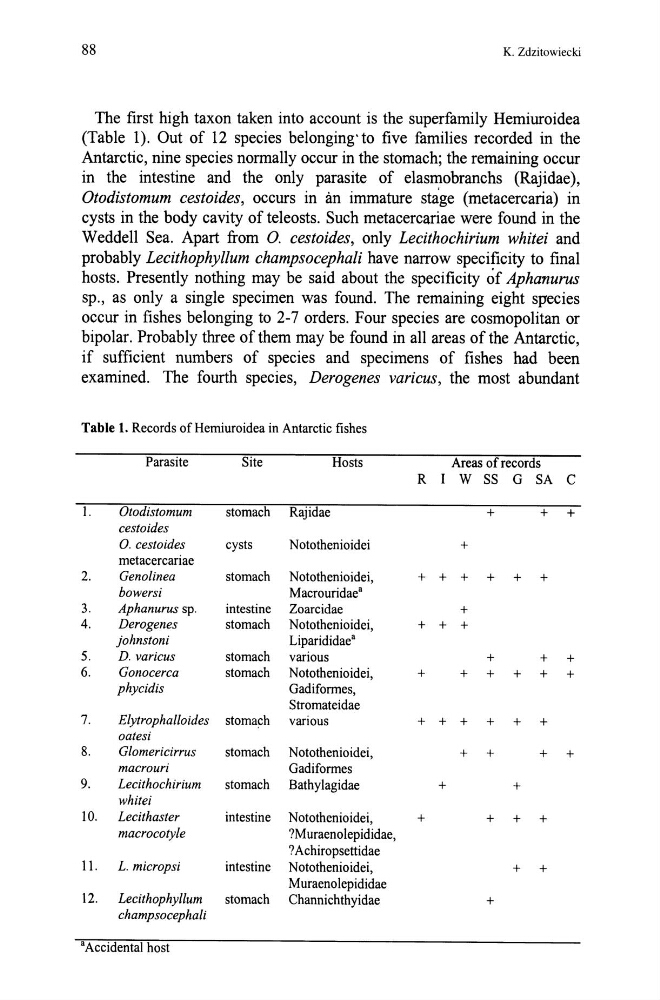
The first high taxon taken into account is the superfamily Hemiuroidea
(Table 1). Out of 12 species belonging'to five families recorded in the
Antarctic, nine species normally occur in the stomach; the remaining occur
in the intestine and the only parasite of elasmobranchs (Rajidae),
Otodistomum cestoides, occurs in an immature stage (metacercaria) in
cysts in the body cavity of teleosts. Such metacercariae were found in the
Weddell Sea. Apart from 0. cestoides, only Lecithochirium whitei and
probably Lecithophyllum champsocephali have narrow specificity to final
hosts. Presently nothing may be said about the specificity of Aphanurus
sp., as only a single specimen was found. The remaining eight species
occur in fishes belonging to 2-7 orders. Four species are cosmopolitan or
bipolar. Probably three of them may be found in all areas of the Antarctic,
if sufficient numbers of species and specimens of fishes had been
examined. The fourth species, Derogenes varicus, the most abundant
Table 1. Records of Hemiuroidea in Antarctic fishes
Parasite
Site
Hosts
Areas of records
R I W SS G SA C
1.
Otodistomum
stomach Rajidae
+
+ +
cestoides
O. cestoides
cysts
Notothenioidei
+
metacercariae
2.
Genolinea
stomach Notothenioidei,
+ + + + + +
bowersi
Macrouridae a
3.
Aphanurus sp.
intestine Zoarcidae
+
4.
Derogenes
stomach Notothenioidei,
+ + +
johnstoni
Liparididae a
5.
D. varicus
stomach various
+
+ +
6.
Gonocerca
stomach Notothenioidei,
+
+ + + + +
phycidis
Gadiformes,
Stromateidae
7.
Elytrophalloides stomach various
+ + + + + +
oatesi
8.
Glomericirrus
stomach N otothenioidei,
+ +
+ +
macrouri
Gadiformes
9.
Lecithochirium
stomach Bathylagidae
+
+
whitei
10.
Lecithaster
intestine Notothenioidei,
+
+ + +
macrocotyle
?Muraenolepididae,
? Achiropsettidae
11.
L. micropsi
intestine N otothenioidei,
+ +
Muraenolepididae
12.
Lecithophyllum
stomach Channichthyidae
+
champsocephali
aAccidental host
K. Zdzitowiecki
The first high taxon taken into account is the superfamily Hemiuroidea
(Table 1). Out of 12 species belonging'to five families recorded in the
Antarctic, nine species normally occur in the stomach; the remaining occur
in the intestine and the only parasite of elasmobranchs (Rajidae),
Otodistomum cestoides, occurs in an immature stage (metacercaria) in
cysts in the body cavity of teleosts. Such metacercariae were found in the
Weddell Sea. Apart from 0. cestoides, only Lecithochirium whitei and
probably Lecithophyllum champsocephali have narrow specificity to final
hosts. Presently nothing may be said about the specificity of Aphanurus
sp., as only a single specimen was found. The remaining eight species
occur in fishes belonging to 2-7 orders. Four species are cosmopolitan or
bipolar. Probably three of them may be found in all areas of the Antarctic,
if sufficient numbers of species and specimens of fishes had been
examined. The fourth species, Derogenes varicus, the most abundant
Table 1. Records of Hemiuroidea in Antarctic fishes
Parasite
Site
Hosts
Areas of records
R I W SS G SA C
1.
Otodistomum
stomach Rajidae
+
+ +
cestoides
O. cestoides
cysts
Notothenioidei
+
metacercariae
2.
Genolinea
stomach Notothenioidei,
+ + + + + +
bowersi
Macrouridae a
3.
Aphanurus sp.
intestine Zoarcidae
+
4.
Derogenes
stomach Notothenioidei,
+ + +
johnstoni
Liparididae a
5.
D. varicus
stomach various
+
+ +
6.
Gonocerca
stomach Notothenioidei,
+
+ + + + +
phycidis
Gadiformes,
Stromateidae
7.
Elytrophalloides stomach various
+ + + + + +
oatesi
8.
Glomericirrus
stomach N otothenioidei,
+ +
+ +
macrouri
Gadiformes
9.
Lecithochirium
stomach Bathylagidae
+
+
whitei
10.
Lecithaster
intestine Notothenioidei,
+
+ + +
macrocotyle
?Muraenolepididae,
? Achiropsettidae
11.
L. micropsi
intestine N otothenioidei,
+ +
Muraenolepididae
12.
Lecithophyllum
stomach Channichthyidae
+
champsocephali
aAccidental host