

Evolution of the Tribe Electronini (Myctophiformes, Myctophidae)
79
Pattern species, except for Lampichthys procerus, However, L. procerus,
D. meadi and D. ostenfeldi exhibit close spatial proximity to the bulk of
the Convergence Pattern species. Group D (Broadly Antarctic and
SubAntarctic
Patterns)
encompassed
Electrona,
Krefftichthys,
Metelectrona and all subgenera of both Protomyctophum and
Gymnoscopelus (Fig. 2C).
Two major groups of stations could be identified in the MATRIX-II
series (not figured): one group with fishing depths between 440 m and 825
m, the other between 295 m and 450 m. This indicated a transition in
relative abundances in the 440-450 m depth horizon, depths characterized
by the top of the North Atlantic Deep Water (NADW) layer during the
cruise. SIMPER analysis suggested that P. bolini appeared to be a good
indicator species for the shallow group of stations. Gymnoscopelus
braueri and E. antarctica appeared to be the indicator species for the
deeper group. A higher average abundance for E. antarctica was
associated with depths below 440-450 m.
/-36 7 P. (p.) thOliodon (Seml.Subantarctlcj
t
o K. Bnderssoni (Broadly Anta.ctlc)
19 P. (p.) Mnlsonl
(Broadly Antarctic)
r-5 P. {P.} bolini
(Broadly Ant.rctic)
35
. E211 P. (H.) tI,ompsoni (Sub.retic)
18 P. (H.) subpBlBl/elum (Conve.gence)
[
32 14 P. (H.) para/lelum
(HoIDsubantaretlc)
3 P. (H.) arclicum
(Boreo.retlc)
1-34
[4 P. (H.) hecker;
(Horth Central)
31
8 P. tH.} erockeri
(North Tempe.ate)
29,[9 P. (II.) chi/.nsf.
(South Temperale)
[
1 P. {P.} andriashcvi (Holosubanlarctic)
.... 33
13 P. (P.) norman/ (Convergence)
3O[ E10 P. (p.) gemmatum (Holosubantarctlc)
28 12 P. (P.) lucile,um
(Convergence)
[
'6 E.,1Bso
(Wld.apraad)
27
.e21 M. ""ntnl/is (Seml-subantarctlcj
[
25 11 M. helWigi
(Convergence'
26
2 E. 8111arcliCB (Antarctic)
u[ [17 E. suhBspe", (Holosubantarctic\
23
,[6 E. Cllrlsbfll'l// (Holosubantaretic)
22 15 E. paue/lastfa (Conygrgence,
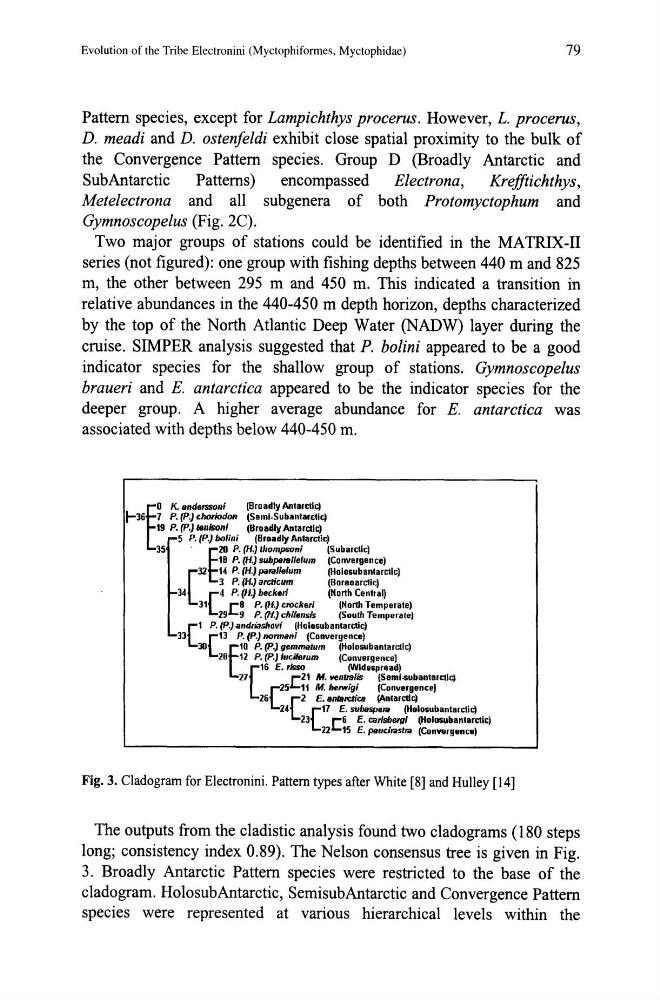
Fig. 3. Cladogram for Electronini. Pattern types after White [8] and Rulley [14]
The outputs from the cladistic analysis found two cladograms (180 steps
long; consistency index 0.89). The Nelson consensus tree is given in Fig.
3. Broadly Antarctic Pattern species were restricted to the base of the
cladogram. HolosubAntarctic, SemisubAntarctic and Convergence Pattern
species were represented at various hierarchical levels within the
79
Pattern species, except for Lampichthys procerus, However, L. procerus,
D. meadi and D. ostenfeldi exhibit close spatial proximity to the bulk of
the Convergence Pattern species. Group D (Broadly Antarctic and
SubAntarctic
Patterns)
encompassed
Electrona,
Krefftichthys,
Metelectrona and all subgenera of both Protomyctophum and
Gymnoscopelus (Fig. 2C).
Two major groups of stations could be identified in the MATRIX-II
series (not figured): one group with fishing depths between 440 m and 825
m, the other between 295 m and 450 m. This indicated a transition in
relative abundances in the 440-450 m depth horizon, depths characterized
by the top of the North Atlantic Deep Water (NADW) layer during the
cruise. SIMPER analysis suggested that P. bolini appeared to be a good
indicator species for the shallow group of stations. Gymnoscopelus
braueri and E. antarctica appeared to be the indicator species for the
deeper group. A higher average abundance for E. antarctica was
associated with depths below 440-450 m.
/-36 7 P. (p.) thOliodon (Seml.Subantarctlcj
t
o K. Bnderssoni (Broadly Anta.ctlc)
19 P. (p.) Mnlsonl
(Broadly Antarctic)
r-5 P. {P.} bolini
(Broadly Ant.rctic)
35
. E211 P. (H.) tI,ompsoni (Sub.retic)
18 P. (H.) subpBlBl/elum (Conve.gence)
[
32 14 P. (H.) para/lelum
(HoIDsubantaretlc)
3 P. (H.) arclicum
(Boreo.retlc)
1-34
[4 P. (H.) hecker;
(Horth Central)
31
8 P. tH.} erockeri
(North Tempe.ate)
29,[9 P. (II.) chi/.nsf.
(South Temperale)
[
1 P. {P.} andriashcvi (Holosubanlarctic)
.... 33
13 P. (P.) norman/ (Convergence)
3O[ E10 P. (p.) gemmatum (Holosubantarctlc)
28 12 P. (P.) lucile,um
(Convergence)
[
'6 E.,1Bso
(Wld.apraad)
27
.e21 M. ""ntnl/is (Seml-subantarctlcj
[
25 11 M. helWigi
(Convergence'
26
2 E. 8111arcliCB (Antarctic)
u[ [17 E. suhBspe", (Holosubantarctic\
23
,[6 E. Cllrlsbfll'l// (Holosubantaretic)
22 15 E. paue/lastfa (Conygrgence,
Fig. 3. Cladogram for Electronini. Pattern types after White [8] and Rulley [14]
The outputs from the cladistic analysis found two cladograms (180 steps
long; consistency index 0.89). The Nelson consensus tree is given in Fig.
3. Broadly Antarctic Pattern species were restricted to the base of the
cladogram. HolosubAntarctic, SemisubAntarctic and Convergence Pattern
species were represented at various hierarchical levels within the