

Age, Growth and Maximum Size of Antarctic Notothenioid Fish - Revisited
33
5.0
3.0
2.0
1.0
0.6
0.4
Co
0.3
Q) 0.2
2:
~
0.1
0.06
0.04
0.02
0.01
:
-1
• Lesser Antarctic/sub-Antarctic Zone
• High-Antarctic Zone
.. Patagonian Shelf
20
•• 4
o Boreal and Temperate Waters
-<>
\\
l?
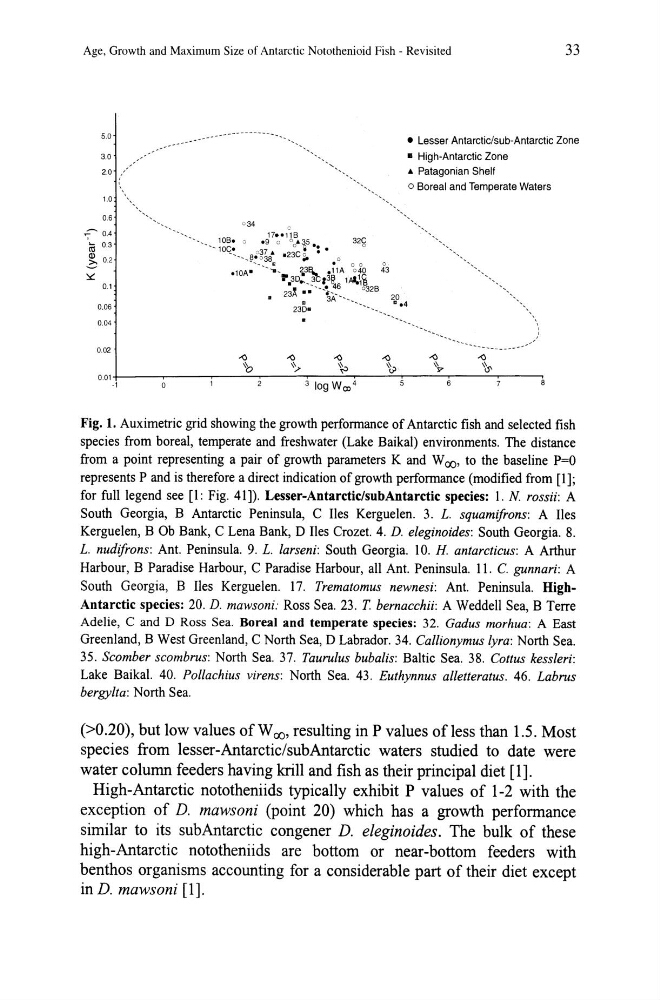
Fig. 1. Auximetric grid showing the growth performance of Antarctic fish and selected fish
species from boreal, temperate and freshwater (Lake Baikal) environments. The distance
from a point representing a pair of growth parameters K and Woo, to the baseline p=o
represents P and is therefore a direct indication of growth performance (modified from [1];
for full legend see [1: Fig. 41]). Lesser-Antarctic/subAntarctic species: I. N. rossii: A
South Georgia, B Antarctic Peninsula, C Iles Kerguelen. 3. L squamifrons: AIles
Kerguelen, B Ob Bank, C Lena Bank, DIles Crozet. 4. D. eleginoides: South Georgia. 8.
L nudifrons: Ant. Peninsula. 9. L larseni: South Georgia. 10. H. antarcticus: A Arthur
Harbour, B Paradise Harbour, C Paradise Harbour, all Ant. Peninsula. II. C. gunnari: A
South Georgia, BIles Kerguelen. 17. Trematomus newnesi: Ant. Peninsula. HighAntarctic species: 20. D mawsoni: Ross Sea. 23. T bernacchii: A Weddell Sea, B Terre
Adelie, C and D Ross Sea. Boreal and temperate species: 32. Gadus morhua: A East
Greenland, B West Greenland, C North Sea, D Labrador. 34. Callionymus lyra: North Sea.
35. Scomber scombrus: North Sea. 37. Taurulus bubalis: Baltic Sea. 38. Collus kessleri:
Lake Baikal. 40. Pollachius virens: North Sea. 43. Euthynnus alletteratus. 46. Labrus
bergylta: North Sea.
(>0.20), but low values ofW 00' resulting in P values ofless than 1.5. Most
species from lesser-Antarctic/subAntarctic waters studied to date were
water column feeders having krill and fish as their principal diet [1].
High-Antarctic nototheniids typically exhibit P values of 1-2 with the
exception of D. mawsoni (point 20) which has a growth performance
similar to its subAntarctic congener D. eleginoides. The bulk of these
high-Antarctic nototheniids are bottom or near-bottom feeders with
benthos organisms accounting for a considerable part of their diet except
in D. mawsoni [I].
33
5.0
3.0
2.0
1.0
0.6
0.4
Co
0.3
Q) 0.2
2:
~
0.1
0.06
0.04
0.02
0.01
:
-1
• Lesser Antarctic/sub-Antarctic Zone
• High-Antarctic Zone
.. Patagonian Shelf
20
•• 4
o Boreal and Temperate Waters
-<>
\\
l?
Fig. 1. Auximetric grid showing the growth performance of Antarctic fish and selected fish
species from boreal, temperate and freshwater (Lake Baikal) environments. The distance
from a point representing a pair of growth parameters K and Woo, to the baseline p=o
represents P and is therefore a direct indication of growth performance (modified from [1];
for full legend see [1: Fig. 41]). Lesser-Antarctic/subAntarctic species: I. N. rossii: A
South Georgia, B Antarctic Peninsula, C Iles Kerguelen. 3. L squamifrons: AIles
Kerguelen, B Ob Bank, C Lena Bank, DIles Crozet. 4. D. eleginoides: South Georgia. 8.
L nudifrons: Ant. Peninsula. 9. L larseni: South Georgia. 10. H. antarcticus: A Arthur
Harbour, B Paradise Harbour, C Paradise Harbour, all Ant. Peninsula. II. C. gunnari: A
South Georgia, BIles Kerguelen. 17. Trematomus newnesi: Ant. Peninsula. HighAntarctic species: 20. D mawsoni: Ross Sea. 23. T bernacchii: A Weddell Sea, B Terre
Adelie, C and D Ross Sea. Boreal and temperate species: 32. Gadus morhua: A East
Greenland, B West Greenland, C North Sea, D Labrador. 34. Callionymus lyra: North Sea.
35. Scomber scombrus: North Sea. 37. Taurulus bubalis: Baltic Sea. 38. Collus kessleri:
Lake Baikal. 40. Pollachius virens: North Sea. 43. Euthynnus alletteratus. 46. Labrus
bergylta: North Sea.
(>0.20), but low values ofW 00' resulting in P values ofless than 1.5. Most
species from lesser-Antarctic/subAntarctic waters studied to date were
water column feeders having krill and fish as their principal diet [1].
High-Antarctic nototheniids typically exhibit P values of 1-2 with the
exception of D. mawsoni (point 20) which has a growth performance
similar to its subAntarctic congener D. eleginoides. The bulk of these
high-Antarctic nototheniids are bottom or near-bottom feeders with
benthos organisms accounting for a considerable part of their diet except
in D. mawsoni [I].