

Molecular Adaptations of Antarctic Fish Hemoglobins
347
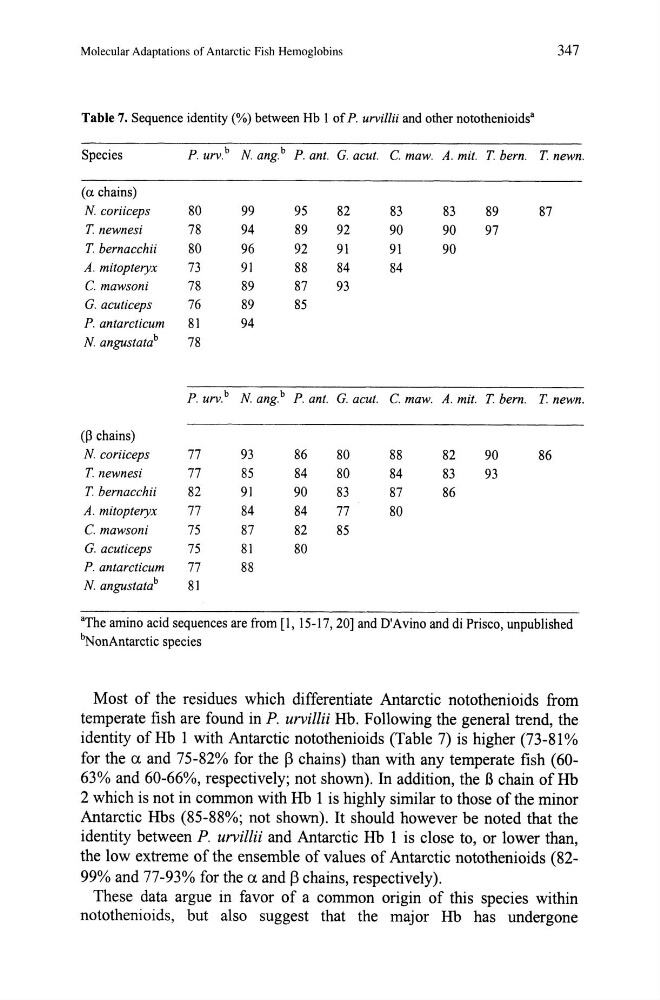
Table 7. Sequence identity (%) between Hb 1 of P. urvillii and other notothenioids"
Species
P. urv. b N. ang b p. ant. G. acut. C. maw. A. mit. T bern. T newn.
(a chains)
N. coriiceps
80
99
95
82
83
83
89
87
T newnesi
78
94
89
92
90
90
97
T bernacchii
80
96
92
91
91
90
A. mitopteryx
73
91
88
84
84
C. mawsoni
78
89
87
93
G. acuticeps
76
89
85
P. antarcticum
81
94
N. angustata b
78
P. urv. b N. ang b p. ant. G. acut. C. maw. A. mit. T bern. T newn.
(p chains)
N. coriiceps
77
93
86
80
88
82
90
86
T newnesi
77
85
84
80
84
83
93
T bernacchii
82
91
90
83
87
86
A. mitopteryx
77
84
84
77
80
C. mawsoni
75
87
82
85
G. acuticeps
75
81
80
P. antarcticum
77
88
N. angustata b
81
"The amino acid sequences are from [I, 15-17,20] and D'Avino and di Prisco, unpublished
~onAntarctic species
Most of the residues which differentiate Antarctic notothenioids from
temperate fish are found in P. urvillii Hb. Following the general trend, the
identity of Hb 1 with Antarctic notothenioids (Table 7) is higher (73-81 %
for the a and 75-82% for the ~ chains) than with any temperate fish (6063% and 60-66%, respectively; not shown). In addition, the B chain of Hb
2 which is not in common with Hb 1 is highly similar to those of the minor
Antarctic Hbs (85-88%; not shown). It should however be noted that the
identity between P. urvillii and Antarctic Hb 1 is close to, or lower than,
the low extreme of the ensemble of values of Antarctic notothenioids (8299% and 77-93% for the a and ~ chains, respectively).
These data argue in favor of a common origin of this species within
notothenioids, but also suggest that the major Hb has undergone
347
Table 7. Sequence identity (%) between Hb 1 of P. urvillii and other notothenioids"
Species
P. urv. b N. ang b p. ant. G. acut. C. maw. A. mit. T bern. T newn.
(a chains)
N. coriiceps
80
99
95
82
83
83
89
87
T newnesi
78
94
89
92
90
90
97
T bernacchii
80
96
92
91
91
90
A. mitopteryx
73
91
88
84
84
C. mawsoni
78
89
87
93
G. acuticeps
76
89
85
P. antarcticum
81
94
N. angustata b
78
P. urv. b N. ang b p. ant. G. acut. C. maw. A. mit. T bern. T newn.
(p chains)
N. coriiceps
77
93
86
80
88
82
90
86
T newnesi
77
85
84
80
84
83
93
T bernacchii
82
91
90
83
87
86
A. mitopteryx
77
84
84
77
80
C. mawsoni
75
87
82
85
G. acuticeps
75
81
80
P. antarcticum
77
88
N. angustata b
81
"The amino acid sequences are from [I, 15-17,20] and D'Avino and di Prisco, unpublished
~onAntarctic species
Most of the residues which differentiate Antarctic notothenioids from
temperate fish are found in P. urvillii Hb. Following the general trend, the
identity of Hb 1 with Antarctic notothenioids (Table 7) is higher (73-81 %
for the a and 75-82% for the ~ chains) than with any temperate fish (6063% and 60-66%, respectively; not shown). In addition, the B chain of Hb
2 which is not in common with Hb 1 is highly similar to those of the minor
Antarctic Hbs (85-88%; not shown). It should however be noted that the
identity between P. urvillii and Antarctic Hb 1 is close to, or lower than,
the low extreme of the ensemble of values of Antarctic notothenioids (8299% and 77-93% for the a and ~ chains, respectively).
These data argue in favor of a common origin of this species within
notothenioids, but also suggest that the major Hb has undergone