

294
Wei-Jen Chen et al.
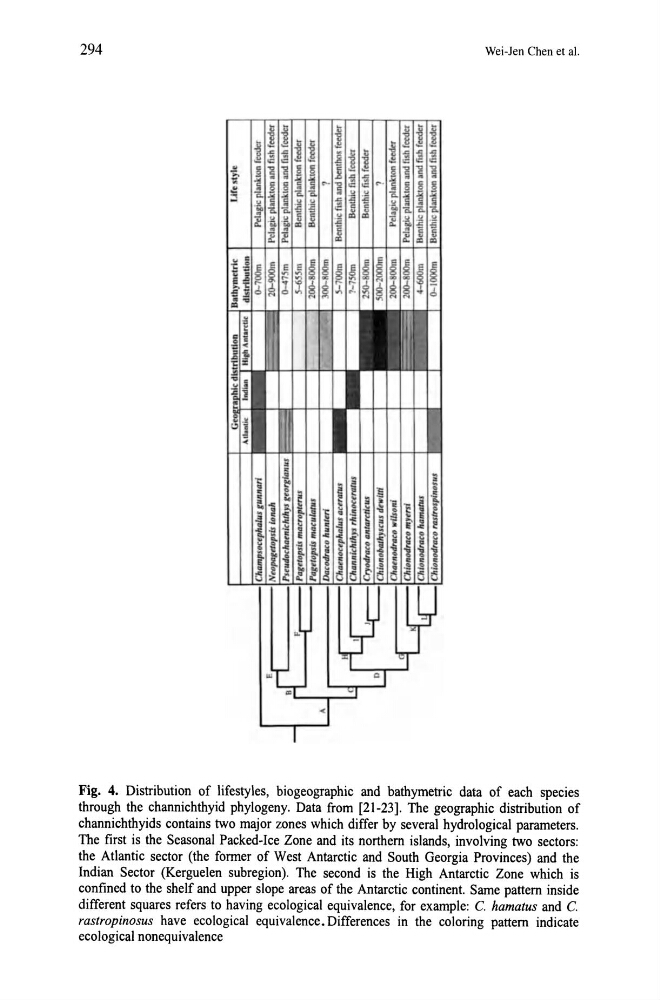
Fig. 4. Distribution of lifestyles, biogeographic and bathymetric data of each species
through the channichthyid phylogeny. Data from [21-23]. The geographic distribution of
channichthyids contains two major zones which differ by several hydrological parameters.
The first is the Seasonal Packed-Ice Zone and its northern islands, involving two sectors:
the Atlantic sector (the former of West Antarctic and South Georgia Provinces) and the
Indian Sector (Kerguelen subregion). The second is the High Antarctic Zone which is
confined to the shelf and upper slope areas of the Antarctic continent. Same pattern inside
different squares refers to having ecological equivalence, for example: C. hamatus and C.
rastropinosus have ecological equivalence. Differences in the coloring pattern indicate
ecological nonequivalence
Wei-Jen Chen et al.
Fig. 4. Distribution of lifestyles, biogeographic and bathymetric data of each species
through the channichthyid phylogeny. Data from [21-23]. The geographic distribution of
channichthyids contains two major zones which differ by several hydrological parameters.
The first is the Seasonal Packed-Ice Zone and its northern islands, involving two sectors:
the Atlantic sector (the former of West Antarctic and South Georgia Provinces) and the
Indian Sector (Kerguelen subregion). The second is the High Antarctic Zone which is
confined to the shelf and upper slope areas of the Antarctic continent. Same pattern inside
different squares refers to having ecological equivalence, for example: C. hamatus and C.
rastropinosus have ecological equivalence. Differences in the coloring pattern indicate
ecological nonequivalence