

276
E. Pisano et al.
2 • • • Kill
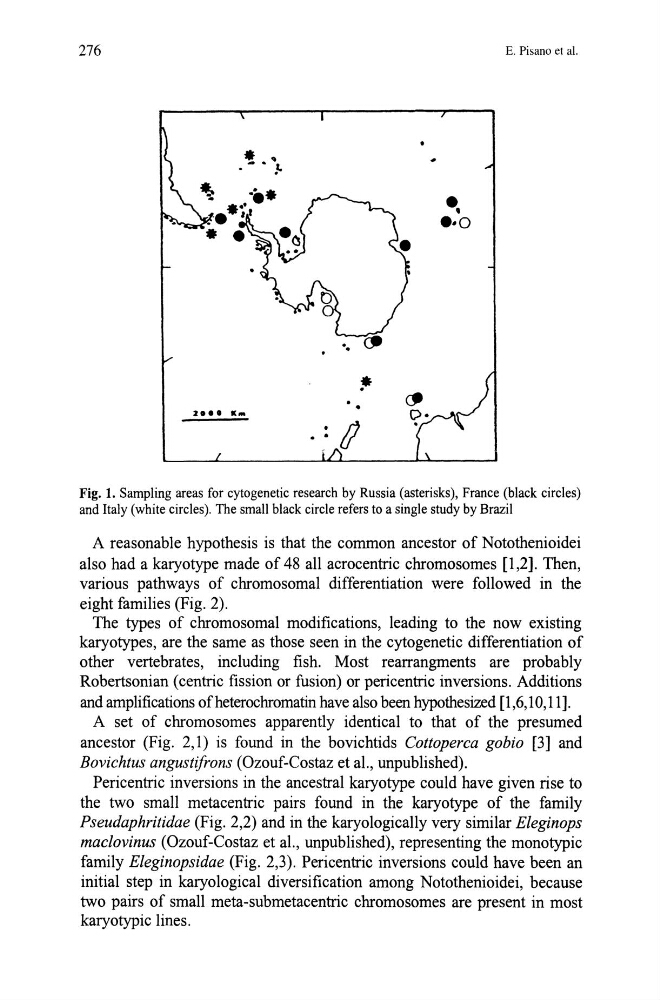
Fig. 1. Sampling areas for cytogenetic research by Russia (asterisks), France (black circles)
and Italy (white circles). The small black circle refers to a single study by Brazil
A reasonable hypothesis is that the common ancestor of Notothenioidei
also had a karyotype made of 48 all acrocentric chromosomes [1,2]. Then,
various pathways of chromosomal differentiation were followed in the
eight families (Fig. 2).
The types of chromosomal modifications, leading to the now existing
karyotypes, are the same as those seen in the cytogenetic differentiation of
other vertebrates, including fish. Most rearrangments are probably
Robertsonian (centric fission or fusion) or pericentric inversions. Additions
and amplifications of heterochromatin have also been hypothesized [1,6,10,11].
A set of chromosomes apparently identical to that of the presumed
ancestor (Fig. 2,1) is found in the bovichtids Cotto perea gobio [3] and
Boviehtus angustifrons (Ozouf-Costaz et aI., unpublished).
Pericentric inversions in the ancestral karyotype could have given rise to
the two small metacentric pairs found in the karyotype of the family
Pseudaphritidae (Fig. 2,2) and in the karyologically very similar Eleginops
maclovinus (Ozouf-Costaz et aI., unpublished), representing the monotypic
family Eleginopsidae (Fig. 2,3). Pericentric inversions could have been an
initial step in karyological diversification among Notothenioidei, because
two pairs of small meta-submetacentric chromosomes are present in most
karyotypic lines.
E. Pisano et al.
2 • • • Kill
Fig. 1. Sampling areas for cytogenetic research by Russia (asterisks), France (black circles)
and Italy (white circles). The small black circle refers to a single study by Brazil
A reasonable hypothesis is that the common ancestor of Notothenioidei
also had a karyotype made of 48 all acrocentric chromosomes [1,2]. Then,
various pathways of chromosomal differentiation were followed in the
eight families (Fig. 2).
The types of chromosomal modifications, leading to the now existing
karyotypes, are the same as those seen in the cytogenetic differentiation of
other vertebrates, including fish. Most rearrangments are probably
Robertsonian (centric fission or fusion) or pericentric inversions. Additions
and amplifications of heterochromatin have also been hypothesized [1,6,10,11].
A set of chromosomes apparently identical to that of the presumed
ancestor (Fig. 2,1) is found in the bovichtids Cotto perea gobio [3] and
Boviehtus angustifrons (Ozouf-Costaz et aI., unpublished).
Pericentric inversions in the ancestral karyotype could have given rise to
the two small metacentric pairs found in the karyotype of the family
Pseudaphritidae (Fig. 2,2) and in the karyologically very similar Eleginops
maclovinus (Ozouf-Costaz et aI., unpublished), representing the monotypic
family Eleginopsidae (Fig. 2,3). Pericentric inversions could have been an
initial step in karyological diversification among Notothenioidei, because
two pairs of small meta-submetacentric chromosomes are present in most
karyotypic lines.