

114
L. Carratu et al.
HSE CAAT
HSE
100bp
TATA
CAAT HSE
TATA
CAAT
HSE
HS~ TATA
CAAT gt HSE
splicing signal
TACTAAC
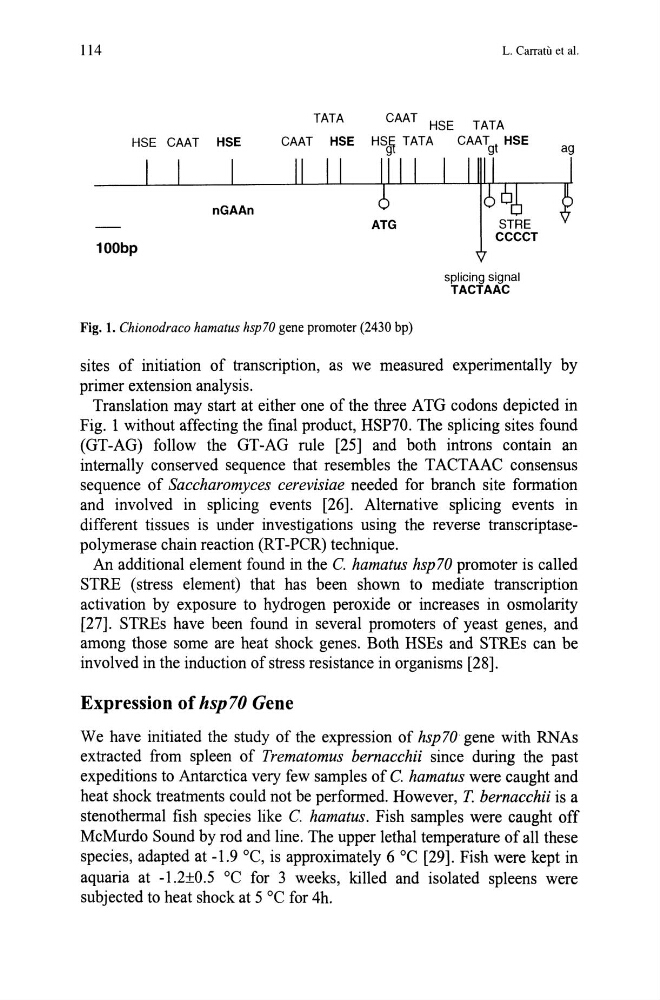
Fig. 1. Chionodraco hamatus hsp70 gene promoter (2430 bp)
ag
sites of initiation of transcription, as we measured experimentally by
primer extension analysis.
Translation may start at either one of the three ATG codons depicted in
Fig. 1 without affecting the final product, HSP70. The splicing sites found
(GT-AG) follow the GT-AG rule [25] and both introns contain an
internally conserved sequence that resembles the TACTAAC consensus
sequence of Saccharomyces cerevisiae needed for branch site formation
and involved in splicing events [26]. Alternative splicing events in
different tissues is under investigations using the reverse transcriptasepolymerase chain reaction (RT-PCR) technique.
An additional element found in the C. hamatus hsp 70 promoter is called
STRE (stress element) that has been shown to mediate transcription
activation by exposure to hydrogen peroxide or increases in osmolarity
[27]. STREs have been found in several promoters of yeast genes, and
among those some are heat shock genes. Both HSEs and STREs can be
involved in the induction of stress resistance in organisms [28].
Expression of hsp 70 Gene
We have initiated the study of the expression of hsp70 gene with RNAs
extracted from spleen of Trematomus bernacchii since during the past
expeditions to Antarctica very few samples of C. hamatus were caught and
heat shock treatments could not be performed. However, T. bernacchii is a
stenothermal fish species like C. hamatus. Fish samples were caught off
McMurdo Sound by rod and line. The upper lethal temperature of all these
species, adapted at -1.9 °C, is approximately 6 °C [29]. Fish were kept in
aquaria at -1.2±O.5 °C for 3 weeks, killed and isolated spleens were
subjected to heat shock at 5 °C for 4h.
L. Carratu et al.
HSE CAAT
HSE
100bp
TATA
CAAT HSE
TATA
CAAT
HSE
HS~ TATA
CAAT gt HSE
splicing signal
TACTAAC
Fig. 1. Chionodraco hamatus hsp70 gene promoter (2430 bp)
ag
sites of initiation of transcription, as we measured experimentally by
primer extension analysis.
Translation may start at either one of the three ATG codons depicted in
Fig. 1 without affecting the final product, HSP70. The splicing sites found
(GT-AG) follow the GT-AG rule [25] and both introns contain an
internally conserved sequence that resembles the TACTAAC consensus
sequence of Saccharomyces cerevisiae needed for branch site formation
and involved in splicing events [26]. Alternative splicing events in
different tissues is under investigations using the reverse transcriptasepolymerase chain reaction (RT-PCR) technique.
An additional element found in the C. hamatus hsp 70 promoter is called
STRE (stress element) that has been shown to mediate transcription
activation by exposure to hydrogen peroxide or increases in osmolarity
[27]. STREs have been found in several promoters of yeast genes, and
among those some are heat shock genes. Both HSEs and STREs can be
involved in the induction of stress resistance in organisms [28].
Expression of hsp 70 Gene
We have initiated the study of the expression of hsp70 gene with RNAs
extracted from spleen of Trematomus bernacchii since during the past
expeditions to Antarctica very few samples of C. hamatus were caught and
heat shock treatments could not be performed. However, T. bernacchii is a
stenothermal fish species like C. hamatus. Fish samples were caught off
McMurdo Sound by rod and line. The upper lethal temperature of all these
species, adapted at -1.9 °C, is approximately 6 °C [29]. Fish were kept in
aquaria at -1.2±O.5 °C for 3 weeks, killed and isolated spleens were
subjected to heat shock at 5 °C for 4h.