

78
100
90
Hermaphrodites
Males
80
C)
70
Z
~
60
~
50
::J
40
(JJ
~ 0
30
20
10
0
5
6
7
8
9
10
11
12
13 14
15
AGE OF CLAM SHRIMP (days)
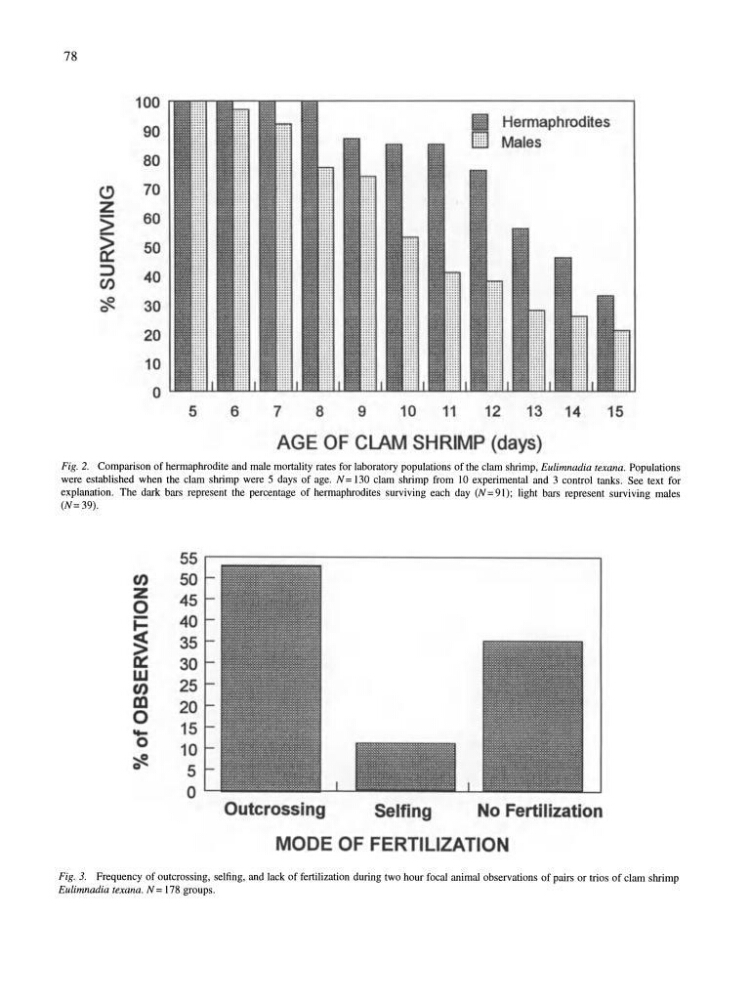
Fig. 2. Comparison of hermaphrodite and male mortality rates for laboratory populations of the clam shrimp, Eulimnadia texana. Populations
were established when the clam shrimp were 5 days of age. N = 130 clam shrimp from to experimental and 3 control tanks. See text for
explanation. The dark bars represent the percentage of hermaphrodites surviving each day (N = 91); light bars represent surviving males
(N=39).
55
tJ)
50
Z
45
0
~
40
35
~ 30
W
25
tJ)
m 20
0
15
..... 0 10
~
0
5
0
Outcrossing
Selfing
No Fertilization
MODE OF FERTILIZATION
Fig. 3. Frequency of outcrossing, selting, and lack of fertilization during two hour focal animal observations of pairs or trios of clam shrimp
Eulimnadia texana. N = 178 groups.
100
90
Hermaphrodites
Males
80
C)
70
Z
~
60
~
50
::J
40
(JJ
~ 0
30
20
10
0
5
6
7
8
9
10
11
12
13 14
15
AGE OF CLAM SHRIMP (days)
Fig. 2. Comparison of hermaphrodite and male mortality rates for laboratory populations of the clam shrimp, Eulimnadia texana. Populations
were established when the clam shrimp were 5 days of age. N = 130 clam shrimp from to experimental and 3 control tanks. See text for
explanation. The dark bars represent the percentage of hermaphrodites surviving each day (N = 91); light bars represent surviving males
(N=39).
55
tJ)
50
Z
45
0
~
40
35
~ 30
W
25
tJ)
m 20
0
15
..... 0 10
~
0
5
0
Outcrossing
Selfing
No Fertilization
MODE OF FERTILIZATION
Fig. 3. Frequency of outcrossing, selting, and lack of fertilization during two hour focal animal observations of pairs or trios of clam shrimp
Eulimnadia texana. N = 178 groups.