

58
MIXED SELFING
& OUTCROSSING
COMPLETE
OUTCROSSING
COMPLETE
SELFING
GONOCHORIC
ANDRODIOECIOUS
UNISEXUAL
50% sis ~~
50% Sis ~~
sis, Sis, SIS
Polymorphism
100% SIS ~ ~
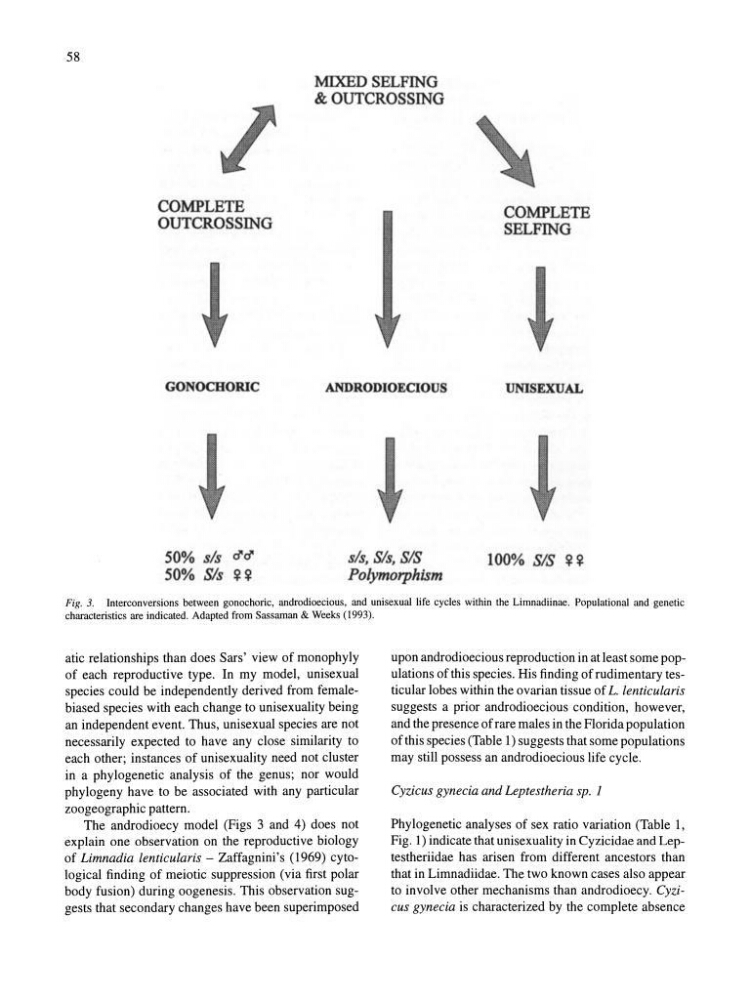
Fig. 3. Interconversions between gonochoric, androdioecious, and unisexual life cycles within the Limnadiinae. Populational and genetic
characteristics are indicated. Adapted from Sassaman & Weeks (1993).
atic relationships than does Sars' view of monophyly
of each reproductive type. In my model, unisexual
species could be independently derived from femalebiased species with each change to unisexuality being
an independent event. Thus, unisexual species are not
necessarily expected to have any close similarity to
each other; instances of unisexuality need not cluster
in a phylogenetic analysis of the genus; nor would
phylogeny have to be associated with any particular
zoogeographic pattern.
The androdioecy model (Figs 3 and 4) does not
explain one observation on the reproductive biology
of Limnadia lenticularis - Zaffagnini's (1969) cytological finding of meiotic suppression (via first polar
body fusion) during oogenesis. This observation suggests that secondary changes have been superimposed
upon androdioecious reproduction in at least some populations of this species. His finding of rudimentary testicular lobes within the ovarian tissue of L. lenticularis
suggests a prior androdioecious condition, however,
and the presence of rare males in the Florida population
of this species (Table 1) suggests that some popUlations
may still possess an androdioecious life cycle.
Cyzicus gynecia and Leptestheria sp. 1
Phylogenetic analyses of sex ratio variation (Table 1,
Fig. 1) indicate that unisexuality in Cyzicidae and Leptestheriidae has arisen from different ancestors than
that in Limnadiidae. The two known cases also appear
to involve other mechanisms than androdioecy. Cyzicus gynecia is characterized by the complete absence
MIXED SELFING
& OUTCROSSING
COMPLETE
OUTCROSSING
COMPLETE
SELFING
GONOCHORIC
ANDRODIOECIOUS
UNISEXUAL
50% sis ~~
50% Sis ~~
sis, Sis, SIS
Polymorphism
100% SIS ~ ~
Fig. 3. Interconversions between gonochoric, androdioecious, and unisexual life cycles within the Limnadiinae. Populational and genetic
characteristics are indicated. Adapted from Sassaman & Weeks (1993).
atic relationships than does Sars' view of monophyly
of each reproductive type. In my model, unisexual
species could be independently derived from femalebiased species with each change to unisexuality being
an independent event. Thus, unisexual species are not
necessarily expected to have any close similarity to
each other; instances of unisexuality need not cluster
in a phylogenetic analysis of the genus; nor would
phylogeny have to be associated with any particular
zoogeographic pattern.
The androdioecy model (Figs 3 and 4) does not
explain one observation on the reproductive biology
of Limnadia lenticularis - Zaffagnini's (1969) cytological finding of meiotic suppression (via first polar
body fusion) during oogenesis. This observation suggests that secondary changes have been superimposed
upon androdioecious reproduction in at least some populations of this species. His finding of rudimentary testicular lobes within the ovarian tissue of L. lenticularis
suggests a prior androdioecious condition, however,
and the presence of rare males in the Florida population
of this species (Table 1) suggests that some popUlations
may still possess an androdioecious life cycle.
Cyzicus gynecia and Leptestheria sp. 1
Phylogenetic analyses of sex ratio variation (Table 1,
Fig. 1) indicate that unisexuality in Cyzicidae and Leptestheriidae has arisen from different ancestors than
that in Limnadiidae. The two known cases also appear
to involve other mechanisms than androdioecy. Cyzicus gynecia is characterized by the complete absence