

52
Lynceus
Para/imnetis
Lynceiopsis
Cyclestheria
Paracyclestheria
Limnadopsium
Limnadopsis
Imnadia
Metalimnadia
Limnadia
Eulimnadia
Cyzicus
Caenestheria
Eocyzicus
Leptestheriella
Eoleptestheria
Sewellestheria
Leptestheria
Maghrebestheria
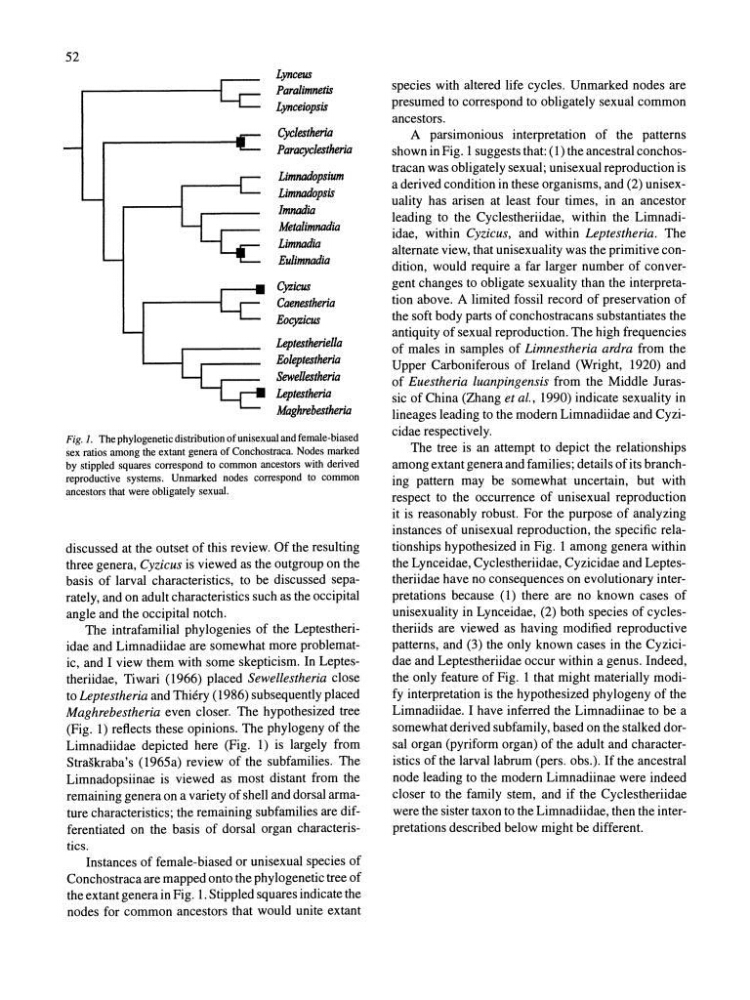
Fig. 1. The phylogenetic distribution of unisexual and female-biased
sex ratios among the extant genera of Conchostraca. Nodes marked
by stippled squares correspond to common ancestors with derived
reproductive systems. Unmarked nodes correspond to common
ancestors that were obligately sexual.
discussed at the outset of this review. Of the resulting
three genera, Cyzicus is viewed as the outgroup on the
basis of larval characteristics, to be discussed separately, and on adult characteristics such as the occipital
angle and the occipital notch.
The intrafamilial phylogenies of the Leptestheriidae and Limnadiidae are somewhat more problematic, and I view them with some skepticism. In Leptestheriidae, Tiwari (1966) placed Sewellestheria close
to Leptestheria and Thiery (1986) subsequently placed
Maghrebestheria even closer. The hypothesized tree
(Fig. 1) reflects these opinions. The phylogeny of the
Limnadiidae depicted here (Fig. 1) is largely from
Straskraba's (1965a) review of the subfamilies. The
Limnadopsiinae is viewed as most distant from the
remaining genera on a variety of shell and dorsal armature characteristics; the remaining subfamilies are differentiated on the basis of dorsal organ characteristics.
Instances of female-biased or unisexual species of
Conchostraca are mapped onto the phylogenetic tree of
the extant genera in Fig. 1. Stippled squares indicate the
nodes for common ancestors that would unite extant
species with altered life cycles. Unmarked nodes are
presumed to correspond to obligately sexual common
ancestors.
A parsimonious interpretation of the patterns
shown in Fig. 1 suggests that: (1) the ancestral conch ostracan was obligately sexual; unisexual reproduction is
a derived condition in these organisms, and (2) unisexuality has arisen at least four times, in an ancestor
leading to the Cyclestheriidae, within the Limnadiidae, within Cyzicus, and within Leptestheria. The
alternate view, that unisexuality was the primitive condition, would require a far larger number of convergent changes to obligate sexuality than the interpretation above. A limited fossil record of preservation of
the soft body parts of conchostracans substantiates the
antiquity of sexual reproduction. The high frequencies
of males in samples of Limnestheria ardra from the
Upper Carboniferous of Ireland (Wright, 1920) and
of Euestheria luanpingensis from the Middle Jurassic of China (Zhang et al., 1990) indicate sexuality in
lineages leading to the modern Limnadiidae and Cyzicidae respectively.
The tree is an attempt to depict the relationships
among extant genera and families; details of its branching pattern may be somewhat uncertain, but with
respect to the occurrence of unisexual reproduction
it is reasonably robust. For the purpose of analyzing
instances of unisexual reproduction, the specific relationships hypothesized in Fig. 1 among genera within
the Lynceidae, Cyclestheriidae, Cyzicidae and Leptestheriidae have no consequences on evolutionary interpretations because (1) there are no known cases of
unisexuality in Lynceidae, (2) both species of cyclestheriids are viewed as having modified reproductive
patterns, and (3) the only known cases in the Cyzicidae and Leptestheriidae occur within a genus. Indeed,
the only feature of Fig. 1 that might materially modify interpretation is the hypothesized phylogeny of the
Limnadiidae. I have inferred the Limnadiinae to be a
somewhat derived subfamily, based on the stalked dorsal organ (pyriform organ) of the adult and characteristics of the larval labrum (pers. obs.). If the ancestral
node leading to the modern Limnadiinae were indeed
closer to the family stem, and if the Cyclestheriidae
were the sister taxon to the Limnadiidae, then the interpretations described below might be different.
Lynceus
Para/imnetis
Lynceiopsis
Cyclestheria
Paracyclestheria
Limnadopsium
Limnadopsis
Imnadia
Metalimnadia
Limnadia
Eulimnadia
Cyzicus
Caenestheria
Eocyzicus
Leptestheriella
Eoleptestheria
Sewellestheria
Leptestheria
Maghrebestheria
Fig. 1. The phylogenetic distribution of unisexual and female-biased
sex ratios among the extant genera of Conchostraca. Nodes marked
by stippled squares correspond to common ancestors with derived
reproductive systems. Unmarked nodes correspond to common
ancestors that were obligately sexual.
discussed at the outset of this review. Of the resulting
three genera, Cyzicus is viewed as the outgroup on the
basis of larval characteristics, to be discussed separately, and on adult characteristics such as the occipital
angle and the occipital notch.
The intrafamilial phylogenies of the Leptestheriidae and Limnadiidae are somewhat more problematic, and I view them with some skepticism. In Leptestheriidae, Tiwari (1966) placed Sewellestheria close
to Leptestheria and Thiery (1986) subsequently placed
Maghrebestheria even closer. The hypothesized tree
(Fig. 1) reflects these opinions. The phylogeny of the
Limnadiidae depicted here (Fig. 1) is largely from
Straskraba's (1965a) review of the subfamilies. The
Limnadopsiinae is viewed as most distant from the
remaining genera on a variety of shell and dorsal armature characteristics; the remaining subfamilies are differentiated on the basis of dorsal organ characteristics.
Instances of female-biased or unisexual species of
Conchostraca are mapped onto the phylogenetic tree of
the extant genera in Fig. 1. Stippled squares indicate the
nodes for common ancestors that would unite extant
species with altered life cycles. Unmarked nodes are
presumed to correspond to obligately sexual common
ancestors.
A parsimonious interpretation of the patterns
shown in Fig. 1 suggests that: (1) the ancestral conch ostracan was obligately sexual; unisexual reproduction is
a derived condition in these organisms, and (2) unisexuality has arisen at least four times, in an ancestor
leading to the Cyclestheriidae, within the Limnadiidae, within Cyzicus, and within Leptestheria. The
alternate view, that unisexuality was the primitive condition, would require a far larger number of convergent changes to obligate sexuality than the interpretation above. A limited fossil record of preservation of
the soft body parts of conchostracans substantiates the
antiquity of sexual reproduction. The high frequencies
of males in samples of Limnestheria ardra from the
Upper Carboniferous of Ireland (Wright, 1920) and
of Euestheria luanpingensis from the Middle Jurassic of China (Zhang et al., 1990) indicate sexuality in
lineages leading to the modern Limnadiidae and Cyzicidae respectively.
The tree is an attempt to depict the relationships
among extant genera and families; details of its branching pattern may be somewhat uncertain, but with
respect to the occurrence of unisexual reproduction
it is reasonably robust. For the purpose of analyzing
instances of unisexual reproduction, the specific relationships hypothesized in Fig. 1 among genera within
the Lynceidae, Cyclestheriidae, Cyzicidae and Leptestheriidae have no consequences on evolutionary interpretations because (1) there are no known cases of
unisexuality in Lynceidae, (2) both species of cyclestheriids are viewed as having modified reproductive
patterns, and (3) the only known cases in the Cyzicidae and Leptestheriidae occur within a genus. Indeed,
the only feature of Fig. 1 that might materially modify interpretation is the hypothesized phylogeny of the
Limnadiidae. I have inferred the Limnadiinae to be a
somewhat derived subfamily, based on the stalked dorsal organ (pyriform organ) of the adult and characteristics of the larval labrum (pers. obs.). If the ancestral
node leading to the modern Limnadiinae were indeed
closer to the family stem, and if the Cyclestheriidae
were the sister taxon to the Limnadiidae, then the interpretations described below might be different.