

227
A
B
c
S. sealii
0.3
• ••
~
~ 0.2 ...................................... .
· . .;,.
........ ~!' ............. . !.i .. . ~~ .. '!.
. ....
c.
.~
~ 0.1 .............. o~:l··~.fL.············
.......... 4L: ..... ~. ~~····t·,i.······
0.01..----'---"'-----'---"'----'
2 . 5 . . . - - - - - - - - - - - - - - ,
2.0
:c
-;:, 1.5 ...................................... .
•
•
· .,
• .tll• ,
.If. _
•• •
•
............•............... . ,. ....... .
c.
.
" "
... ~ ",t "t" " ..
:: 1.0 .............. tf~r .~ .D ............. .
.... ~ ....................... ~ ....... .
. .
r..
.",
0.5
0.01..----'---"'-----'----'---'
2 . 0 . . - - - - - - - - - - - - - - ,
1.5
D
~
'" 1.0 ................ :1. . "'g' D················
.:::
... .. r.. 0.5
0.0 L..-_--'-_ _ "'--_--'-_ _ - ' - _ - - '
5
10
15
20
25
30
10
I ........
• :-WT
15
20
25
30 5
10
15
20
25
30
standard length (mm)
standard length (mm)
standard length (mm)
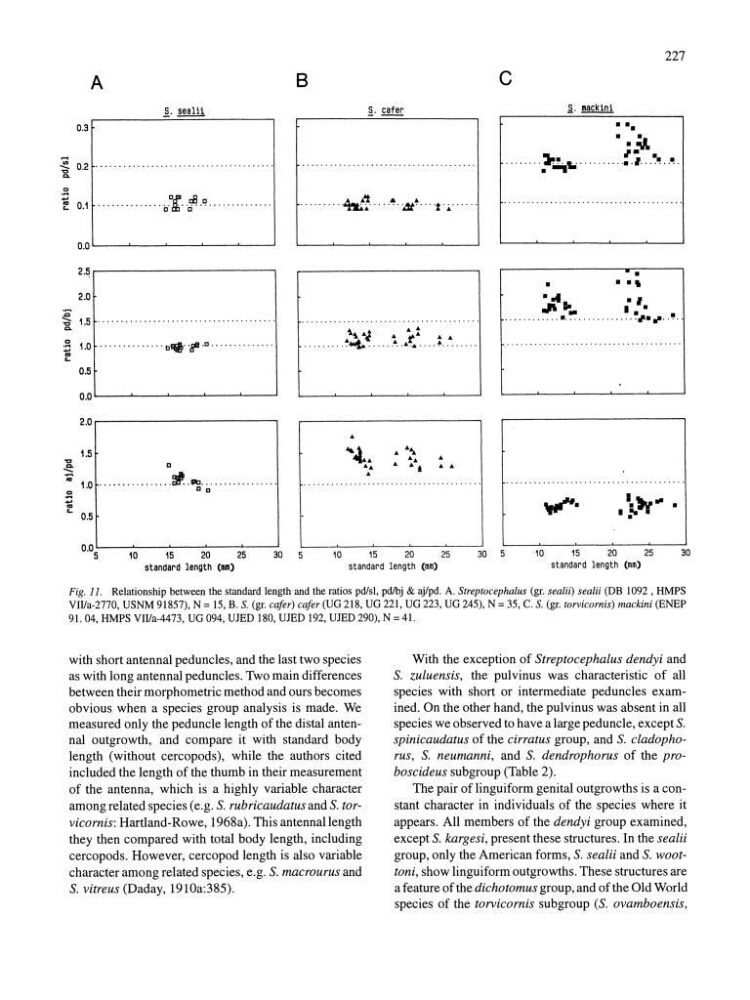
Fig. 11. Relationship between the standard length and the ratios pd/sl, pd/bj & aj/pd. A. Streptocephalus (gr. sealii) sealii (DB 1092, HMPS
VIVa-2770, USNM 91857), N = 15, B. S. (gr. cafer) cafer (UG 218, UG 221, UG 223, UG 245), N = 35, C. S. (gr. torvicornis) mackini (ENEP
91. 04, HMPS VIVa-4473, UG 094, UJED 180, UJED 192, UJED 290), N = 41.
with short antennal peduncles, and the last two species
as with long antennal peduncles. Two main differences
between their morphometric method and ours becomes
obvious when a species group analysis is made. We
measured only the peduncle length of the distal antennal outgrowth, and compare it with standard body
length (without cercopods), while the authors cited
included the length of the thumb in their measurement
of the antenna, which is a highly variable character
among related species (e.g. S. rubricaudatus and S. torvicornis: Hartland-Rowe, 1968a). This antennallength
they then compared with total body length, including
cercopods. However, cercopod length is also variable
character among related species, e.g. S. macrourus and
S. vitreus (Daday, 191Oa:385).
With the exception of Streptocephalus dendyi and
S. zuluensis, the pulvinus was characteristic of all
species with short or intermediate peduncles examined. On the other hand, the pulvinus was absent in all
species we observed to have a large peduncle, except S.
spinicaudatus of the cirratus group, and S. cladophorus, S. neumanni, and S. dendrophorus of the proboscideus subgroup (Table 2).
The pair of linguiform genital outgrowths is a constant character in individuals of the species where it
appears. All members of the dendyi group examined,
except S. kargesi, present these structures. In the sealii
group, only the American forms, S. sealii and S. woottoni, show linguiform outgrowths. These structures are
a feature of the dichotomus group, and of the Old World
species of the torvicornis subgroup (S. ovamboensis,
A
B
c
S. sealii
0.3
• ••
~
~ 0.2 ...................................... .
· . .;,.
........ ~!' ............. . !.i .. . ~~ .. '!.
. ....
c.
.~
~ 0.1 .............. o~:l··~.fL.············
.......... 4L: ..... ~. ~~····t·,i.······
0.01..----'---"'-----'---"'----'
2 . 5 . . . - - - - - - - - - - - - - - ,
2.0
:c
-;:, 1.5 ...................................... .
•
•
· .,
• .tll• ,
.If. _
•• •
•
............•............... . ,. ....... .
c.
.
" "
... ~ ",t "t" " ..
:: 1.0 .............. tf~r .~ .D ............. .
.... ~ ....................... ~ ....... .
. .
r..
.",
0.5
0.01..----'---"'-----'----'---'
2 . 0 . . - - - - - - - - - - - - - - ,
1.5
D
~
'" 1.0 ................ :1. . "'g' D················
.:::
... .. r.. 0.5
0.0 L..-_--'-_ _ "'--_--'-_ _ - ' - _ - - '
5
10
15
20
25
30
10
I ........
• :-WT
15
20
25
30 5
10
15
20
25
30
standard length (mm)
standard length (mm)
standard length (mm)
Fig. 11. Relationship between the standard length and the ratios pd/sl, pd/bj & aj/pd. A. Streptocephalus (gr. sealii) sealii (DB 1092, HMPS
VIVa-2770, USNM 91857), N = 15, B. S. (gr. cafer) cafer (UG 218, UG 221, UG 223, UG 245), N = 35, C. S. (gr. torvicornis) mackini (ENEP
91. 04, HMPS VIVa-4473, UG 094, UJED 180, UJED 192, UJED 290), N = 41.
with short antennal peduncles, and the last two species
as with long antennal peduncles. Two main differences
between their morphometric method and ours becomes
obvious when a species group analysis is made. We
measured only the peduncle length of the distal antennal outgrowth, and compare it with standard body
length (without cercopods), while the authors cited
included the length of the thumb in their measurement
of the antenna, which is a highly variable character
among related species (e.g. S. rubricaudatus and S. torvicornis: Hartland-Rowe, 1968a). This antennallength
they then compared with total body length, including
cercopods. However, cercopod length is also variable
character among related species, e.g. S. macrourus and
S. vitreus (Daday, 191Oa:385).
With the exception of Streptocephalus dendyi and
S. zuluensis, the pulvinus was characteristic of all
species with short or intermediate peduncles examined. On the other hand, the pulvinus was absent in all
species we observed to have a large peduncle, except S.
spinicaudatus of the cirratus group, and S. cladophorus, S. neumanni, and S. dendrophorus of the proboscideus subgroup (Table 2).
The pair of linguiform genital outgrowths is a constant character in individuals of the species where it
appears. All members of the dendyi group examined,
except S. kargesi, present these structures. In the sealii
group, only the American forms, S. sealii and S. woottoni, show linguiform outgrowths. These structures are
a feature of the dichotomus group, and of the Old World
species of the torvicornis subgroup (S. ovamboensis,