

12
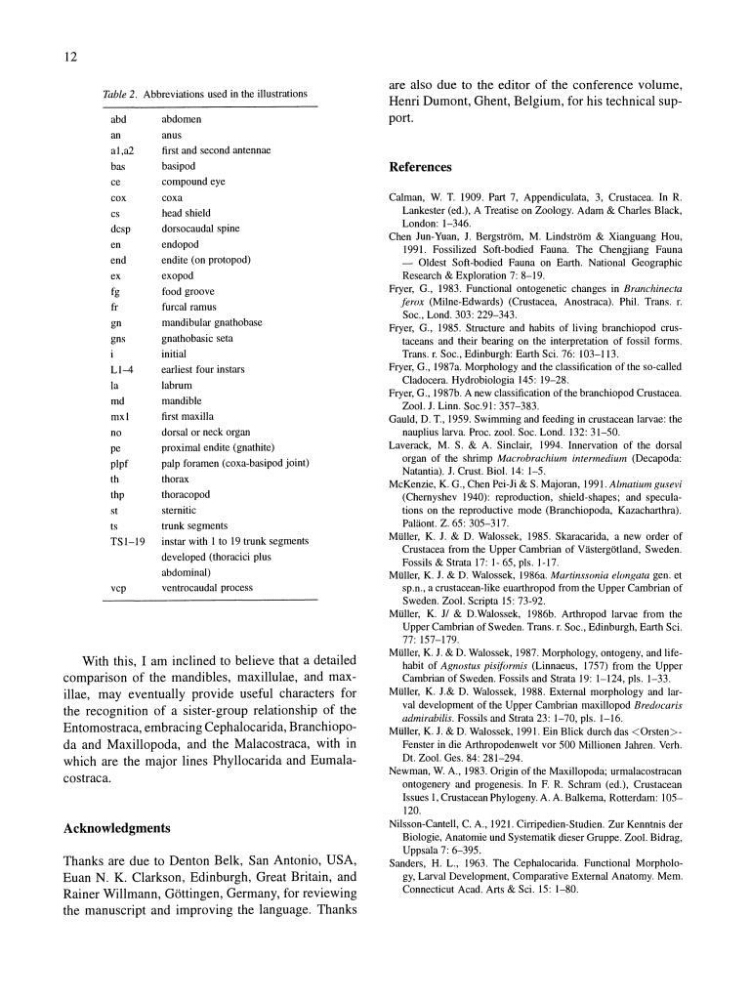
Table 2. Abbreviations used in the illustrations
abd
abdomen
an
anus
al,a2
first and second antennae
bas
basipod
ce
compound eye
cox
coxa
cs
head shield
dcsp
dorsocaudal spine
en
endopod
end
endite (on protopod)
ex
exopod
fg
food groove
fr
furcal ramus
gn
mandibular gnathobase
gns
gnathobasic seta
initial
Ll-4
earliest four instars
la
labrum
md
mandible
mxl
first maxilla
no
dorsal or neck organ
pe
proximal endite (gnathite)
plpf
palp foramen (coxa-basipod joint)
th
thorax
thp
thoracopod
st
sternitic
ts
trunk segments
TSI-19
instar with 1 to 19 trunk segments
developed (thoracici plus
abdominal)
vcp
ventrocaudal process
With this, I am inclined to believe that a detailed
comparison of the mandibles, maxillulae, and maxillae, may eventually provide useful characters for
the recognition of a sister-group relationship of the
Entomostraca, embracing Cephalocarida, Branchiopoda and Maxillopoda, and the Malacostraca, with in
which are the major lines Phyllocarida and Eumalacostraca.
Acknowledgments
Thanks are due to Denton Belk, San Antonio, USA,
Euan N. K. Clarkson, Edinburgh, Great Britain, and
Rainer Willmann, Gottingen, Germany, for reviewing
the manuscript and improving the language. Thanks
are also due to the editor of the conference volume,
Henri Dumont, Ghent, Belgium, for his technical support.
References
Calman, W. T. 1909. Part 7, Appendiculata, 3, Crustacea. In R.
Lankester (ed.), A Treatise on Zoology. Adam & Charles Black,
London: 1-346.
Chen Jun-Yuan, J. Bergstrom, M. Lindstrom & Xianguang Hou,
1991. Fossilized Soft-bodied Fauna. The Chengjiang Fauna
- Oldest Soft-bodied Fauna on Earth. National Geographic
Research & Exploration 7: 8-19.
Fryer, G., 1983. Functional ontogenetic changes in Branchinecta
ferox (Milne-Edwards) (Crustacea, Anostraca). Phil. Trans. r.
Soc., Lond. 303: 229-343.
Fryer, G., 1985. Structure and habits of living branchiopod crustaceans and their bearing on the interpretation of fossil forms.
Trans. r. Soc., Edinburgh: Earth Sci. 76: 103-113.
Fryer, G., 1987a. Morphology and the classification of the so-called
Cladocera. Hydrobiologia 145: 19-28.
Fryer, G., 1987b. A new classification ofthe branchiopod Crustacea.
Zool. J. Linn. Soc.91: 357-383.
Gauld, D. T., 1959. Swimming and feeding in crustacean larvae: the
nauplius larva. Proc. zoo!. Soc. Lond. 132: 31-50.
Laverack, M. S. & A. Sinclair, 1994. Innervation of the dorsal
organ of the shrimp Macrobrachium intermedium (Decapoda:
Natantia). J. Crust. BioI. 14: 1-5.
McKenzie, K. G., Chen Pei-Ji & S. Majoran, 1991. Almatium gusevi
(Chernyshev 1940): reproduction, shield-shapes; and speculations on the reproductive mode (Branchiopoda, Kazacharthra).
Palllont. Z. 65: 305-317.
MUller, K. J. & D. Walossek, 1985. Skaracarida, a new order of
Crustacea from the Upper Cambrian of Vlistergotland, Sweden.
Fossils & Strata 17: 1- 65, pis. 1-17.
Miiller, K. J. & D. Walossek, 1986a. Martinssonia elongata gen. et
sp.n., a crustacean-like euarthropod from the Upper Cambrian of
Sweden. Zool. Scripta 15: 73-92.
MUller, K. JI & D.walossek, 1986b. Arthropod larvae from the
Upper Cambrian of Sweden. Trans. r. Soc., Edinburgh, Earth Sci.
77: 157-179.
MUller, K. J. & D. Walossek, 1987. Morphology, ontogeny, and lifehabit of Agnostus pisif(Jrmis (Linnaeus, 1757) from the Upper
Cambrian of Sweden. Fossils and Strata 19: 1-124, pis. 1-33.
Miiller, K. J.& D. Walossek, 1988. External morphology and larval development of the Upper Cambrian maxillopod Bredocaris
admirabilis. Fossils and Strata 23: 1-70, pis. 1-16.
MUller, K. J. & D. Walossek, 1991. Ein Blick durch dasFenster in die ArthropodenweJt vor 500 Millionen Jahren. Verh.
Dt. Zoo!. Ges. 84: 281-294.
Newman, W. A., 1983. Origin of the Maxillopoda; urmalacostracan
ontogenery and progenesis. In F. R. Schram (ed.), Crustacean
Issues I, Crustacean Phylogeny. A. A. Balkema, Rotterdam: 105120.
Nilsson-Cantell, C. A., 1921. Cirripedien-Studien. Zur Kenntnis der
Biologie, Anatomie und Systematik dieser Gruppe. Zoo!. Bidrag,
Uppsala 7: 6-395.
Sanders, H. L., 1963. The Cephalocarida. Functional Morphology, Larval Development, Comparative External Anatomy. Mem.
Connecticut Acad. Arts & Sci. 15: 1-80.
Table 2. Abbreviations used in the illustrations
abd
abdomen
an
anus
al,a2
first and second antennae
bas
basipod
ce
compound eye
cox
coxa
cs
head shield
dcsp
dorsocaudal spine
en
endopod
end
endite (on protopod)
ex
exopod
fg
food groove
fr
furcal ramus
gn
mandibular gnathobase
gns
gnathobasic seta
initial
Ll-4
earliest four instars
la
labrum
md
mandible
mxl
first maxilla
no
dorsal or neck organ
pe
proximal endite (gnathite)
plpf
palp foramen (coxa-basipod joint)
th
thorax
thp
thoracopod
st
sternitic
ts
trunk segments
TSI-19
instar with 1 to 19 trunk segments
developed (thoracici plus
abdominal)
vcp
ventrocaudal process
With this, I am inclined to believe that a detailed
comparison of the mandibles, maxillulae, and maxillae, may eventually provide useful characters for
the recognition of a sister-group relationship of the
Entomostraca, embracing Cephalocarida, Branchiopoda and Maxillopoda, and the Malacostraca, with in
which are the major lines Phyllocarida and Eumalacostraca.
Acknowledgments
Thanks are due to Denton Belk, San Antonio, USA,
Euan N. K. Clarkson, Edinburgh, Great Britain, and
Rainer Willmann, Gottingen, Germany, for reviewing
the manuscript and improving the language. Thanks
are also due to the editor of the conference volume,
Henri Dumont, Ghent, Belgium, for his technical support.
References
Calman, W. T. 1909. Part 7, Appendiculata, 3, Crustacea. In R.
Lankester (ed.), A Treatise on Zoology. Adam & Charles Black,
London: 1-346.
Chen Jun-Yuan, J. Bergstrom, M. Lindstrom & Xianguang Hou,
1991. Fossilized Soft-bodied Fauna. The Chengjiang Fauna
- Oldest Soft-bodied Fauna on Earth. National Geographic
Research & Exploration 7: 8-19.
Fryer, G., 1983. Functional ontogenetic changes in Branchinecta
ferox (Milne-Edwards) (Crustacea, Anostraca). Phil. Trans. r.
Soc., Lond. 303: 229-343.
Fryer, G., 1985. Structure and habits of living branchiopod crustaceans and their bearing on the interpretation of fossil forms.
Trans. r. Soc., Edinburgh: Earth Sci. 76: 103-113.
Fryer, G., 1987a. Morphology and the classification of the so-called
Cladocera. Hydrobiologia 145: 19-28.
Fryer, G., 1987b. A new classification ofthe branchiopod Crustacea.
Zool. J. Linn. Soc.91: 357-383.
Gauld, D. T., 1959. Swimming and feeding in crustacean larvae: the
nauplius larva. Proc. zoo!. Soc. Lond. 132: 31-50.
Laverack, M. S. & A. Sinclair, 1994. Innervation of the dorsal
organ of the shrimp Macrobrachium intermedium (Decapoda:
Natantia). J. Crust. BioI. 14: 1-5.
McKenzie, K. G., Chen Pei-Ji & S. Majoran, 1991. Almatium gusevi
(Chernyshev 1940): reproduction, shield-shapes; and speculations on the reproductive mode (Branchiopoda, Kazacharthra).
Palllont. Z. 65: 305-317.
MUller, K. J. & D. Walossek, 1985. Skaracarida, a new order of
Crustacea from the Upper Cambrian of Vlistergotland, Sweden.
Fossils & Strata 17: 1- 65, pis. 1-17.
Miiller, K. J. & D. Walossek, 1986a. Martinssonia elongata gen. et
sp.n., a crustacean-like euarthropod from the Upper Cambrian of
Sweden. Zool. Scripta 15: 73-92.
MUller, K. JI & D.walossek, 1986b. Arthropod larvae from the
Upper Cambrian of Sweden. Trans. r. Soc., Edinburgh, Earth Sci.
77: 157-179.
MUller, K. J. & D. Walossek, 1987. Morphology, ontogeny, and lifehabit of Agnostus pisif(Jrmis (Linnaeus, 1757) from the Upper
Cambrian of Sweden. Fossils and Strata 19: 1-124, pis. 1-33.
Miiller, K. J.& D. Walossek, 1988. External morphology and larval development of the Upper Cambrian maxillopod Bredocaris
admirabilis. Fossils and Strata 23: 1-70, pis. 1-16.
MUller, K. J. & D. Walossek, 1991. Ein Blick durch das
Dt. Zoo!. Ges. 84: 281-294.
Newman, W. A., 1983. Origin of the Maxillopoda; urmalacostracan
ontogenery and progenesis. In F. R. Schram (ed.), Crustacean
Issues I, Crustacean Phylogeny. A. A. Balkema, Rotterdam: 105120.
Nilsson-Cantell, C. A., 1921. Cirripedien-Studien. Zur Kenntnis der
Biologie, Anatomie und Systematik dieser Gruppe. Zoo!. Bidrag,
Uppsala 7: 6-395.
Sanders, H. L., 1963. The Cephalocarida. Functional Morphology, Larval Development, Comparative External Anatomy. Mem.
Connecticut Acad. Arts & Sci. 15: 1-80.