

Seasonal Patterns
AUTUMN 2
Opiliones
Homoptera
Larvae
Carabldae
Curcullonldae
AUTUMN 1
Araneae
Scolopedromorpha
Dlplura
Formlcldae
Geophilomorpha
Lucanldae
lsopoda
staphyllnldae
Uthoblomorpha
~
Heteroptera
Hlste~dae
43
~Idae
Chrysomelidae
Scarabeidae
Scorplones
SUMMER
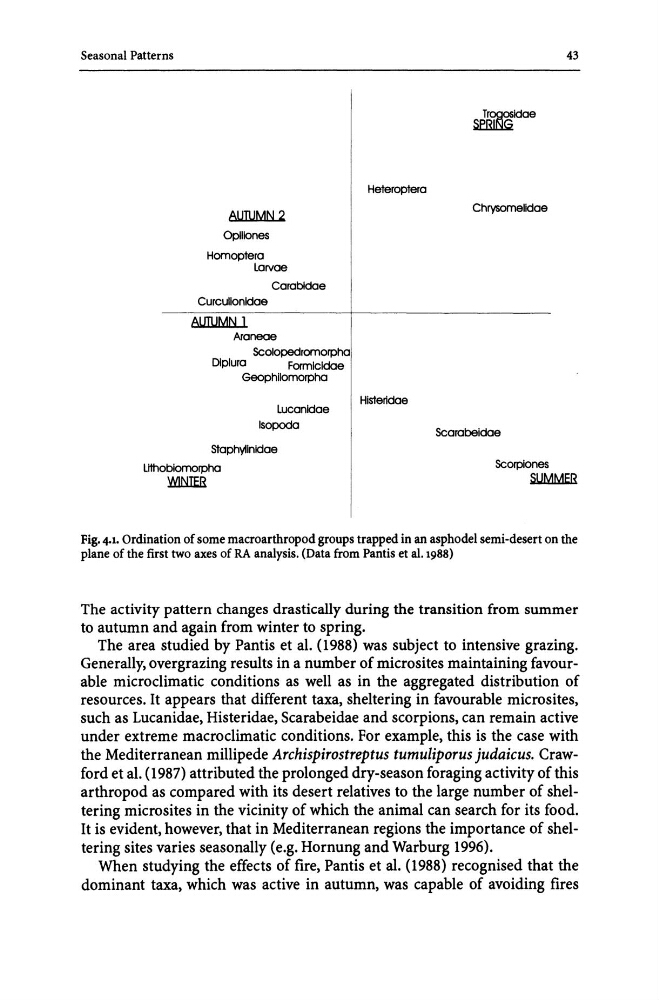
Fig. 4.1. Ordination of some macroarthropod groups trapped in an asphodel semi-desert on the
plane of the first two axes of RA analysis. (Data from Pantis et al. 1988)
The activity pattern changes drastically during the transition from summer
to autumn and again from winter to spring.
The area studied by Pantis et al. (1988) was subject to intensive grazing.
Generally, overgrazing results in a number of microsites maintaining favourable microc1imatic conditions as well as in the aggregated distribution of
resources. It appears that different taxa, sheltering in favourable micro sites,
such as Lucanidae, Histeridae, Scarabeidae and scorpions, can remain active
under extreme macroc1imatic conditions. For example, this is the case with
the Mediterranean millipede Archispirostreptus tumuliporus judaicus. Crawford et al. (1987) attributed the prolonged dry-season foraging activity of this
arthropod as compared with its desert relatives to the large number of sheltering microsites in the vicinity of which the animal can search for its food.
It is evident, however, that in Mediterranean regions the importance of sheltering sites varies seasonally (e.g. Hornung and Warburg 1996).
When studying the effects of fire, Pantis et al. (1988) recognised that the
dominant taxa, which was active in autumn, was capable of avoiding fires
AUTUMN 2
Opiliones
Homoptera
Larvae
Carabldae
Curcullonldae
AUTUMN 1
Araneae
Scolopedromorpha
Dlplura
Formlcldae
Geophilomorpha
Lucanldae
lsopoda
staphyllnldae
Uthoblomorpha
~
Heteroptera
Hlste~dae
43
~Idae
Chrysomelidae
Scarabeidae
Scorplones
SUMMER
Fig. 4.1. Ordination of some macroarthropod groups trapped in an asphodel semi-desert on the
plane of the first two axes of RA analysis. (Data from Pantis et al. 1988)
The activity pattern changes drastically during the transition from summer
to autumn and again from winter to spring.
The area studied by Pantis et al. (1988) was subject to intensive grazing.
Generally, overgrazing results in a number of microsites maintaining favourable microc1imatic conditions as well as in the aggregated distribution of
resources. It appears that different taxa, sheltering in favourable micro sites,
such as Lucanidae, Histeridae, Scarabeidae and scorpions, can remain active
under extreme macroc1imatic conditions. For example, this is the case with
the Mediterranean millipede Archispirostreptus tumuliporus judaicus. Crawford et al. (1987) attributed the prolonged dry-season foraging activity of this
arthropod as compared with its desert relatives to the large number of sheltering microsites in the vicinity of which the animal can search for its food.
It is evident, however, that in Mediterranean regions the importance of sheltering sites varies seasonally (e.g. Hornung and Warburg 1996).
When studying the effects of fire, Pantis et al. (1988) recognised that the
dominant taxa, which was active in autumn, was capable of avoiding fires