
Index
261
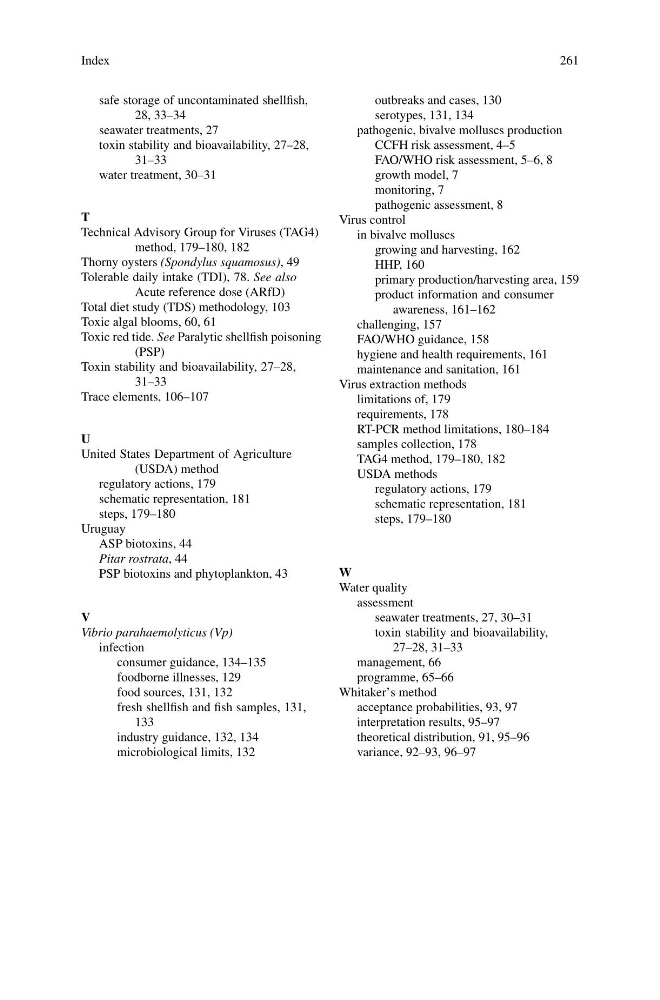
safe storage of uncontaminated shellfish,
28, 33–34
seawater treatments, 27
toxin stability and bioavailability, 27–28,
31–33
water treatment, 30–31
T
Technical Advisory Group for Viruses (TAG4)
method, 179–180, 182
Thorny oysters (Spondylus squamosus), 49
Tolerable daily intake (TDI), 78. See also
Acute reference dose (ARfD)
Total diet study (TDS) methodology, 103
Toxic algal blooms, 60, 61
Toxic red tide. See Paralytic shellfish poisoning
(PSP)
Toxin stability and bioavailability, 27–28,
31–33
Trace elements, 106–107
U
United States Department of Agriculture
(USDA) method
regulatory actions, 179
schematic representation, 181
steps, 179–180
Uruguay
ASP biotoxins, 44
Pitar rostrata, 44
PSP biotoxins and phytoplankton, 43
V
Vibrio parahaemolyticus (Vp)
infection
consumer guidance, 134–135
foodborne illnesses, 129
food sources, 131, 132
fresh shellfish and fish samples, 131,
133
industry guidance, 132, 134
microbiological limits, 132
outbreaks and cases, 130
serotypes, 131, 134
pathogenic, bivalve molluscs production
CCFH risk assessment, 4–5
FAO/WHO risk assessment, 5–6, 8
growth model, 7
monitoring, 7
pathogenic assessment, 8
Virus control
in bivalve molluscs
growing and harvesting, 162
HHP, 160
primary production/harvesting area, 159
product information and consumer
awareness, 161–162
challenging, 157
FAO/WHO guidance, 158
hygiene and health requirements, 161
maintenance and sanitation, 161
Virus extraction methods
limitations of, 179
requirements, 178
RT-PCR method limitations, 180–184
samples collection, 178
TAG4 method, 179–180, 182
USDA methods
regulatory actions, 179
schematic representation, 181
steps, 179–180
W
Water quality
assessment
seawater treatments, 27, 30–31
toxin stability and bioavailability,
27–28, 31–33
management, 66
programme, 65–66
Whitaker’s method
acceptance probabilities, 93, 97
interpretation results, 95–97
theoretical distribution, 91, 95–96
variance, 92–93, 96–97
261
safe storage of uncontaminated shellfish,
28, 33–34
seawater treatments, 27
toxin stability and bioavailability, 27–28,
31–33
water treatment, 30–31
T
Technical Advisory Group for Viruses (TAG4)
method, 179–180, 182
Thorny oysters (Spondylus squamosus), 49
Tolerable daily intake (TDI), 78. See also
Acute reference dose (ARfD)
Total diet study (TDS) methodology, 103
Toxic algal blooms, 60, 61
Toxic red tide. See Paralytic shellfish poisoning
(PSP)
Toxin stability and bioavailability, 27–28,
31–33
Trace elements, 106–107
U
United States Department of Agriculture
(USDA) method
regulatory actions, 179
schematic representation, 181
steps, 179–180
Uruguay
ASP biotoxins, 44
Pitar rostrata, 44
PSP biotoxins and phytoplankton, 43
V
Vibrio parahaemolyticus (Vp)
infection
consumer guidance, 134–135
foodborne illnesses, 129
food sources, 131, 132
fresh shellfish and fish samples, 131,
133
industry guidance, 132, 134
microbiological limits, 132
outbreaks and cases, 130
serotypes, 131, 134
pathogenic, bivalve molluscs production
CCFH risk assessment, 4–5
FAO/WHO risk assessment, 5–6, 8
growth model, 7
monitoring, 7
pathogenic assessment, 8
Virus control
in bivalve molluscs
growing and harvesting, 162
HHP, 160
primary production/harvesting area, 159
product information and consumer
awareness, 161–162
challenging, 157
FAO/WHO guidance, 158
hygiene and health requirements, 161
maintenance and sanitation, 161
Virus extraction methods
limitations of, 179
requirements, 178
RT-PCR method limitations, 180–184
samples collection, 178
TAG4 method, 179–180, 182
USDA methods
regulatory actions, 179
schematic representation, 181
steps, 179–180
W
Water quality
assessment
seawater treatments, 27, 30–31
toxin stability and bioavailability,
27–28, 31–33
management, 66
programme, 65–66
Whitaker’s method
acceptance probabilities, 93, 97
interpretation results, 95–97
theoretical distribution, 91, 95–96
variance, 92–93, 96–97
Précédent