

14 Bioaccumulation and Removal Dynamics of Murine Norovirus in Manila Clams. . .
167
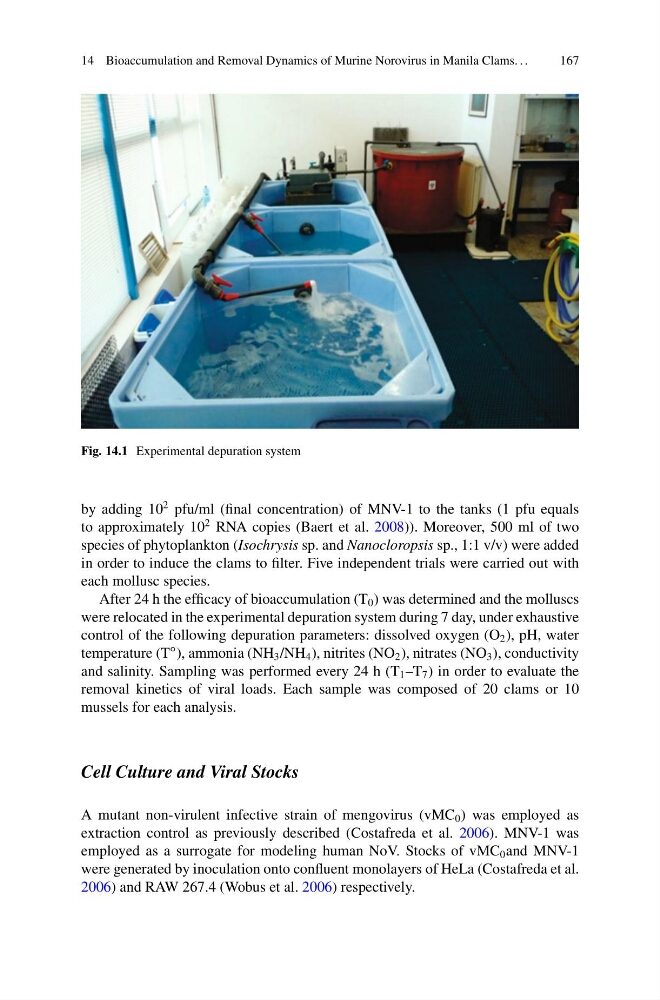
Fig. 14.1 Experimental depuration system
by adding 10
2 pfu/ml (final concentration) of MNV-1 to the tanks (1 pfu equals
to approximately 10
2 RNA copies (Baert et al. 2008)). Moreover, 500 ml of two
species of phytoplankton (Isochrysis sp. and Nanocloropsis sp., 1:1 v/v) were added
in order to induce the clams to filter. Five independent trials were carried out with
each mollusc species.
After 24 h the efficacy of bioaccumulation (T 0 ) was determined and the molluscs
were relocated in the experimental depuration system during 7 day, under exhaustive
control of the following depuration parameters: dissolved oxygen (O 2 ), pH, water
temperature (T
ı ), ammonia (NH 3 /NH 4 ), nitrites (NO 2 ), nitrates (NO 3 ), conductivity
and salinity. Sampling was performed every 24 h (T 1 –T 7 ) in order to evaluate the
removal kinetics of viral loads. Each sample was composed of 20 clams or 10
mussels for each analysis.
Cell Culture and Viral Stocks
A mutant non-virulent infective strain of mengovirus (vMC 0 ) was employed as
extraction control as previously described (Costafreda et al. 2006). MNV-1 was
employed as a surrogate for modeling human NoV. Stocks of vMC 0 and MNV-1
were generated by inoculation onto confluent monolayers of HeLa (Costafreda et al.
2006) and RAW 267.4 (Wobus et al. 2006) respectively.
167
Fig. 14.1 Experimental depuration system
by adding 10
2 pfu/ml (final concentration) of MNV-1 to the tanks (1 pfu equals
to approximately 10
2 RNA copies (Baert et al. 2008)). Moreover, 500 ml of two
species of phytoplankton (Isochrysis sp. and Nanocloropsis sp., 1:1 v/v) were added
in order to induce the clams to filter. Five independent trials were carried out with
each mollusc species.
After 24 h the efficacy of bioaccumulation (T 0 ) was determined and the molluscs
were relocated in the experimental depuration system during 7 day, under exhaustive
control of the following depuration parameters: dissolved oxygen (O 2 ), pH, water
temperature (T
ı ), ammonia (NH 3 /NH 4 ), nitrites (NO 2 ), nitrates (NO 3 ), conductivity
and salinity. Sampling was performed every 24 h (T 1 –T 7 ) in order to evaluate the
removal kinetics of viral loads. Each sample was composed of 20 clams or 10
mussels for each analysis.
Cell Culture and Viral Stocks
A mutant non-virulent infective strain of mengovirus (vMC 0 ) was employed as
extraction control as previously described (Costafreda et al. 2006). MNV-1 was
employed as a surrogate for modeling human NoV. Stocks of vMC 0 and MNV-1
were generated by inoculation onto confluent monolayers of HeLa (Costafreda et al.
2006) and RAW 267.4 (Wobus et al. 2006) respectively.