

water Eastern Atlantic’’ were the patterns best represented, suggesting that the
asteroid fauna in the Mexican Caribbean includes an important group of tropical
species that have extended towards the north in zones of colder waters like the
northern Gulf of Mexico and east coast of USA. Work by Caballero-Ochoa and
Laguarda-Figueras (2010) used Parsimony Analysis of Endemism (PAE) to analyze the holothurian faunal affinities between the provinces of the Mexican tropical
Pacific Ocean.
They found that the Cortes Province was the most diverse, including 62
holothurian species. The Panamic Province was not closely related with the
Mexican, Cortes, Californian, Clipperton, Revillagigedo and Islas Marianas
Provinces. Another important work is that of Hernandez-Diaz (2011) who also
used PAE method to solve the relationship between echinoderms of the reefs of
Yucatan. She found a nested pattern of distribution, which suggests they all belong
to the same zoogeographic region with faunal elements from the Gulf of Mexico
and Caribbean Sea.
2.3.6 Ethnobiology of Echinoderms in Mexico
Animal remains have been part of the archaeological discoveries around the world
and are present in different cultures. Ethnobiology is defined as the study of the
past and present interrelationships between human cultures and the animals in their
environment. It includes classification and naming of zoological forms, cultural
knowledge and use of wild and domestic animals (Seixas and Begossi 2001).
In 1978, the Aztec Great Temple ruins were discovered beneath the central
plaza of Mexico City. Over the next few decades, this sacred structure was
excavated and studied, revealing a wealth of information about Aztec religious
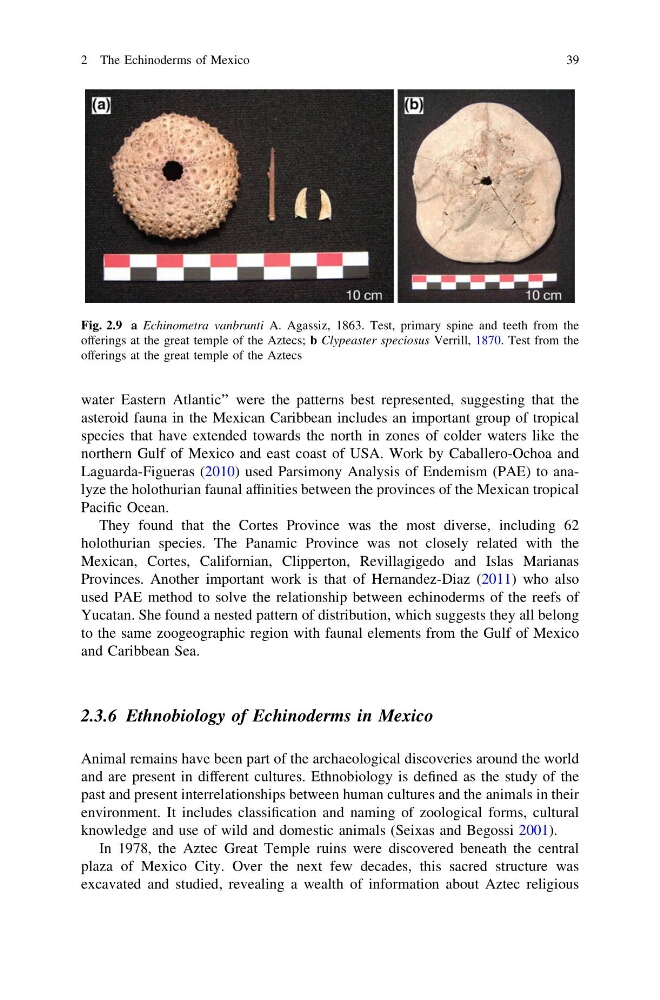
Fig. 2.9 a Echinometra vanbrunti A. Agassiz, 1863. Test, primary spine and teeth from the
offerings at the great temple of the Aztecs; b Clypeaster speciosus Verrill, 1870. Test from the
offerings at the great temple of the Aztecs
2 The Echinoderms of Mexico
39
asteroid fauna in the Mexican Caribbean includes an important group of tropical
species that have extended towards the north in zones of colder waters like the
northern Gulf of Mexico and east coast of USA. Work by Caballero-Ochoa and
Laguarda-Figueras (2010) used Parsimony Analysis of Endemism (PAE) to analyze the holothurian faunal affinities between the provinces of the Mexican tropical
Pacific Ocean.
They found that the Cortes Province was the most diverse, including 62
holothurian species. The Panamic Province was not closely related with the
Mexican, Cortes, Californian, Clipperton, Revillagigedo and Islas Marianas
Provinces. Another important work is that of Hernandez-Diaz (2011) who also
used PAE method to solve the relationship between echinoderms of the reefs of
Yucatan. She found a nested pattern of distribution, which suggests they all belong
to the same zoogeographic region with faunal elements from the Gulf of Mexico
and Caribbean Sea.
2.3.6 Ethnobiology of Echinoderms in Mexico
Animal remains have been part of the archaeological discoveries around the world
and are present in different cultures. Ethnobiology is defined as the study of the
past and present interrelationships between human cultures and the animals in their
environment. It includes classification and naming of zoological forms, cultural
knowledge and use of wild and domestic animals (Seixas and Begossi 2001).
In 1978, the Aztec Great Temple ruins were discovered beneath the central
plaza of Mexico City. Over the next few decades, this sacred structure was
excavated and studied, revealing a wealth of information about Aztec religious
Fig. 2.9 a Echinometra vanbrunti A. Agassiz, 1863. Test, primary spine and teeth from the
offerings at the great temple of the Aztecs; b Clypeaster speciosus Verrill, 1870. Test from the
offerings at the great temple of the Aztecs
2 The Echinoderms of Mexico
39