

Bryan et al. (1996) studied the antibacterial and antifouling activity of the
ethanolic extracts of 20 species of echinoderms (11 asteroids, three holothuroids,
three ophiuroids and one crinoid) collected in the Gulf of Mexico. They used
cultures of Deleya marina and Alteromonas luteo-violacea for antibacterial assays,
and larvae of the barnacle Balanus amphirite and the bryozoan Bugula neritina in
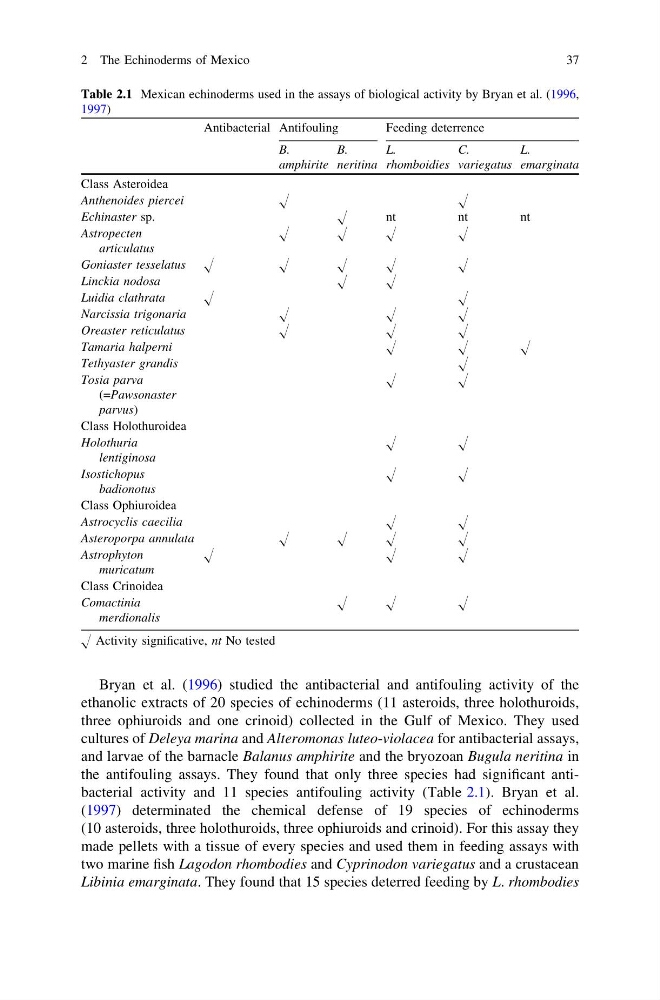
the antifouling assays. They found that only three species had significant antibacterial activity and 11 species antifouling activity (Table 2.1). Bryan et al.
(1997) determinated the chemical defense of 19 species of echinoderms
(10 asteroids, three holothuroids, three ophiuroids and crinoid). For this assay they
made pellets with a tissue of every species and used them in feeding assays with
two marine fish Lagodon rhombodies and Cyprinodon variegatus and a crustacean
Libinia emarginata. They found that 15 species deterred feeding by L. rhombodies
Table 2.1 Mexican echinoderms used in the assays of biological activity by Bryan et al. (1996,
1997)
Antibacterial Antifouling
Feeding deterrence
B.
amphirite
B.
neritina
L.
rhomboidies
C.
variegatus
L.
emarginata
Class Asteroidea
Anthenoides piercei
H
H
Echinaster sp.
H
nt
nt
nt
Astropecten
articulatus
H
H
H
H
Goniaster tesselatus H
H
H
H
H
Linckia nodosa
H
H
Luidia clathrata
H
H
Narcissia trigonaria
H
H
H
Oreaster reticulatus
H
H
H
Tamaria halperni
H
H
H
Tethyaster grandis
H
Tosia parva
(=Pawsonaster
parvus)
H
H
Class Holothuroidea
Holothuria
lentiginosa
H
H
Isostichopus
badionotus
H
H
Class Ophiuroidea
Astrocyclis caecilia
H
H
Asteroporpa annulata
H
H
H
H
Astrophyton
muricatum
H
H
H
Class Crinoidea
Comactinia
merdionalis
H
H
H
H Activity significative, nt No tested
2 The Echinoderms of Mexico
37
ethanolic extracts of 20 species of echinoderms (11 asteroids, three holothuroids,
three ophiuroids and one crinoid) collected in the Gulf of Mexico. They used
cultures of Deleya marina and Alteromonas luteo-violacea for antibacterial assays,
and larvae of the barnacle Balanus amphirite and the bryozoan Bugula neritina in
the antifouling assays. They found that only three species had significant antibacterial activity and 11 species antifouling activity (Table 2.1). Bryan et al.
(1997) determinated the chemical defense of 19 species of echinoderms
(10 asteroids, three holothuroids, three ophiuroids and crinoid). For this assay they
made pellets with a tissue of every species and used them in feeding assays with
two marine fish Lagodon rhombodies and Cyprinodon variegatus and a crustacean
Libinia emarginata. They found that 15 species deterred feeding by L. rhombodies
Table 2.1 Mexican echinoderms used in the assays of biological activity by Bryan et al. (1996,
1997)
Antibacterial Antifouling
Feeding deterrence
B.
amphirite
B.
neritina
L.
rhomboidies
C.
variegatus
L.
emarginata
Class Asteroidea
Anthenoides piercei
H
H
Echinaster sp.
H
nt
nt
nt
Astropecten
articulatus
H
H
H
H
Goniaster tesselatus H
H
H
H
H
Linckia nodosa
H
H
Luidia clathrata
H
H
Narcissia trigonaria
H
H
H
Oreaster reticulatus
H
H
H
Tamaria halperni
H
H
H
Tethyaster grandis
H
Tosia parva
(=Pawsonaster
parvus)
H
H
Class Holothuroidea
Holothuria
lentiginosa
H
H
Isostichopus
badionotus
H
H
Class Ophiuroidea
Astrocyclis caecilia
H
H
Asteroporpa annulata
H
H
H
H
Astrophyton
muricatum
H
H
H
Class Crinoidea
Comactinia
merdionalis
H
H
H
H Activity significative, nt No tested
2 The Echinoderms of Mexico
37