

Echinometra spp. than for L. variegatus. The reproductive period of the whitespined urchin, T. ventricosus in not very synchronous like the other three species
and also contrasts by a peak in the coolest time of the year. Tripneustes ventricosus
displayed gonad indices between 1.2 (July 1982 and June 1983) and 4.4 (May
1982) (Cameron 1986).
All four of these species displayed similar reproductive strategies; they all
broadcast gametes which develop into feeding pelagic larvae. Cameron (1986)
found that at 23–25 °C L. variegatus, E. lucunter and E. viridis achieve metamorphosis in about two weeks and T. ventricosus in about four weeks (Lewis
1958). The seasonal larval occurrence of L. variegatus and Echinometra spp.
coincides with their differences in synchrony. Lytechinus variegatus plutei were
present in all samples from the spring to fall 1982 and 1983. Plutei of Echinometra
spp. was only present during the fall reproductive peak. Larval abundances of
L. variegatus, E. viridis, and E. lucunter co-varied with the reproductive period.
Tripneustes ventricosus plutei were only found during August and September
1982. The larval period of T. ventricosus is twice as long as the other three species.
Summer currents may carry larvae of L. variegatus offshore followed by a later
return of mature larvae. Larvae of the other three species may be present in the
water column at a time when retention is favorable.
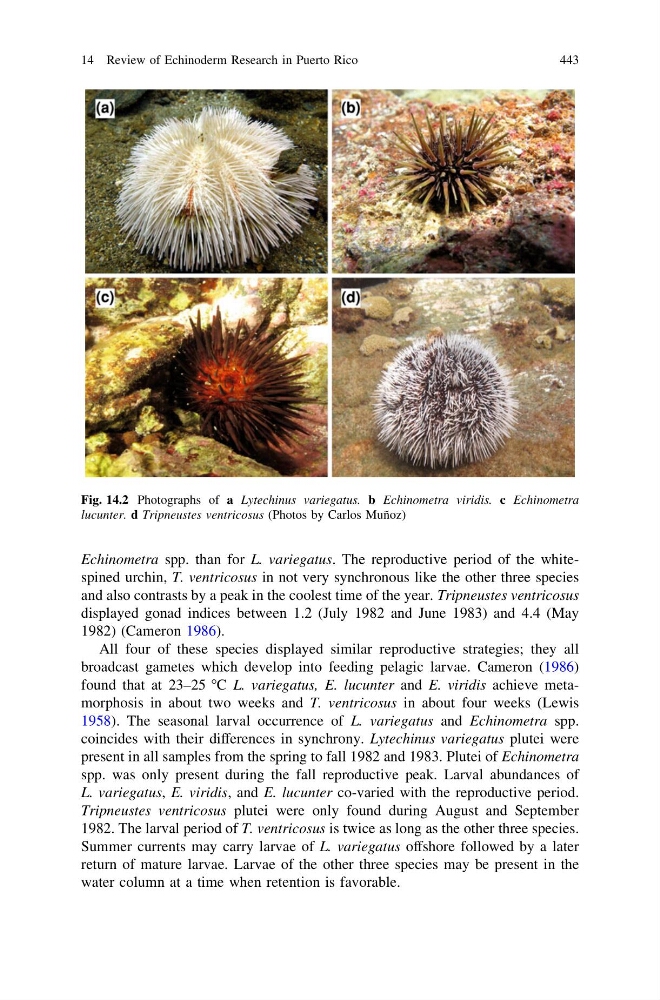
Fig. 14.2 Photographs of a Lytechinus variegatus. b Echinometra viridis. c Echinometra
lucunter. d Tripneustes ventricosus (Photos by Carlos Muñoz)
14 Review of Echinoderm Research in Puerto Rico
443
and also contrasts by a peak in the coolest time of the year. Tripneustes ventricosus
displayed gonad indices between 1.2 (July 1982 and June 1983) and 4.4 (May
1982) (Cameron 1986).
All four of these species displayed similar reproductive strategies; they all
broadcast gametes which develop into feeding pelagic larvae. Cameron (1986)
found that at 23–25 °C L. variegatus, E. lucunter and E. viridis achieve metamorphosis in about two weeks and T. ventricosus in about four weeks (Lewis
1958). The seasonal larval occurrence of L. variegatus and Echinometra spp.
coincides with their differences in synchrony. Lytechinus variegatus plutei were
present in all samples from the spring to fall 1982 and 1983. Plutei of Echinometra
spp. was only present during the fall reproductive peak. Larval abundances of
L. variegatus, E. viridis, and E. lucunter co-varied with the reproductive period.
Tripneustes ventricosus plutei were only found during August and September
1982. The larval period of T. ventricosus is twice as long as the other three species.
Summer currents may carry larvae of L. variegatus offshore followed by a later
return of mature larvae. Larvae of the other three species may be present in the
water column at a time when retention is favorable.
Fig. 14.2 Photographs of a Lytechinus variegatus. b Echinometra viridis. c Echinometra
lucunter. d Tripneustes ventricosus (Photos by Carlos Muñoz)
14 Review of Echinoderm Research in Puerto Rico
443