

(1917, 1920b) described two viviparous comatulids, Phrixometra nutrix and
Isometra vivipara, from the family Antedonidae. These species are the only two
crinoids reported until now from Argentina.
Asteroidea
The systematics and distribution of the class Asteroidea were first studied by
Bernasconi (1934, 1935, 1937, 1941a, 1943, 1961, 1962a, b, 1963, 1964a, b, c,
1965a, 1966a, 1972, 1973a, 1980) and later by Tablado (1982) and Tablado and
Maytia (1988). These authors reported a total of 58 species of sea stars inhabiting
the region. Twenty-eight species are found exclusively along the Magellanic
Province, 13 along the Argentine Province, while the others are found in both
provinces. Six orders are represented: Paxillosida, Notomyotida, Valvatida,
Velatida, Spinulosida and Forcipulatida. The order Valvatida is the most numerous
one, with 19 species. Forcipulatida has 14 species and Paxillosida has 11 species.
In the order Forcipulatida, Hernández and Tablado (1985) identified three species
of the genus Anasterias: A. antarctica, A. minuta and A. pedicellaris, off Ría
Deseado (*48°S). However, according to Clark and Downey (1992) this remains
to be settled. Although they recognized that there are morphologically distinct
forms among the genus Anasterias, the sea stars can belong to different species or
they may comprise a very variable species. In the same order, Allostichaster has
one representative in Argentine waters. According to Clark and Downey (1992)
this species is a synonym of Allostichaster capensis from South African waters,
but this is not certain. The order Velatida is represented by nine species, followed
by Spinulosida and Notomyotida with three and two species, respectively.
Ophiuroidea
Knowledge about diversity of brittle stars from Argentina is based on Bernasconi
and D’Agostino (1971, 1974, 1977). Thirty-two species of brittle stars have been
reported from the region. Only one is an endemic species, Amphilepis sanmatiensis
from the San Matías gulf (Bernasconi and D’Agostino 1975). The order Euryalida
is represented by the family Gorgonocephalidae with two species,
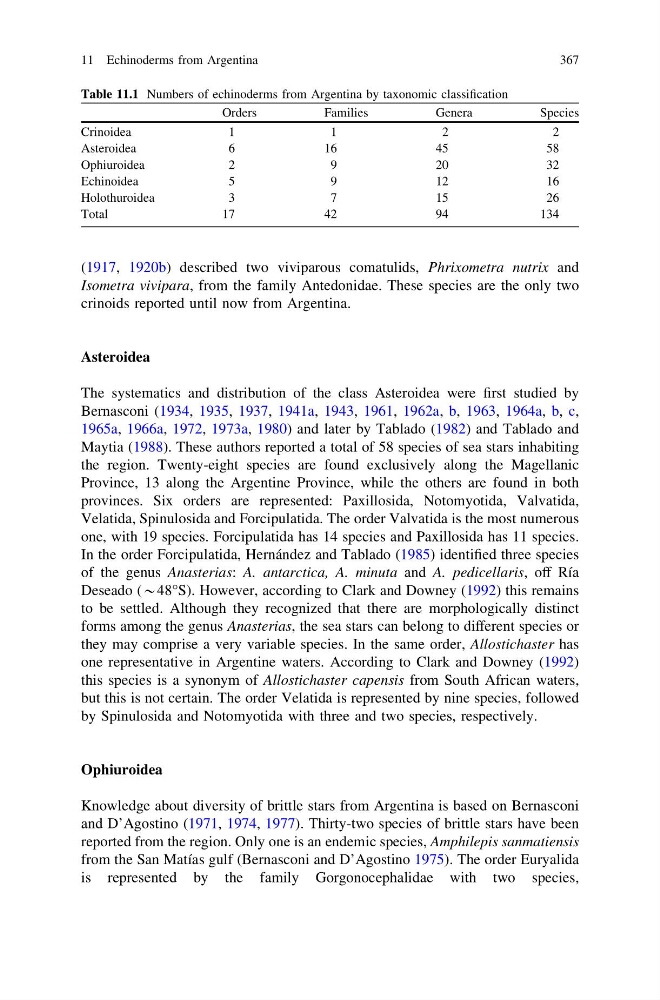
Table 11.1 Numbers of echinoderms from Argentina by taxonomic classification
Orders
Families
Genera
Species
Crinoidea
1
1
2
2
Asteroidea
6
16
45
58
Ophiuroidea
2
9
20
32
Echinoidea
5
9
12
16
Holothuroidea
3
7
15
26
Total
17
42
94
134
11 Echinoderms from Argentina
367
Isometra vivipara, from the family Antedonidae. These species are the only two
crinoids reported until now from Argentina.
Asteroidea
The systematics and distribution of the class Asteroidea were first studied by
Bernasconi (1934, 1935, 1937, 1941a, 1943, 1961, 1962a, b, 1963, 1964a, b, c,
1965a, 1966a, 1972, 1973a, 1980) and later by Tablado (1982) and Tablado and
Maytia (1988). These authors reported a total of 58 species of sea stars inhabiting
the region. Twenty-eight species are found exclusively along the Magellanic
Province, 13 along the Argentine Province, while the others are found in both
provinces. Six orders are represented: Paxillosida, Notomyotida, Valvatida,
Velatida, Spinulosida and Forcipulatida. The order Valvatida is the most numerous
one, with 19 species. Forcipulatida has 14 species and Paxillosida has 11 species.
In the order Forcipulatida, Hernández and Tablado (1985) identified three species
of the genus Anasterias: A. antarctica, A. minuta and A. pedicellaris, off Ría
Deseado (*48°S). However, according to Clark and Downey (1992) this remains
to be settled. Although they recognized that there are morphologically distinct
forms among the genus Anasterias, the sea stars can belong to different species or
they may comprise a very variable species. In the same order, Allostichaster has
one representative in Argentine waters. According to Clark and Downey (1992)
this species is a synonym of Allostichaster capensis from South African waters,
but this is not certain. The order Velatida is represented by nine species, followed
by Spinulosida and Notomyotida with three and two species, respectively.
Ophiuroidea
Knowledge about diversity of brittle stars from Argentina is based on Bernasconi
and D’Agostino (1971, 1974, 1977). Thirty-two species of brittle stars have been
reported from the region. Only one is an endemic species, Amphilepis sanmatiensis
from the San Matías gulf (Bernasconi and D’Agostino 1975). The order Euryalida
is represented by the family Gorgonocephalidae with two species,
Table 11.1 Numbers of echinoderms from Argentina by taxonomic classification
Orders
Families
Genera
Species
Crinoidea
1
1
2
2
Asteroidea
6
16
45
58
Ophiuroidea
2
9
20
32
Echinoidea
5
9
12
16
Holothuroidea
3
7
15
26
Total
17
42
94
134
11 Echinoderms from Argentina
367