

and Ophionereididae are only reported for a single ecoregion. Records of ophiuroids show that 70.91 % of the species are found in shallow waters between 0 and
50 m deep, with the least number of reports at depths between 200 and 499 m
(3.64 %). Most of the reported families of ophiuroids in Venezuela are only found
at depths between 0 and 50 m (five families), while the Ophiactidae, Ophiolepididae and Ophiuridae are reported at depths greater than 500 m.
The Class Echinoidea is represented by 50 species, 38 genera, 22 families and
10 orders, with most members in the Eastern Upwelling (26.19 %), Oceanic
Islands (21.43 %) and Central Coast (13.49 %) ecoregions, and no records in the
Oceanic area region. The Clypeasteridae, Brissidae and Schizasteridae showed a
wider distribution along the coast, with representatives in eleven, eight and seven
ecoregions, respectively. Six families (Aeropsidae, Cassidulidae, Echinoneidae,
Echinidae, Hemiasteridae and Loveniidae) are reported for a single ecoregion, the
Oceanic Islands ecoregion for the first three and the remaining in the Eastern
Upwelling ecoregion. Most echinoids (45.76 %) in Venezuela occupy shallow
waters, between 0 and 50 m deep, followed by the range 51–199 m (42.37 %).
The echinoid families reported in this study are only present at most in two depth
ranges, most from 0 to 199 m (eight families). Only the Echinothuriidae was found
in two depth ranges, 200–500 m and beyond 500 m. The other families (13) were
only present in one depth range. The Echinometridae, Echinoneidae, Mellitidae
and Scutellidae, are reported between 0 and 50 m deep, while the Aeropsidae,
Aspidodiadematidae, Hemiasteridae, Loveniidae and Saleniidae were only found
in depths greater than 500 m.
The Class Holothuroidea consisted of 53 species, 34 genera, 12 families and
four orders, with most members in the Eastern upwelling (46.58 %) and Oceanic
Islands (30.14 %) ecoregions. Members of this class have not been found in the
Cariaco Trench, Central Coast, Tocuyo, Golfete de Coro and Golfo de Venezuela
ecoregions. The Family Holothuridae shows the widest distribution along the coast
(being found in five ecoregions), while the Chiridotidae, Deimatidae, Molpadiidae,
Psychropotidae and Psolidae were only present in a single one. Most records of
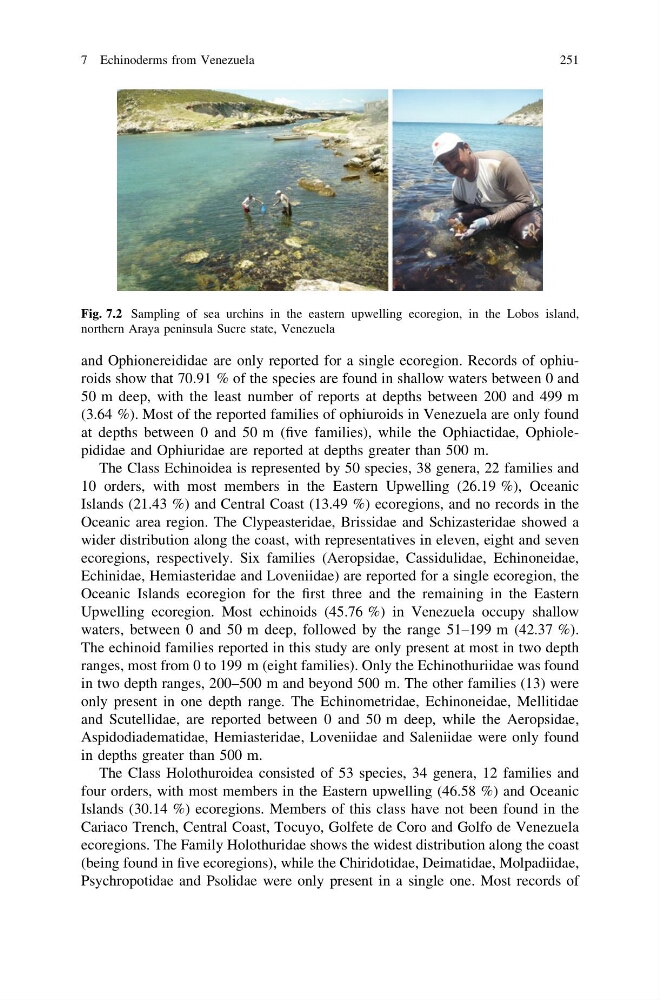
Fig. 7.2 Sampling of sea urchins in the eastern upwelling ecoregion, in the Lobos island,
northern Araya peninsula Sucre state, Venezuela
7 Echinoderms from Venezuela
251
50 m deep, with the least number of reports at depths between 200 and 499 m
(3.64 %). Most of the reported families of ophiuroids in Venezuela are only found
at depths between 0 and 50 m (five families), while the Ophiactidae, Ophiolepididae and Ophiuridae are reported at depths greater than 500 m.
The Class Echinoidea is represented by 50 species, 38 genera, 22 families and
10 orders, with most members in the Eastern Upwelling (26.19 %), Oceanic
Islands (21.43 %) and Central Coast (13.49 %) ecoregions, and no records in the
Oceanic area region. The Clypeasteridae, Brissidae and Schizasteridae showed a
wider distribution along the coast, with representatives in eleven, eight and seven
ecoregions, respectively. Six families (Aeropsidae, Cassidulidae, Echinoneidae,
Echinidae, Hemiasteridae and Loveniidae) are reported for a single ecoregion, the
Oceanic Islands ecoregion for the first three and the remaining in the Eastern
Upwelling ecoregion. Most echinoids (45.76 %) in Venezuela occupy shallow
waters, between 0 and 50 m deep, followed by the range 51–199 m (42.37 %).
The echinoid families reported in this study are only present at most in two depth
ranges, most from 0 to 199 m (eight families). Only the Echinothuriidae was found
in two depth ranges, 200–500 m and beyond 500 m. The other families (13) were
only present in one depth range. The Echinometridae, Echinoneidae, Mellitidae
and Scutellidae, are reported between 0 and 50 m deep, while the Aeropsidae,
Aspidodiadematidae, Hemiasteridae, Loveniidae and Saleniidae were only found
in depths greater than 500 m.
The Class Holothuroidea consisted of 53 species, 34 genera, 12 families and
four orders, with most members in the Eastern upwelling (46.58 %) and Oceanic
Islands (30.14 %) ecoregions. Members of this class have not been found in the
Cariaco Trench, Central Coast, Tocuyo, Golfete de Coro and Golfo de Venezuela
ecoregions. The Family Holothuridae shows the widest distribution along the coast
(being found in five ecoregions), while the Chiridotidae, Deimatidae, Molpadiidae,
Psychropotidae and Psolidae were only present in a single one. Most records of
Fig. 7.2 Sampling of sea urchins in the eastern upwelling ecoregion, in the Lobos island,
northern Araya peninsula Sucre state, Venezuela
7 Echinoderms from Venezuela
251