

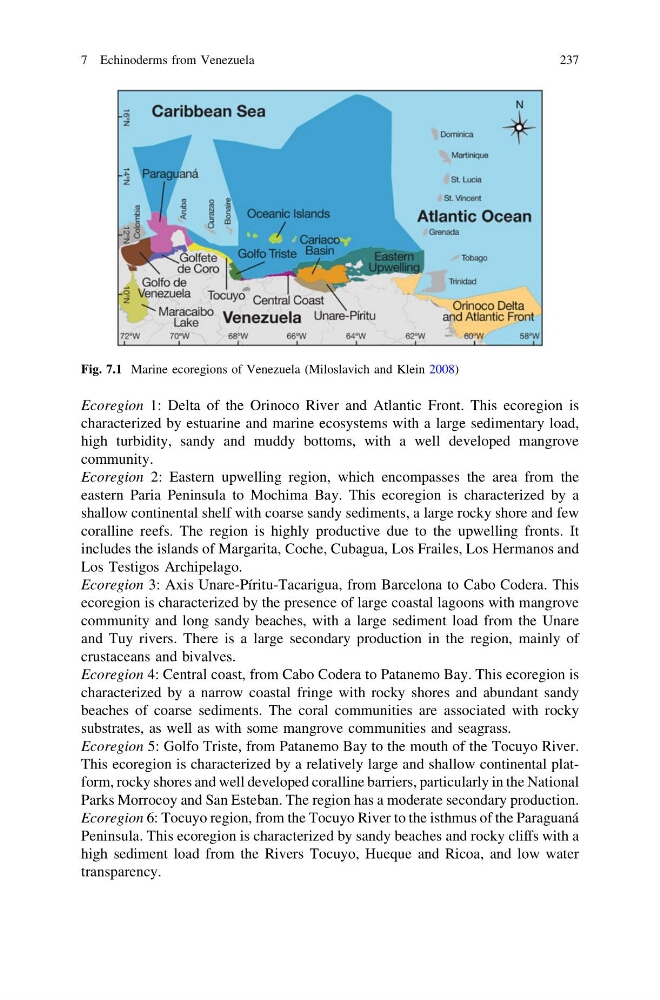
Ecoregion 1: Delta of the Orinoco River and Atlantic Front. This ecoregion is
characterized by estuarine and marine ecosystems with a large sedimentary load,
high turbidity, sandy and muddy bottoms, with a well developed mangrove
community.
Ecoregion 2: Eastern upwelling region, which encompasses the area from the
eastern Paria Peninsula to Mochima Bay. This ecoregion is characterized by a
shallow continental shelf with coarse sandy sediments, a large rocky shore and few
coralline reefs. The region is highly productive due to the upwelling fronts. It
includes the islands of Margarita, Coche, Cubagua, Los Frailes, Los Hermanos and
Los Testigos Archipelago.
Ecoregion 3: Axis Unare-Píritu-Tacarigua, from Barcelona to Cabo Codera. This
ecoregion is characterized by the presence of large coastal lagoons with mangrove
community and long sandy beaches, with a large sediment load from the Unare
and Tuy rivers. There is a large secondary production in the region, mainly of
crustaceans and bivalves.
Ecoregion 4: Central coast, from Cabo Codera to Patanemo Bay. This ecoregion is
characterized by a narrow coastal fringe with rocky shores and abundant sandy
beaches of coarse sediments. The coral communities are associated with rocky
substrates, as well as with some mangrove communities and seagrass.
Ecoregion 5: Golfo Triste, from Patanemo Bay to the mouth of the Tocuyo River.
This ecoregion is characterized by a relatively large and shallow continental platform, rocky shores and well developed coralline barriers, particularly in the National
Parks Morrocoy and San Esteban. The region has a moderate secondary production.
Ecoregion 6: Tocuyo region, from the Tocuyo River to the isthmus of the Paraguaná
Peninsula. This ecoregion is characterized by sandy beaches and rocky cliffs with a
high sediment load from the Rivers Tocuyo, Hueque and Ricoa, and low water
transparency.
Fig. 7.1 Marine ecoregions of Venezuela (Miloslavich and Klein 2008)
7 Echinoderms from Venezuela
237
characterized by estuarine and marine ecosystems with a large sedimentary load,
high turbidity, sandy and muddy bottoms, with a well developed mangrove
community.
Ecoregion 2: Eastern upwelling region, which encompasses the area from the
eastern Paria Peninsula to Mochima Bay. This ecoregion is characterized by a
shallow continental shelf with coarse sandy sediments, a large rocky shore and few
coralline reefs. The region is highly productive due to the upwelling fronts. It
includes the islands of Margarita, Coche, Cubagua, Los Frailes, Los Hermanos and
Los Testigos Archipelago.
Ecoregion 3: Axis Unare-Píritu-Tacarigua, from Barcelona to Cabo Codera. This
ecoregion is characterized by the presence of large coastal lagoons with mangrove
community and long sandy beaches, with a large sediment load from the Unare
and Tuy rivers. There is a large secondary production in the region, mainly of
crustaceans and bivalves.
Ecoregion 4: Central coast, from Cabo Codera to Patanemo Bay. This ecoregion is
characterized by a narrow coastal fringe with rocky shores and abundant sandy
beaches of coarse sediments. The coral communities are associated with rocky
substrates, as well as with some mangrove communities and seagrass.
Ecoregion 5: Golfo Triste, from Patanemo Bay to the mouth of the Tocuyo River.
This ecoregion is characterized by a relatively large and shallow continental platform, rocky shores and well developed coralline barriers, particularly in the National
Parks Morrocoy and San Esteban. The region has a moderate secondary production.
Ecoregion 6: Tocuyo region, from the Tocuyo River to the isthmus of the Paraguaná
Peninsula. This ecoregion is characterized by sandy beaches and rocky cliffs with a
high sediment load from the Rivers Tocuyo, Hueque and Ricoa, and low water
transparency.
Fig. 7.1 Marine ecoregions of Venezuela (Miloslavich and Klein 2008)
7 Echinoderms from Venezuela
237