

more experimental studies are necessary to reach a definitive conclusion about the
possible effect of temperature in the immune response in the tropical sea urchin E.
vanbrunti.
6.3.3 Larval Ecology
In general, the larvae of echinoderms are an integral part of marine zooplankton
collections in the Ecuadorian waters, but their abundance and distribution have
been reported as rare (Luzuriaga 2011). Luzuriaga (2011) determined areas of
distribution and abundance of larvae of echinoderms (mainly ophiopluteus) based
on the analysis of time series data of zooplankton from fixed coastal stations (from
1996 to 2009) and oceanographic cruises (from 2004 to 2009). In some regions and
years an increase of the number of larvae of echinoderms along the continental
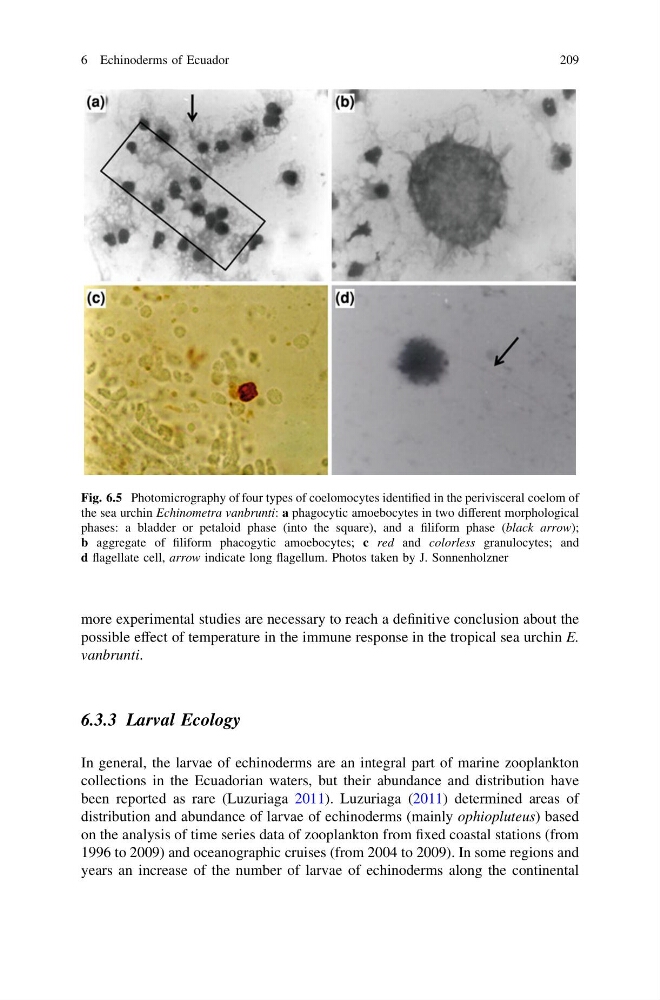
Fig. 6.5 Photomicrography of four types of coelomocytes identified in the perivisceral coelom of
the sea urchin Echinometra vanbrunti: a phagocytic amoebocytes in two different morphological
phases: a bladder or petaloid phase (into the square), and a filiform phase (black arrow);
b aggregate of filiform phacogytic amoebocytes; c red and colorless granulocytes; and
d flagellate cell, arrow indicate long flagellum. Photos taken by J. Sonnenholzner
6 Echinoderms of Ecuador
209
possible effect of temperature in the immune response in the tropical sea urchin E.
vanbrunti.
6.3.3 Larval Ecology
In general, the larvae of echinoderms are an integral part of marine zooplankton
collections in the Ecuadorian waters, but their abundance and distribution have
been reported as rare (Luzuriaga 2011). Luzuriaga (2011) determined areas of
distribution and abundance of larvae of echinoderms (mainly ophiopluteus) based
on the analysis of time series data of zooplankton from fixed coastal stations (from
1996 to 2009) and oceanographic cruises (from 2004 to 2009). In some regions and
years an increase of the number of larvae of echinoderms along the continental
Fig. 6.5 Photomicrography of four types of coelomocytes identified in the perivisceral coelom of
the sea urchin Echinometra vanbrunti: a phagocytic amoebocytes in two different morphological
phases: a bladder or petaloid phase (into the square), and a filiform phase (black arrow);
b aggregate of filiform phacogytic amoebocytes; c red and colorless granulocytes; and
d flagellate cell, arrow indicate long flagellum. Photos taken by J. Sonnenholzner
6 Echinoderms of Ecuador
209