

Colombian Caribbean. This results in an irregular or heterogeneous distribution of
major habitats and ecosystems in the region. Upwelling in La Guajira peninsula
promotes the abundance of marine vegetation (seagrass and algal beds) but limits
the development of coral reefs. The water conditions of a large section of the
middle part of the coast are influenced by heavy discharge of freshwaters and
sediments by major rivers (Magdalena, Canal del Dique, Sinú) which form alluvial
plains, and deltaic formations with coastal lagoons. Estuarine conditions prevail in
these lagoons and mangrove forests are extensive. In contrast, warm waters and
high isolation around the offshore islands on the continental shelf and at the
oceanic archipelago of San Andrés and Providencia foster the development of
coral reefs. Finally, the northern ranges of the Sierra Nevada de Santa Marta sink
steeply into the sea. This result in an irregular shoreline with cliffs and pocket
beaches creating a diverse mosaic of rocky and sandy shores, fringing reefs, and
seagrass meadows (INVEMAR 2000).
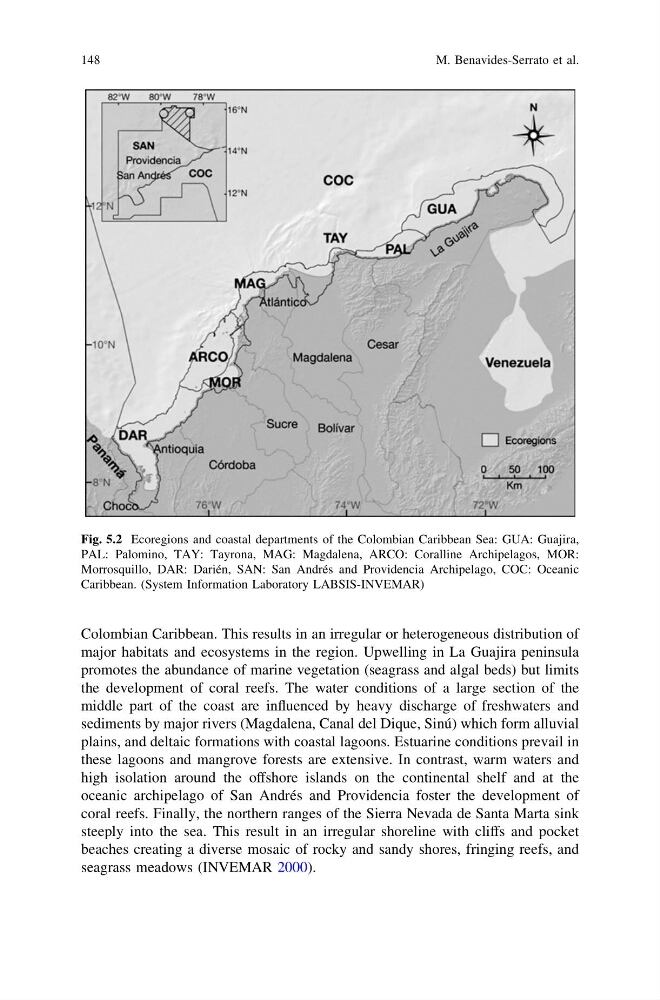
Fig. 5.2 Ecoregions and coastal departments of the Colombian Caribbean Sea: GUA: Guajira,
PAL: Palomino, TAY: Tayrona, MAG: Magdalena, ARCO: Coralline Archipelagos, MOR:
Morrosquillo, DAR: Darién, SAN: San Andrés and Providencia Archipelago, COC: Oceanic
Caribbean. (System Information Laboratory LABSIS-INVEMAR)
148
M. Benavides-Serrato et al.
major habitats and ecosystems in the region. Upwelling in La Guajira peninsula
promotes the abundance of marine vegetation (seagrass and algal beds) but limits
the development of coral reefs. The water conditions of a large section of the
middle part of the coast are influenced by heavy discharge of freshwaters and
sediments by major rivers (Magdalena, Canal del Dique, Sinú) which form alluvial
plains, and deltaic formations with coastal lagoons. Estuarine conditions prevail in
these lagoons and mangrove forests are extensive. In contrast, warm waters and
high isolation around the offshore islands on the continental shelf and at the
oceanic archipelago of San Andrés and Providencia foster the development of
coral reefs. Finally, the northern ranges of the Sierra Nevada de Santa Marta sink
steeply into the sea. This result in an irregular shoreline with cliffs and pocket
beaches creating a diverse mosaic of rocky and sandy shores, fringing reefs, and
seagrass meadows (INVEMAR 2000).
Fig. 5.2 Ecoregions and coastal departments of the Colombian Caribbean Sea: GUA: Guajira,
PAL: Palomino, TAY: Tayrona, MAG: Magdalena, ARCO: Coralline Archipelagos, MOR:
Morrosquillo, DAR: Darién, SAN: San Andrés and Providencia Archipelago, COC: Oceanic
Caribbean. (System Information Laboratory LABSIS-INVEMAR)
148
M. Benavides-Serrato et al.