

2.2. THE CASE STUDIES
a thin-branching growth form into a more compact shape when the exposure to water movement increases. Since it was well known that most reef
corals contained symbiotic algae within their tissues, this shift in morphology was thought to optimize light capture as light diminished with depth.
These observations were often projected to other species as well, causing simplifications and generalizations in coral behavior. Scuba diving broadened
coral research and permitted studies of coral reef ecology and coral physiol53
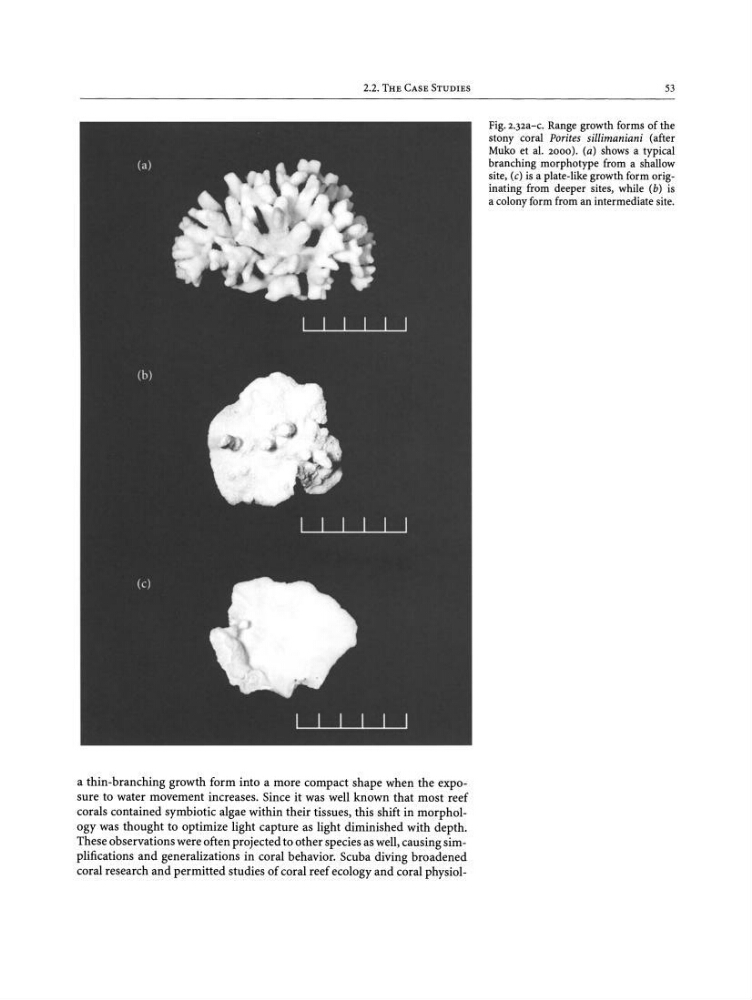
Pig.z.jza-c. Range growth forms of the
stony coral Porites sillimaniani (after
Muko et al. 2000). (a) shows a typical
branching morphotype from a shallow
site, (c) is a plate-like growth form originating from deeper sites, while (b) is
a colonyform from an intermediate site.
a thin-branching growth form into a more compact shape when the exposure to water movement increases. Since it was well known that most reef
corals contained symbiotic algae within their tissues, this shift in morphology was thought to optimize light capture as light diminished with depth.
These observations were often projected to other species as well, causing simplifications and generalizations in coral behavior. Scuba diving broadened
coral research and permitted studies of coral reef ecology and coral physiol53
Pig.z.jza-c. Range growth forms of the
stony coral Porites sillimaniani (after
Muko et al. 2000). (a) shows a typical
branching morphotype from a shallow
site, (c) is a plate-like growth form originating from deeper sites, while (b) is
a colonyform from an intermediate site.