

22
2. ENVIRONMENTALLY DRIVEN PLASTICITY
C::==~L
(b)
creased during the winter, after the kelp had reproduced and when they were
subjected to storms (Johnson and Koehl 1994).
Whether or not waves impose a mechanical upper limit to the sizes of attached organisms is still being explored (reviewed by Denny 1999). However,
breakability is not necessarily a "bad" feature preventing organisms from
succeeding in wave-swept environments if those broken organisms can regrow. For example, when bits of a sessile organism or colony break off, the
hydrodynamic forces on the part of the structure that remains can be reduced,
hence partial breakage can prevent total destruction (e.g. Black 1976). Furthermore, if the broken-off pieces of an organism or colony can reattach and
grow, breakage can be a mechanism of asexual reproduction and dispersal,
as has been shown for a number of species of coral (Highsmith 1982).
To be able to include the impact of hydrodynamic forces in simulation models of growth processes, as will be discussed in Sections 4.5 and
4.6, it is required to be able to compute local forces exerted by the fluid on
the growing object. In most cases these objects will have a typical complexshaped and branching geometry and are usually characterized by a rough
and fractal-like surface. In (2.8) and (2.9) all morphological details are "hidden" in the coefficients Ci and CM . In morphological simulations of growth
processes, where local hydrodynamic forces are included, in many cases
a more microscopic description of forces will be needed to be able (for
example) to simulate partial breakage. In Sect. 4.3.1 we will discuss how microscopic estimates can be derived from simulated hydrodynamics about
complex-shaped obstacles.
molecule «< ambient
Mass transfer
(a)
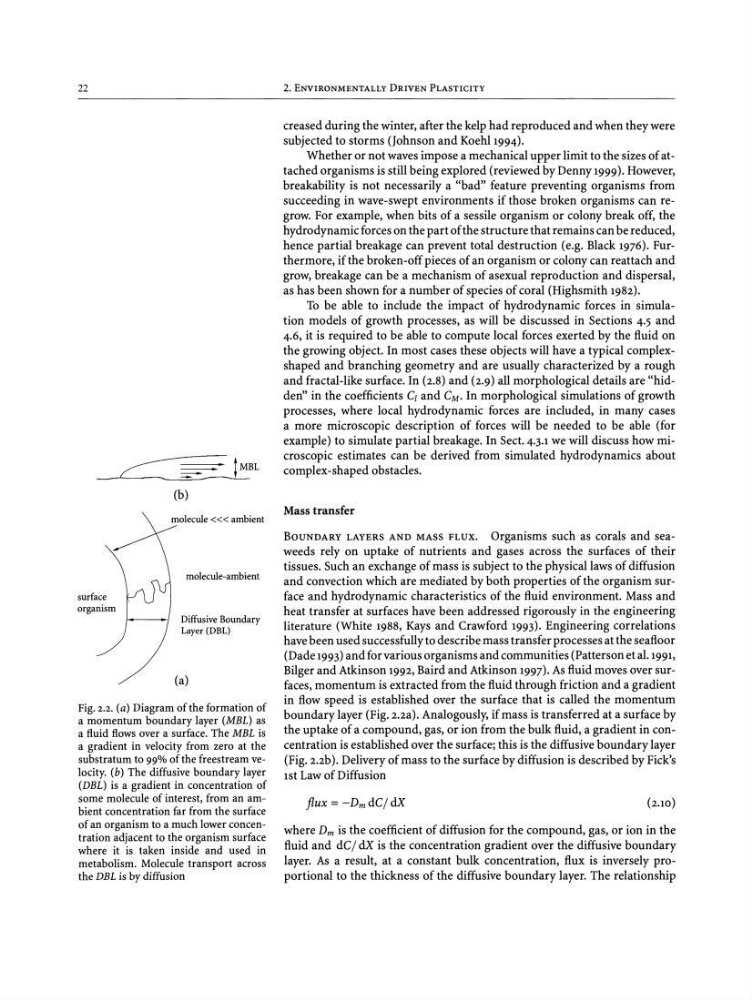
Fig. 2.2. (a) Diagram of the formation of
a momentum boundary layer (MBL) as
a fluid flows over a surface. The MBL is
a gradient in velocity from zero at the
substratum to 99% of the freestream velocity. (b) The diffusive boundary layer
(DBL) is a gradient in concentration of
some molecule of interest, from an ambient concentrationfar from the surface
of an organism to a muchlowerconcentration adjacent to the organismsurface
where it is taken inside and used in
metabolism. Molecule transport across
the DBL is by diffusion
where D m is the coefficient of diffusion for the compound, gas, or ion in the
fluid and dC/ d.X is the concentration gradient over the diffusive boundary
layer. As a result, at a constant bulk concentration, flux is inversely proportional to the thickness of the diffusive boundary layer. The relationship
(2.10 )
flux = -Dm dC/ d.X
BOUNDARY LAYERS AND MASS FLUX. Organisms such as corals and seaweeds rely on uptake of nutrients and gases across the surfaces of their
tissues. Such an exchange of mass is subject to the physical laws of diffusion
and convection which are mediated by both properties of the organism surface and hydrodynamic characteristics of the fluid environment. Mass and
heat transfer at surfaces have been addressed rigorously in the engineering
literature (White 1988, Kays and Crawford 1993). Engineering correlations
have been used successfully to describe mass transfer processes at the seafloor
(Dade 1993) and for various organisms and communities (Patterson et al.1991,
Bilger and Atkinson 1992,Baird and Atkinson 1997).As fluid moves over surfaces, momentum is extracted from the fluid through friction and a gradient
in flow speed is established over the surface that is called the momentum
boundary layer (Fig. 2.2a). Analogously, if mass is transferred at a surface by
the uptake of a compound, gas, or ion from the bulk fluid, a gradient in concentration is established over the surface; this is the diffusive boundary layer
(Fig. 2.2b). Delivery of mass to the surface by diffusion is described by Pick's
ist Law of Diffusion
molecule-ambient
Diffusive Boundary
Layer (DBL)
surface
organism
2. ENVIRONMENTALLY DRIVEN PLASTICITY
C::==~L
(b)
creased during the winter, after the kelp had reproduced and when they were
subjected to storms (Johnson and Koehl 1994).
Whether or not waves impose a mechanical upper limit to the sizes of attached organisms is still being explored (reviewed by Denny 1999). However,
breakability is not necessarily a "bad" feature preventing organisms from
succeeding in wave-swept environments if those broken organisms can regrow. For example, when bits of a sessile organism or colony break off, the
hydrodynamic forces on the part of the structure that remains can be reduced,
hence partial breakage can prevent total destruction (e.g. Black 1976). Furthermore, if the broken-off pieces of an organism or colony can reattach and
grow, breakage can be a mechanism of asexual reproduction and dispersal,
as has been shown for a number of species of coral (Highsmith 1982).
To be able to include the impact of hydrodynamic forces in simulation models of growth processes, as will be discussed in Sections 4.5 and
4.6, it is required to be able to compute local forces exerted by the fluid on
the growing object. In most cases these objects will have a typical complexshaped and branching geometry and are usually characterized by a rough
and fractal-like surface. In (2.8) and (2.9) all morphological details are "hidden" in the coefficients Ci and CM . In morphological simulations of growth
processes, where local hydrodynamic forces are included, in many cases
a more microscopic description of forces will be needed to be able (for
example) to simulate partial breakage. In Sect. 4.3.1 we will discuss how microscopic estimates can be derived from simulated hydrodynamics about
complex-shaped obstacles.
molecule «< ambient
Mass transfer
(a)
Fig. 2.2. (a) Diagram of the formation of
a momentum boundary layer (MBL) as
a fluid flows over a surface. The MBL is
a gradient in velocity from zero at the
substratum to 99% of the freestream velocity. (b) The diffusive boundary layer
(DBL) is a gradient in concentration of
some molecule of interest, from an ambient concentrationfar from the surface
of an organism to a muchlowerconcentration adjacent to the organismsurface
where it is taken inside and used in
metabolism. Molecule transport across
the DBL is by diffusion
where D m is the coefficient of diffusion for the compound, gas, or ion in the
fluid and dC/ d.X is the concentration gradient over the diffusive boundary
layer. As a result, at a constant bulk concentration, flux is inversely proportional to the thickness of the diffusive boundary layer. The relationship
(2.10 )
flux = -Dm dC/ d.X
BOUNDARY LAYERS AND MASS FLUX. Organisms such as corals and seaweeds rely on uptake of nutrients and gases across the surfaces of their
tissues. Such an exchange of mass is subject to the physical laws of diffusion
and convection which are mediated by both properties of the organism surface and hydrodynamic characteristics of the fluid environment. Mass and
heat transfer at surfaces have been addressed rigorously in the engineering
literature (White 1988, Kays and Crawford 1993). Engineering correlations
have been used successfully to describe mass transfer processes at the seafloor
(Dade 1993) and for various organisms and communities (Patterson et al.1991,
Bilger and Atkinson 1992,Baird and Atkinson 1997).As fluid moves over surfaces, momentum is extracted from the fluid through friction and a gradient
in flow speed is established over the surface that is called the momentum
boundary layer (Fig. 2.2a). Analogously, if mass is transferred at a surface by
the uptake of a compound, gas, or ion from the bulk fluid, a gradient in concentration is established over the surface; this is the diffusive boundary layer
(Fig. 2.2b). Delivery of mass to the surface by diffusion is described by Pick's
ist Law of Diffusion
molecule-ambient
Diffusive Boundary
Layer (DBL)
surface
organism