

18
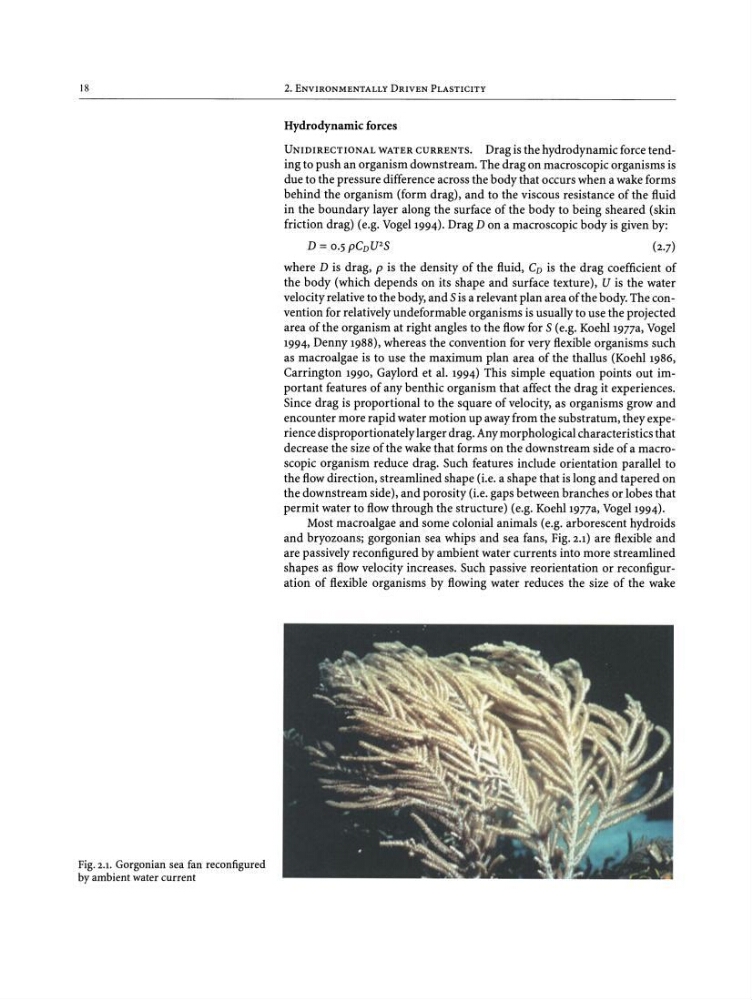
Fig. 2.1 . Gorgonian sea fan reconfigured
by ambient water current
2. ENVIRONMENTALLY DRIVEN PLASTICITY
Hydrodynamic forces
UNIDIRECTIONAL WATER CURRENTS. Drag is the hydrodynamic force tending to push an organism downstream. The drag on macroscopic organisms is
due to the pressure difference across the body that occurs when a wake forms
behind the organism (form drag), and to the viscous resistance of the fluid
in the boundary layer along the surface of the body to being sheared (skin
friction drag) (e.g. Vogel1994). Drag D on a macroscopic body is given by:
D = 0.5 pC DU
2S
(2.7)
where D is drag, p is the density of the fluid, CD is the drag coefficient of
the body (which depends on its shape and surface texture), U is the water
velocity relative to the body, and Sis a relevant plan area of the body. The convention for relatively undeformable organisms is usually to use the projected
area of the organism at right angles to the flow for S (e.g. Koehl 1977a, Vogel
1994, Denny 1988), whereas the convention for very flexible organisms such
as macroalgae is to use the maximum plan area of the thallus (Koehl 1986,
Carrington 1990, Gaylord et al. 1994) This simple equation points out important features of any benthic organism that affect the drag it experiences.
Since drag is proportional to the square of velocity, as organisms grow and
encounter more rapid water motion up awayfrom the substratum, they experience disproportionately larger drag . Any morphological characteristics that
decrease the size of the wake that forms on the downstream side of a macroscopic organism reduce drag . Such features include orientation parallel to
the flow direction, streamlined shape (i.e. a shape that is long and tapered on
the downstream side), and porosity (i.e. gaps between branches or lobes that
permit water to flow through the structure) (e.g. Koehl 1977a, Vogel1994).
Most macroalgae and some colonial animals (e.g. arborescent hydro ids
and bryozoans; gorgon ian sea whips and sea fans, Fig. 2.1) are flexible and
are passively reconfigured by ambient water currents into more streamlined
shapes as flow velocity increases. Such passive reorientation or reconfiguration of flexible organisms by flowing water reduces the size of the wake
Fig. 2.1 . Gorgonian sea fan reconfigured
by ambient water current
2. ENVIRONMENTALLY DRIVEN PLASTICITY
Hydrodynamic forces
UNIDIRECTIONAL WATER CURRENTS. Drag is the hydrodynamic force tending to push an organism downstream. The drag on macroscopic organisms is
due to the pressure difference across the body that occurs when a wake forms
behind the organism (form drag), and to the viscous resistance of the fluid
in the boundary layer along the surface of the body to being sheared (skin
friction drag) (e.g. Vogel1994). Drag D on a macroscopic body is given by:
D = 0.5 pC DU
2S
(2.7)
where D is drag, p is the density of the fluid, CD is the drag coefficient of
the body (which depends on its shape and surface texture), U is the water
velocity relative to the body, and Sis a relevant plan area of the body. The convention for relatively undeformable organisms is usually to use the projected
area of the organism at right angles to the flow for S (e.g. Koehl 1977a, Vogel
1994, Denny 1988), whereas the convention for very flexible organisms such
as macroalgae is to use the maximum plan area of the thallus (Koehl 1986,
Carrington 1990, Gaylord et al. 1994) This simple equation points out important features of any benthic organism that affect the drag it experiences.
Since drag is proportional to the square of velocity, as organisms grow and
encounter more rapid water motion up awayfrom the substratum, they experience disproportionately larger drag . Any morphological characteristics that
decrease the size of the wake that forms on the downstream side of a macroscopic organism reduce drag . Such features include orientation parallel to
the flow direction, streamlined shape (i.e. a shape that is long and tapered on
the downstream side), and porosity (i.e. gaps between branches or lobes that
permit water to flow through the structure) (e.g. Koehl 1977a, Vogel1994).
Most macroalgae and some colonial animals (e.g. arborescent hydro ids
and bryozoans; gorgon ian sea whips and sea fans, Fig. 2.1) are flexible and
are passively reconfigured by ambient water currents into more streamlined
shapes as flow velocity increases. Such passive reorientation or reconfiguration of flexible organisms by flowing water reduces the size of the wake