

334
Related Techniques
1 2
J , ~ 6 1 I , 10 II IZ II I' 15 M
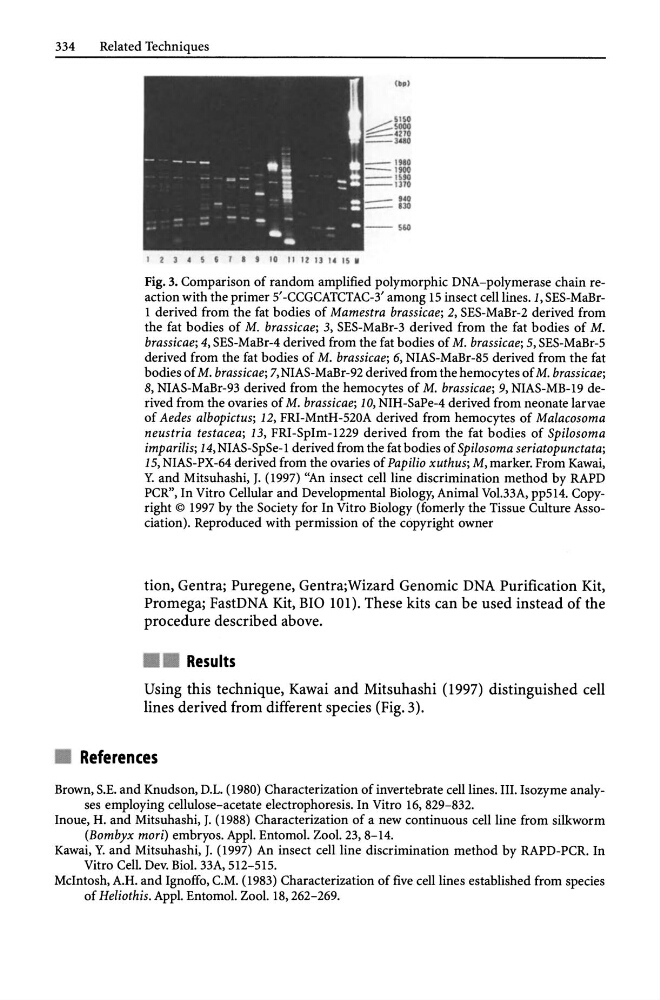
Fig. 3. Comparison of random amplified polymorphic DNA-polymerase chain reaction with the primer 5' -CCGCATCTAC-3' among 15 insect cell lines. I, SES-MaBr1 derived from the fat bodies of Mamestra brassicae; 2, SES-MaBr-2 derived from
the fat bodies of M. brassicae; 3, SES-MaBr-3 derived from the fat bodies of M.
brassicae; 4, SES-MaBr-4 derived from the fat bodies of M. brassicae; 5, SES-MaBr-S
derived from the fat bodies of M. brassicae; 6, NIAS-MaBr-8S derived from the fat
bodies of M. brassicae; 7,NIAS-MaBr-92 derived from the hemocytes of M. brassicae;
8, NIAS-MaBr-93 derived from the hemocytes of M. brassicae; 9, NIAS-MB-19 derived from the ovaries of M. brassicae; 10, NIH-SaPe-4 derived from neonate larvae
of Aedes albopictus; 12, FRI-MntH-S20A derived from hemocytes of Malacosoma
neustria testacea; 13, FRI-SpIm-1229 derived from the fat bodies of Spilosoma
imparilis; 14, NIAS-SpSe-l derived from the fat bodies of Spilosoma seriatopunctata;
15, NIAS-PX-64 derived from the ovaries of Papilio xuthus; M, marker. From Kawai,
Y. and Mitsuhashi, J. (1997) "An insect cell line discrimination method by RAPD
PCR", In Vitro Cellular and Developmental Biology, Animal Vol.33A, ppSl4. Copyright © 1997 by the Society for In Vitro Biology (fomerly the Tissue Culture Association). Reproduced with permission of the copyright owner
tion, Gentra; Puregene, Gentra;Wizard Genomic DNA Purification Kit,
Prom ega; FastDNA Kit, BIO 101). These kits can be used instead of the
procedure described above .
• • Results
Using this technique, Kawai and Mitsuhashi (1997) distinguished cell
lines derived from different species (Fig. 3).
• References
Brown, S.E. and Knudson, D.L. (1980) Characterization of invertebrate cell lines. III. Isozyme analyses employing cellulose-acetate electrophoresis. In Vitro 16, 829-832.
Inoue, H. and Mitsuhashi, J. (1988) Characterization of a new continuous cell line from silkworm
(Bombyx mori) embryos. Appl. Entomol. Zool. 23, 8-14.
Kawai, Y. and Mitsuhashi, J. (1997) An insect cell line discrimination method by RAPD-PCR. In
Vitro Cell. Dev. BioI. 33A, 512-515.
McIntosh, A.H. and Ignoffo, C.M. (1983) Characterization of five cell lines established from species
of Heliothis. Appl. Entomol. Zool. 18,262-269.
Related Techniques
1 2
J , ~ 6 1 I , 10 II IZ II I' 15 M
Fig. 3. Comparison of random amplified polymorphic DNA-polymerase chain reaction with the primer 5' -CCGCATCTAC-3' among 15 insect cell lines. I, SES-MaBr1 derived from the fat bodies of Mamestra brassicae; 2, SES-MaBr-2 derived from
the fat bodies of M. brassicae; 3, SES-MaBr-3 derived from the fat bodies of M.
brassicae; 4, SES-MaBr-4 derived from the fat bodies of M. brassicae; 5, SES-MaBr-S
derived from the fat bodies of M. brassicae; 6, NIAS-MaBr-8S derived from the fat
bodies of M. brassicae; 7,NIAS-MaBr-92 derived from the hemocytes of M. brassicae;
8, NIAS-MaBr-93 derived from the hemocytes of M. brassicae; 9, NIAS-MB-19 derived from the ovaries of M. brassicae; 10, NIH-SaPe-4 derived from neonate larvae
of Aedes albopictus; 12, FRI-MntH-S20A derived from hemocytes of Malacosoma
neustria testacea; 13, FRI-SpIm-1229 derived from the fat bodies of Spilosoma
imparilis; 14, NIAS-SpSe-l derived from the fat bodies of Spilosoma seriatopunctata;
15, NIAS-PX-64 derived from the ovaries of Papilio xuthus; M, marker. From Kawai,
Y. and Mitsuhashi, J. (1997) "An insect cell line discrimination method by RAPD
PCR", In Vitro Cellular and Developmental Biology, Animal Vol.33A, ppSl4. Copyright © 1997 by the Society for In Vitro Biology (fomerly the Tissue Culture Association). Reproduced with permission of the copyright owner
tion, Gentra; Puregene, Gentra;Wizard Genomic DNA Purification Kit,
Prom ega; FastDNA Kit, BIO 101). These kits can be used instead of the
procedure described above .
• • Results
Using this technique, Kawai and Mitsuhashi (1997) distinguished cell
lines derived from different species (Fig. 3).
• References
Brown, S.E. and Knudson, D.L. (1980) Characterization of invertebrate cell lines. III. Isozyme analyses employing cellulose-acetate electrophoresis. In Vitro 16, 829-832.
Inoue, H. and Mitsuhashi, J. (1988) Characterization of a new continuous cell line from silkworm
(Bombyx mori) embryos. Appl. Entomol. Zool. 23, 8-14.
Kawai, Y. and Mitsuhashi, J. (1997) An insect cell line discrimination method by RAPD-PCR. In
Vitro Cell. Dev. BioI. 33A, 512-515.
McIntosh, A.H. and Ignoffo, C.M. (1983) Characterization of five cell lines established from species
of Heliothis. Appl. Entomol. Zool. 18,262-269.