

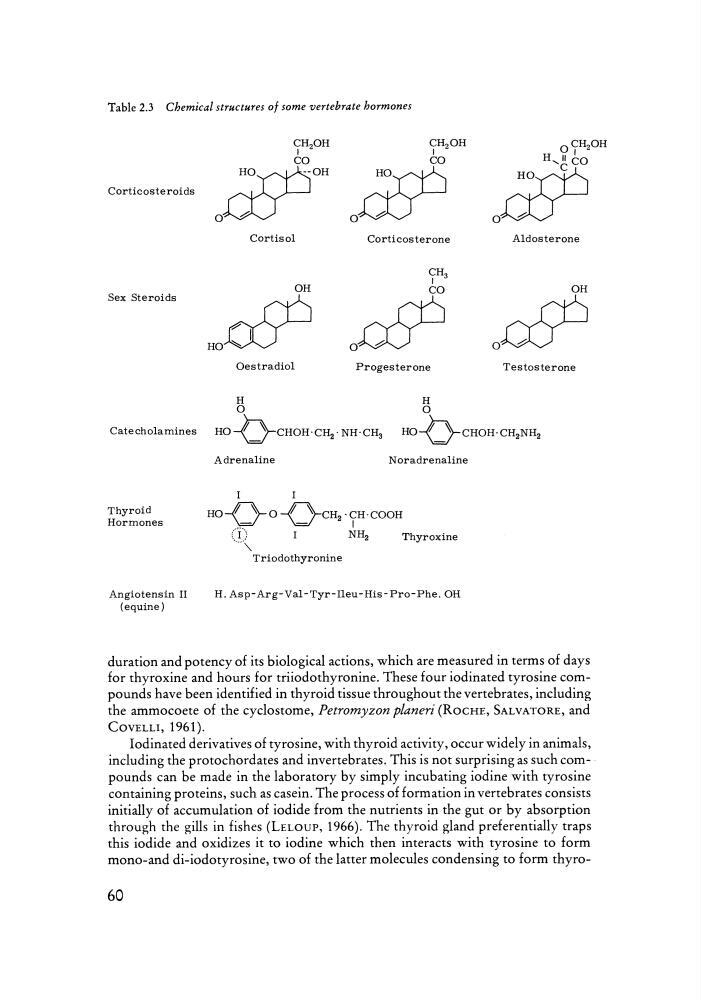
Table 2.3 Chemical structures of some ve rtebrate hormones
9
HP H
Cor tic o s t e r oi ds
H~tb°H
oa:rCortis ol
Corti co steron e
Aldoste r one
Sex St e r oi ds
~H3
HO~ O~ O~
Oe stradiol
Progesterone
Testosterone
H
o
Catechola mines
HO - Q - CHOH .CH 2 · NH · CH 3
Adre naline
Noradrenaline
I
I
Thyroid
HO ~ O ~CH2 -C ,H·COOH
Ho rmones
~ ~
0)
I
NH2
Thyrox ine
" T riodothyroni n e
An gi ot e ns in II
H. Asp-A rg -Val -Tyr - Ileu -His -Pro -Phe . OH
(e quine)
duration and potency of its biological actions, whi ch are measured in terms of days
for th yroxine and hours for triiodothyronine. These four iodinated tyrosine compounds have been identified in th yroid tissue throughout the vert ebrates, including
th e ammocoete of the cyclo stome, Petromy zon plane ri (ROCH E, SALVATOR E, and
COVELLI , 1961).
Iodinated deri vatives of tyrosine, with th yroid activity , occur widely in animals,
includin g th e protochordates and invertebrates. Thi s is not surprising as such com - .
pounds can be made in the laboratory by simply incubating iodine w ith tyrosine
conta ining proteins, such as casein. The process of formation in verte brates con sists
initially of accumulation of iodide from the nutrients in th e gut or by abso rption
thro ugh th e gills in fishes ( LELO U P, 1966). T he th yroid gland preferentially tr aps
th is iodide and oxidizes it to iodine which then inte racts wi th tyrosine to form
mono-and di-iodotyro sine, tw o of the latter molecules condensing to form th y ro60
9
HP H
Cor tic o s t e r oi ds
H~tb°H
oa:rCortis ol
Corti co steron e
Aldoste r one
Sex St e r oi ds
~H3
HO~ O~ O~
Oe stradiol
Progesterone
Testosterone
H
o
Catechola mines
HO - Q - CHOH .CH 2 · NH · CH 3
Adre naline
Noradrenaline
I
I
Thyroid
HO ~ O ~CH2 -C ,H·COOH
Ho rmones
~ ~
0)
I
NH2
Thyrox ine
" T riodothyroni n e
An gi ot e ns in II
H. Asp-A rg -Val -Tyr - Ileu -His -Pro -Phe . OH
(e quine)
duration and potency of its biological actions, whi ch are measured in terms of days
for th yroxine and hours for triiodothyronine. These four iodinated tyrosine compounds have been identified in th yroid tissue throughout the vert ebrates, including
th e ammocoete of the cyclo stome, Petromy zon plane ri (ROCH E, SALVATOR E, and
COVELLI , 1961).
Iodinated deri vatives of tyrosine, with th yroid activity , occur widely in animals,
includin g th e protochordates and invertebrates. Thi s is not surprising as such com - .
pounds can be made in the laboratory by simply incubating iodine w ith tyrosine
conta ining proteins, such as casein. The process of formation in verte brates con sists
initially of accumulation of iodide from the nutrients in th e gut or by abso rption
thro ugh th e gills in fishes ( LELO U P, 1966). T he th yroid gland preferentially tr aps
th is iodide and oxidizes it to iodine which then inte racts wi th tyrosine to form
mono-and di-iodotyro sine, tw o of the latter molecules condensing to form th y ro60