

-
Feed - back
Controller
(Fixed)
<4
.IEndccnre Glandl
Misaligment
II
IIMotor I
Load or
Controlled
(Effectorl I
~
..-..
Power
Power
-Demand
<4
..
Input
(Hormonel
Output
Disturbance
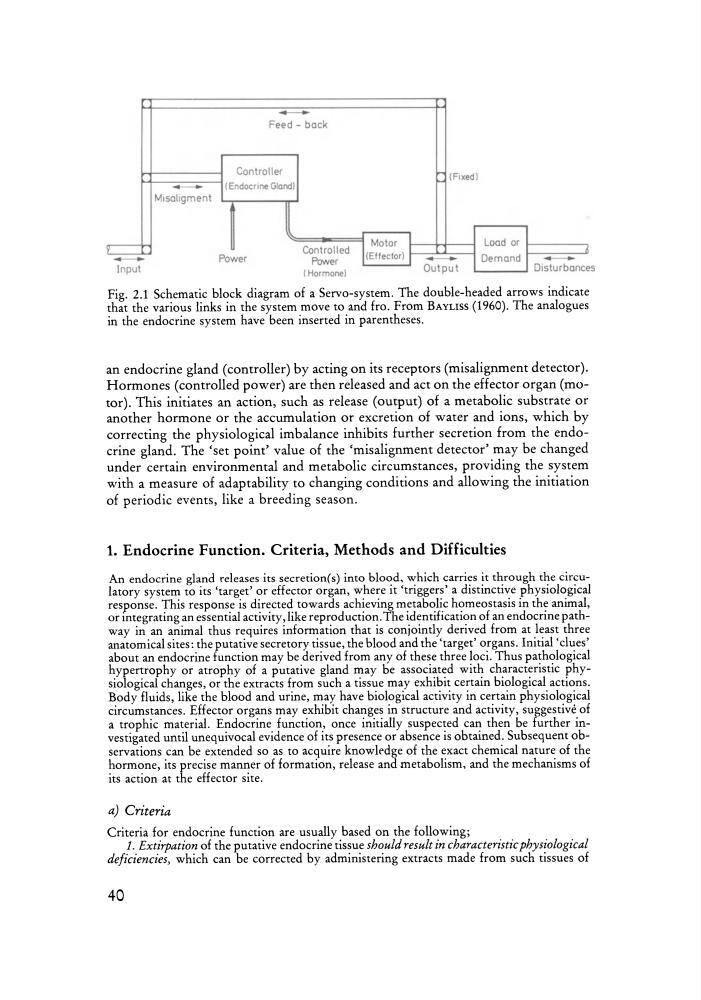
Fig. 2.1 Schematic block diagram of a Servo-system . The double-headed arrows indicate
that the various links in the system move to and fro. From BAYLISS (1960). The analogues
in the endocrine system have been inserted in parent heses.
an endocrine gland (controller) by acting on its receptors (misalignment detector).
Hormones (controlled power) are then released and act on the effector organ (motor). This initiates an action, such as release (output) of a metabolic su bstrate or
another hormone or the accumulation or excretion of water and ions , which by
correcting the physiological imbalance inhibits further secretion from the endocrine gland. The 'set point ' value of the 'misalignment detector' may be changed
under certain environmental and metabolic circumstances, providing the system
with a measure of adaptabili ty to changing conditions and allowing the initiation
of periodic events, like a breeding season.
1. Endocrine Function . Criteria, Methods and Difficulties
An endocrine gland releases its secretion(s) into blood. which carries it through the circulatory system to its 'target' or effector organ, where it 'triggers' a distinctive ph ysiological
response. This response is direc ted towards achie ving metabolic homeostasis in the animal,
or Integrating an essential activit y, like reproduction.The identification of an endocrine pathway in an animal thus requires information that is conjointly derived from at least three
anatomical sites: the putative secretory tissue, the blood and the ' target' organs. Initial 'clues'
about an endocrine function may be derived from any of these three loci . Thus pathological
hypertrophy or atrophy of a putative gland may be associated with characteristic physiologica l changes, or the extracts from such a tissue may exhibit certain biolo gical actions.
Body fluids, like the blood and uri ne, may have biological activity in certain physiological
circumstances. Effector organs may exhibit changes in structure and activity, suggestive of
a trophic material. Endocrine function, once initiall y suspected can then be further investigated until unequivocal evidence of its presence or absence is obtained. Subsequent observations can be extended so as to acquire knowledge of the exact chemical nature of the
hormone, its precise manner of formation, release and metabolism. and the mechanisms of
its action at the effector site.
a) Criteria
Criteria for endocrine function are usua lly based on the following;
1. Extirpation of the putative endocrine tissue shouldresultin characteristicphysiological
deficiencies, wh ich can be corrected by admi nistering extracts made from such tissues of
40
s
Feed - back
Controller
(Fixed)
<4
.IEndccnre Glandl
Misaligment
II
IIMotor I
Load or
Controlled
(Effectorl I
~
..-..
Power
Power
-Demand
<4
..
Input
(Hormonel
Output
Disturbance
Fig. 2.1 Schematic block diagram of a Servo-system . The double-headed arrows indicate
that the various links in the system move to and fro. From BAYLISS (1960). The analogues
in the endocrine system have been inserted in parent heses.
an endocrine gland (controller) by acting on its receptors (misalignment detector).
Hormones (controlled power) are then released and act on the effector organ (motor). This initiates an action, such as release (output) of a metabolic su bstrate or
another hormone or the accumulation or excretion of water and ions , which by
correcting the physiological imbalance inhibits further secretion from the endocrine gland. The 'set point ' value of the 'misalignment detector' may be changed
under certain environmental and metabolic circumstances, providing the system
with a measure of adaptabili ty to changing conditions and allowing the initiation
of periodic events, like a breeding season.
1. Endocrine Function . Criteria, Methods and Difficulties
An endocrine gland releases its secretion(s) into blood. which carries it through the circulatory system to its 'target' or effector organ, where it 'triggers' a distinctive ph ysiological
response. This response is direc ted towards achie ving metabolic homeostasis in the animal,
or Integrating an essential activit y, like reproduction.The identification of an endocrine pathway in an animal thus requires information that is conjointly derived from at least three
anatomical sites: the putative secretory tissue, the blood and the ' target' organs. Initial 'clues'
about an endocrine function may be derived from any of these three loci . Thus pathological
hypertrophy or atrophy of a putative gland may be associated with characteristic physiologica l changes, or the extracts from such a tissue may exhibit certain biolo gical actions.
Body fluids, like the blood and uri ne, may have biological activity in certain physiological
circumstances. Effector organs may exhibit changes in structure and activity, suggestive of
a trophic material. Endocrine function, once initiall y suspected can then be further investigated until unequivocal evidence of its presence or absence is obtained. Subsequent observations can be extended so as to acquire knowledge of the exact chemical nature of the
hormone, its precise manner of formation, release and metabolism. and the mechanisms of
its action at the effector site.
a) Criteria
Criteria for endocrine function are usua lly based on the following;
1. Extirpation of the putative endocrine tissue shouldresultin characteristicphysiological
deficiencies, wh ich can be corrected by admi nistering extracts made from such tissues of
40
s