

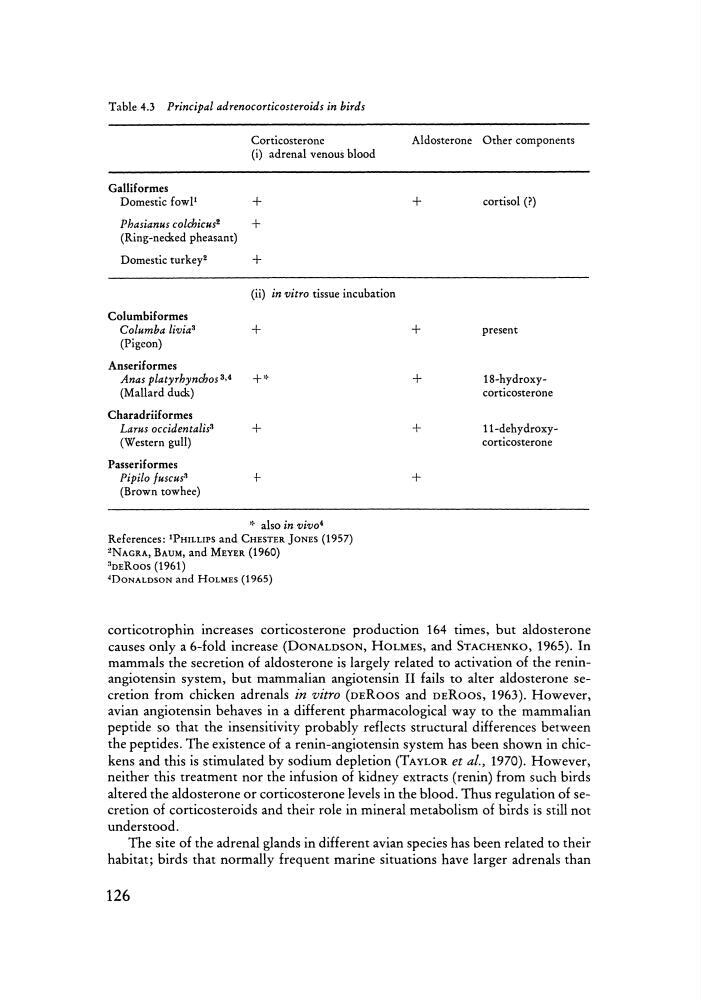
Table 4.3 Principal adrenocortlcosteroids in birds
Corticosterone
(i) adrenal venous blood
Aldosterone Other components
Galliformes
Domestic fowl!
+
+
cortisol (?)
Phasianus colchicus z
+
(Ring-necked pheasant)
Domestic turkey"
+
(ii) in vitro tissue incubation
Columbiformes
Columba livia~
+
+
present
(Pigeon)
Anseriformes
Anas platyrhynchos 3,4
+:l o
+
18-hydroxy(Mallard duck)
corticosterone
Charadriiformes
Larus occidentalist
+
+
11-dehydroxy(Western gull)
corticosterone
Passeriformes
Pipilo fuscus~
t
+
(Brown towhee)
,~ also in vivo'
References : IPHILLlPS and CHESTER JONES (1957)
2N AGRA, BAuM, and MEYER (1960)
~DERoos (1961)
4DoNALDSON and HOLMES (1965)
corticotrophin increases corticosterone production 164 times, but aldosterone
causes only a 6-fold increase (DONALDSON, HOLMES, and STACHENKO, 1965). In
mammals the secretion of aldosterone is largely related to activation of the reninangiotensin system, but mammalian angiotensin II fails to alter aldosterone secretion from chicken adrenals in vitro (DERoos and DERoos, 1963). However,
avian angiotensin behaves in a different pharmacological way to the mammalian
peptide so that the insensitivity probably reflects structural differences between
the peptides. The existence of a renin-angiotensin system has been shown in chickens and this is stimulated by sodium depletion (TAYLOR et al., 1970). However,
neither this treatment nor the infusion of kidney extracts (renin) from such birds
altered the aldosterone or corticosterone levels in the blood. Thus regulation of secretion of corticosteroids and their role in mineral metabolism of birds is still not
understood.
The site of the adrenal glands in different avian species has been related to their
habitat; birds that normally frequent marine situations have larger adrenals than
126
Corticosterone
(i) adrenal venous blood
Aldosterone Other components
Galliformes
Domestic fowl!
+
+
cortisol (?)
Phasianus colchicus z
+
(Ring-necked pheasant)
Domestic turkey"
+
(ii) in vitro tissue incubation
Columbiformes
Columba livia~
+
+
present
(Pigeon)
Anseriformes
Anas platyrhynchos 3,4
+:l o
+
18-hydroxy(Mallard duck)
corticosterone
Charadriiformes
Larus occidentalist
+
+
11-dehydroxy(Western gull)
corticosterone
Passeriformes
Pipilo fuscus~
t
+
(Brown towhee)
,~ also in vivo'
References : IPHILLlPS and CHESTER JONES (1957)
2N AGRA, BAuM, and MEYER (1960)
~DERoos (1961)
4DoNALDSON and HOLMES (1965)
corticotrophin increases corticosterone production 164 times, but aldosterone
causes only a 6-fold increase (DONALDSON, HOLMES, and STACHENKO, 1965). In
mammals the secretion of aldosterone is largely related to activation of the reninangiotensin system, but mammalian angiotensin II fails to alter aldosterone secretion from chicken adrenals in vitro (DERoos and DERoos, 1963). However,
avian angiotensin behaves in a different pharmacological way to the mammalian
peptide so that the insensitivity probably reflects structural differences between
the peptides. The existence of a renin-angiotensin system has been shown in chickens and this is stimulated by sodium depletion (TAYLOR et al., 1970). However,
neither this treatment nor the infusion of kidney extracts (renin) from such birds
altered the aldosterone or corticosterone levels in the blood. Thus regulation of secretion of corticosteroids and their role in mineral metabolism of birds is still not
understood.
The site of the adrenal glands in different avian species has been related to their
habitat; birds that normally frequent marine situations have larger adrenals than
126