

1 0
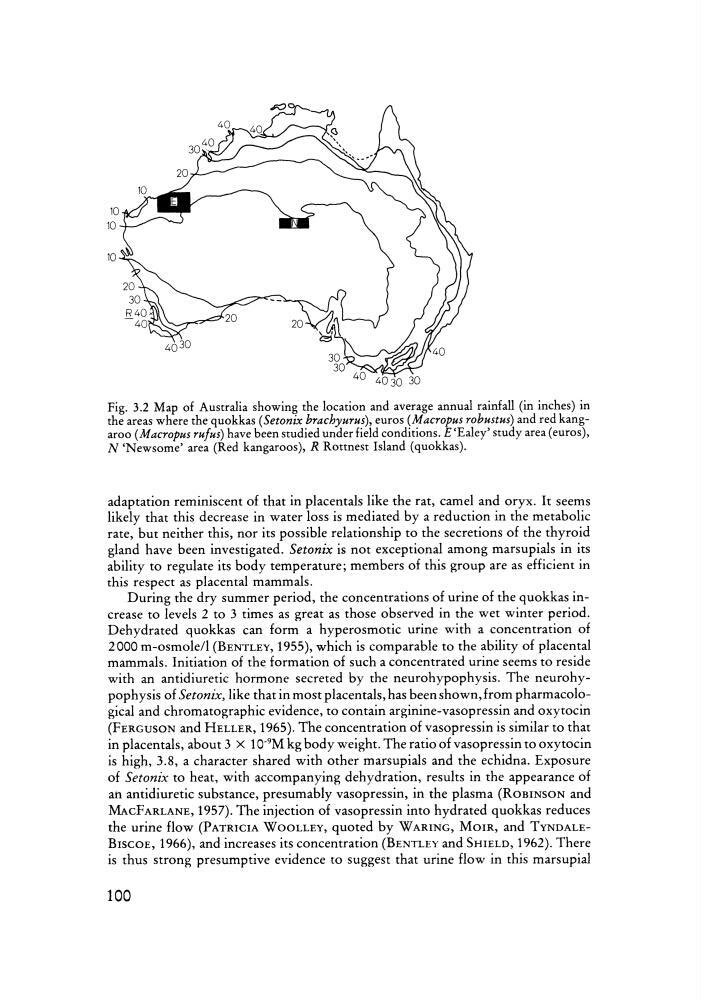
Fig. 3.2 Map of Australia showing the location and average annual rainfall (in inches) in
the areas where the quokkas (Setonix brachyurus), euros (Macropus robustus) and red kangaroo (Macropus rufus) have been studied under fieldconditions. E 'Ealey' study area(euros),
N 'Newsome' area (Red kangaroos), R Rottnest Island (quokkas).
adaptation reminiscent of that in placentals like the rat, camel and oryx. It seems
likely that this decrease in water loss is mediated by a reduction in the metabolic
rate, but neither this, nor its possible relationship to the secretions of the thyroid
gland have been investigated. Setonix is not exceptional among marsupials in its
ability to regulate its body temperature; members of this group are as efficient in
this respect as placental mammals.
During the dry summer period, the concentrations of urine of the quokkas increase to levels 2 to 3 times as great as those observed in the wet winter period.
Dehydrated quokkas can form a hyperosmotic urine with a concentration of
2000 m-osmole/I (BENTLEY, 1955), which is comparable to the ability of placental
mammals. Initiation of the formation of such a concentrated urine seems to reside
with an antidiuretic hormone secreted by the neurohypophysis. The neurohypophysis of Setonix, like that in most placentals, has been shown, from pharmacological and chromatographic evidence, to contain arginine-vasopressin and oxytocin
(FERGUSON and HELLER, 1965). The concentration of vasopressin is similar to that
in placentals, about 3 X 10·9Mkg body weight. The ratio of vasopressin to ox ytocin
is high , 3.8, a character shared with other marsupials and the echidna. Exposure
of Setonix to heat, with accompanying deh ydration, results in the appearance of
an antidiuretic substance, presumably vasopressin, in the plasma (ROBINSON and
MAcFARLANE, 1957). The injection of vasopressin into hydrated quokkas reduces
the urine flow (PATRICIA WOOLLEY, quoted by WARING, MOIR, and TYNDALEBISCOE, 1966), and increases its concentration (BENTLEY and SHIELD, 1962). There
is thus strong presumptive evidence to suggest that urine flow in this marsupial
100
Fig. 3.2 Map of Australia showing the location and average annual rainfall (in inches) in
the areas where the quokkas (Setonix brachyurus), euros (Macropus robustus) and red kangaroo (Macropus rufus) have been studied under fieldconditions. E 'Ealey' study area(euros),
N 'Newsome' area (Red kangaroos), R Rottnest Island (quokkas).
adaptation reminiscent of that in placentals like the rat, camel and oryx. It seems
likely that this decrease in water loss is mediated by a reduction in the metabolic
rate, but neither this, nor its possible relationship to the secretions of the thyroid
gland have been investigated. Setonix is not exceptional among marsupials in its
ability to regulate its body temperature; members of this group are as efficient in
this respect as placental mammals.
During the dry summer period, the concentrations of urine of the quokkas increase to levels 2 to 3 times as great as those observed in the wet winter period.
Dehydrated quokkas can form a hyperosmotic urine with a concentration of
2000 m-osmole/I (BENTLEY, 1955), which is comparable to the ability of placental
mammals. Initiation of the formation of such a concentrated urine seems to reside
with an antidiuretic hormone secreted by the neurohypophysis. The neurohypophysis of Setonix, like that in most placentals, has been shown, from pharmacological and chromatographic evidence, to contain arginine-vasopressin and oxytocin
(FERGUSON and HELLER, 1965). The concentration of vasopressin is similar to that
in placentals, about 3 X 10·9Mkg body weight. The ratio of vasopressin to ox ytocin
is high , 3.8, a character shared with other marsupials and the echidna. Exposure
of Setonix to heat, with accompanying deh ydration, results in the appearance of
an antidiuretic substance, presumably vasopressin, in the plasma (ROBINSON and
MAcFARLANE, 1957). The injection of vasopressin into hydrated quokkas reduces
the urine flow (PATRICIA WOOLLEY, quoted by WARING, MOIR, and TYNDALEBISCOE, 1966), and increases its concentration (BENTLEY and SHIELD, 1962). There
is thus strong presumptive evidence to suggest that urine flow in this marsupial
100