

The Pleistocene of the Red Sea
25' -
20" -
RED SEA
Preseni'dlSiribulion of Ihe
high salinily - cool woler an lhe Soulh Red Sea - Gulf of
Aden biola
. . - High sOlinily cOOl wOler biolo
RED SEA
Assumed hil;)h gloc1al di stribution
of Ihe high salinily - cool waler
and Ihe Soulh Red Sea -Gulf of
Aden bioto
-:\0"
-25"
-20'
+-0 S. Red Sea - Aden biola
--- Present shoreline
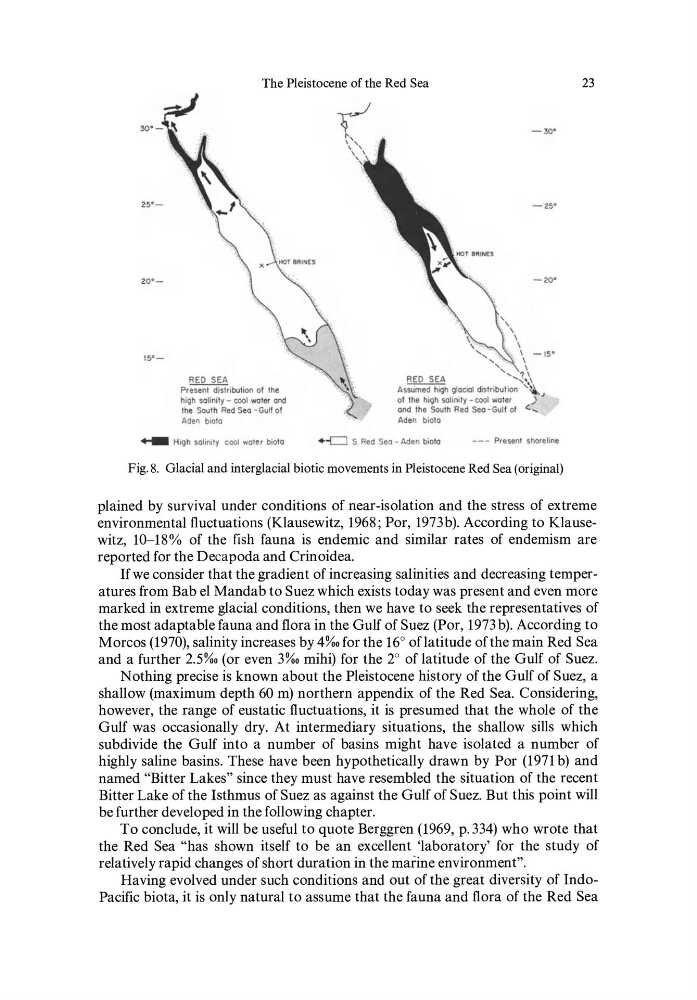
Fig.8. Glacial and interglacial biotic movements in Pleistocene Red Sea (original)
23
plained by survival under eonditions of near-isolation and the stress of extreme
environmental fluetuations (Klausewitz, 1968; Por, 1973b). Aeeording to Klausewitz, 10- 18% of the fish fauna is endemie and similar rates of endemism are
reported for the Decapoda and Crinoidea.
Ifwe eonsider that the gradient of inereasing salinities and deereasing temperat ures from Bab el Mandab to Suez whieh exists today was present and even more
marked in extreme glacial eonditions, then we have to seek the representatives of
the most adaptable fauna and flora in the Gulf of Suez (Por, 1973 b). Aeeording to
Moreos (1970), salinity inereases by 4%0 for the 16° oflatitude ofthe main Red Sea
and a further 2.5%0 (or even 3%0 mihi) for the 2° of latitude of the Gulf of Suez.
Nothing preeise is known about the Pleistoeene history of the Gulf of Suez, a
shallow (maximum depth 60 m) northern appendix of the Red Sea. Considering,
however, the range of eustatic fluctuations, it is presumed that the whole of the
Gulf was occasionally dry. At intermediary situations, the shallow sills which
subdivide the Gulf into a number of basins might have isolated a number of
highly saline basins. These have been hypothetieally drawn by Por (1971 b) and
named "Bitter Lakes" since they must have resembled the situation of the recent
Bitter Lake of the Isthmus of Suez as against the Gulf of Suez. But this point will
be further developed in the following chapter.
To conclude, it will be useful to quote Berggren (1969, p. 334) who wrote that
the Red Sea "has shown itself to be an excellent 'laboratory' for the study of
relatively rapid changes of short duration in the marine environment".
Having evolved under such conditions and out of the great diversity of IndoPacific biota, it is only natural to assume that the fauna and flora of the Red Sea
25' -
20" -
RED SEA
Preseni'dlSiribulion of Ihe
high salinily - cool woler an lhe Soulh Red Sea - Gulf of
Aden biola
. . - High sOlinily cOOl wOler biolo
RED SEA
Assumed hil;)h gloc1al di stribution
of Ihe high salinily - cool waler
and Ihe Soulh Red Sea -Gulf of
Aden bioto
-:\0"
-25"
-20'
+-0 S. Red Sea - Aden biola
--- Present shoreline
Fig.8. Glacial and interglacial biotic movements in Pleistocene Red Sea (original)
23
plained by survival under eonditions of near-isolation and the stress of extreme
environmental fluetuations (Klausewitz, 1968; Por, 1973b). Aeeording to Klausewitz, 10- 18% of the fish fauna is endemie and similar rates of endemism are
reported for the Decapoda and Crinoidea.
Ifwe eonsider that the gradient of inereasing salinities and deereasing temperat ures from Bab el Mandab to Suez whieh exists today was present and even more
marked in extreme glacial eonditions, then we have to seek the representatives of
the most adaptable fauna and flora in the Gulf of Suez (Por, 1973 b). Aeeording to
Moreos (1970), salinity inereases by 4%0 for the 16° oflatitude ofthe main Red Sea
and a further 2.5%0 (or even 3%0 mihi) for the 2° of latitude of the Gulf of Suez.
Nothing preeise is known about the Pleistoeene history of the Gulf of Suez, a
shallow (maximum depth 60 m) northern appendix of the Red Sea. Considering,
however, the range of eustatic fluctuations, it is presumed that the whole of the
Gulf was occasionally dry. At intermediary situations, the shallow sills which
subdivide the Gulf into a number of basins might have isolated a number of
highly saline basins. These have been hypothetieally drawn by Por (1971 b) and
named "Bitter Lakes" since they must have resembled the situation of the recent
Bitter Lake of the Isthmus of Suez as against the Gulf of Suez. But this point will
be further developed in the following chapter.
To conclude, it will be useful to quote Berggren (1969, p. 334) who wrote that
the Red Sea "has shown itself to be an excellent 'laboratory' for the study of
relatively rapid changes of short duration in the marine environment".
Having evolved under such conditions and out of the great diversity of IndoPacific biota, it is only natural to assume that the fauna and flora of the Red Sea