

130
The Migrant Biota
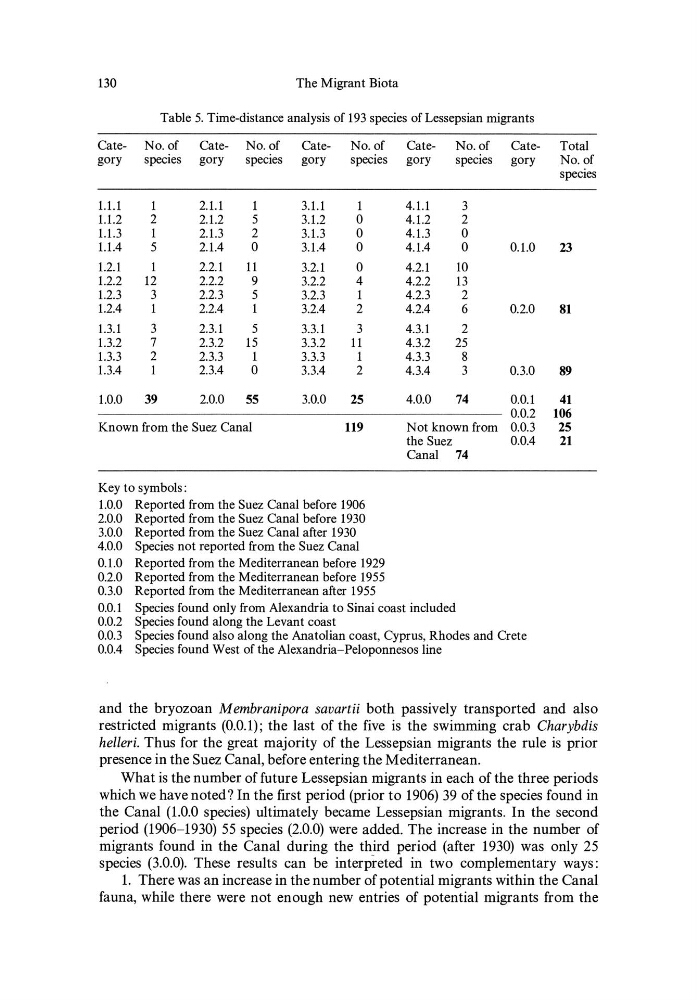
Table 5. Time-distance analysis of 193 species of Lessepsian migrants
Cate- No.of
Cate- No.of
CateNo.of
CateNo.of
CateTotal
gory
species gory
species gory
species gory
species gory
No.of
species
1.1.1
1
2.1.1
1
3.1.1
1
4.1.1
3
1.1.2
2
2.1.2
5
3.1.2
0
4.1.2
2
1.1.3
1
2.1.3
2
3.1.3
0
4.1.3
0
1.1.4
5
2.1.4
0
3.1.4
0
4.1.4
0
0.1.0
23
1.2.1
1
2.2.1
11
3.2.1
0
4.2.1
10
1.2.2
12
2.2.2
9
3.2.2
4
4.2.2
13
1.2.3
3
2.2.3
5
3.2.3
1
4.2.3
2
1.2.4
1
2.2.4
1
3.2.4
2
4.2.4
6
0.2.0
81
1.3.1
3
2.3.1
5
3.3.1
3
4.3.1
2
1.3.2
7
2.3.2
15
3.3.2
11
4.3.2
25
1.3.3
2
2.3.3
1
3.3.3
1
4.3.3
8
1.3.4
1
2.3.4
0
3.3.4
2
4.3.4
3
0.3.0
89
1.0.0
39
2.0.0
55
3.0.0
25
4.0.0
74
0.0.1
41
0.0.2 106
Known from the Suez Canal
119
Not known from 0.0.3
25
the Suez
0.0.4
21
Canal 74
Key to symbols:
1.0.0 Reported from the Suez Canal before 1906
2.0.0 Reported from the Suez Canal before 1930
3.0.0 Reported from the Suez Canal after 1930
4.0.0 Species not reported from the Suez Canal
0.1.0 Reported from the Mediterranean before 1929
0.2.0 Reported from the Mediterranean before 1955
0.3.0 Reported from the Mediterranean after 1955
0.0.1 Species found only from Alexandria to Sinai coast inc1uded
0.0.2 Species found along the Levant coast
0.0.3 Species found also along the Anatolian coast, Cyprus, Rhodes and Crete
0.0.4 Species found West of the Alexandria-Peloponnesos line
and the bryozoan M embranipora savartii both passively transported and also
restricted migrants (0.0.1); the last of the five is the swimming crab Charybdis
helleri. Thus for the great majority of the Lessepsian migrants the rule is prior
presence in the Suez Canal, before entering the Mediterranean.
What is the number of future Lessepsian migrants in each of the three periods
which we have noted? In the first period (prior to 1906) 39 of the species found in
the Canal (1.0.0 species) ultimately became Lessepsian migrants. In the second
period (1906-1930) 55 species (2.0.0) were added. The increase in the number of
migrants found in the Canal during the third period (after 1930) was only 25
species (3.0.0). These results can be interpreted in two complementary ways:
1. There was an increase in the number of potential migrants within the Canal
fauna, while there were not enough new entries of potential migrants from the
The Migrant Biota
Table 5. Time-distance analysis of 193 species of Lessepsian migrants
Cate- No.of
Cate- No.of
CateNo.of
CateNo.of
CateTotal
gory
species gory
species gory
species gory
species gory
No.of
species
1.1.1
1
2.1.1
1
3.1.1
1
4.1.1
3
1.1.2
2
2.1.2
5
3.1.2
0
4.1.2
2
1.1.3
1
2.1.3
2
3.1.3
0
4.1.3
0
1.1.4
5
2.1.4
0
3.1.4
0
4.1.4
0
0.1.0
23
1.2.1
1
2.2.1
11
3.2.1
0
4.2.1
10
1.2.2
12
2.2.2
9
3.2.2
4
4.2.2
13
1.2.3
3
2.2.3
5
3.2.3
1
4.2.3
2
1.2.4
1
2.2.4
1
3.2.4
2
4.2.4
6
0.2.0
81
1.3.1
3
2.3.1
5
3.3.1
3
4.3.1
2
1.3.2
7
2.3.2
15
3.3.2
11
4.3.2
25
1.3.3
2
2.3.3
1
3.3.3
1
4.3.3
8
1.3.4
1
2.3.4
0
3.3.4
2
4.3.4
3
0.3.0
89
1.0.0
39
2.0.0
55
3.0.0
25
4.0.0
74
0.0.1
41
0.0.2 106
Known from the Suez Canal
119
Not known from 0.0.3
25
the Suez
0.0.4
21
Canal 74
Key to symbols:
1.0.0 Reported from the Suez Canal before 1906
2.0.0 Reported from the Suez Canal before 1930
3.0.0 Reported from the Suez Canal after 1930
4.0.0 Species not reported from the Suez Canal
0.1.0 Reported from the Mediterranean before 1929
0.2.0 Reported from the Mediterranean before 1955
0.3.0 Reported from the Mediterranean after 1955
0.0.1 Species found only from Alexandria to Sinai coast inc1uded
0.0.2 Species found along the Levant coast
0.0.3 Species found also along the Anatolian coast, Cyprus, Rhodes and Crete
0.0.4 Species found West of the Alexandria-Peloponnesos line
and the bryozoan M embranipora savartii both passively transported and also
restricted migrants (0.0.1); the last of the five is the swimming crab Charybdis
helleri. Thus for the great majority of the Lessepsian migrants the rule is prior
presence in the Suez Canal, before entering the Mediterranean.
What is the number of future Lessepsian migrants in each of the three periods
which we have noted? In the first period (prior to 1906) 39 of the species found in
the Canal (1.0.0 species) ultimately became Lessepsian migrants. In the second
period (1906-1930) 55 species (2.0.0) were added. The increase in the number of
migrants found in the Canal during the third period (after 1930) was only 25
species (3.0.0). These results can be interpreted in two complementary ways:
1. There was an increase in the number of potential migrants within the Canal
fauna, while there were not enough new entries of potential migrants from the