

116
The Migrant Biota
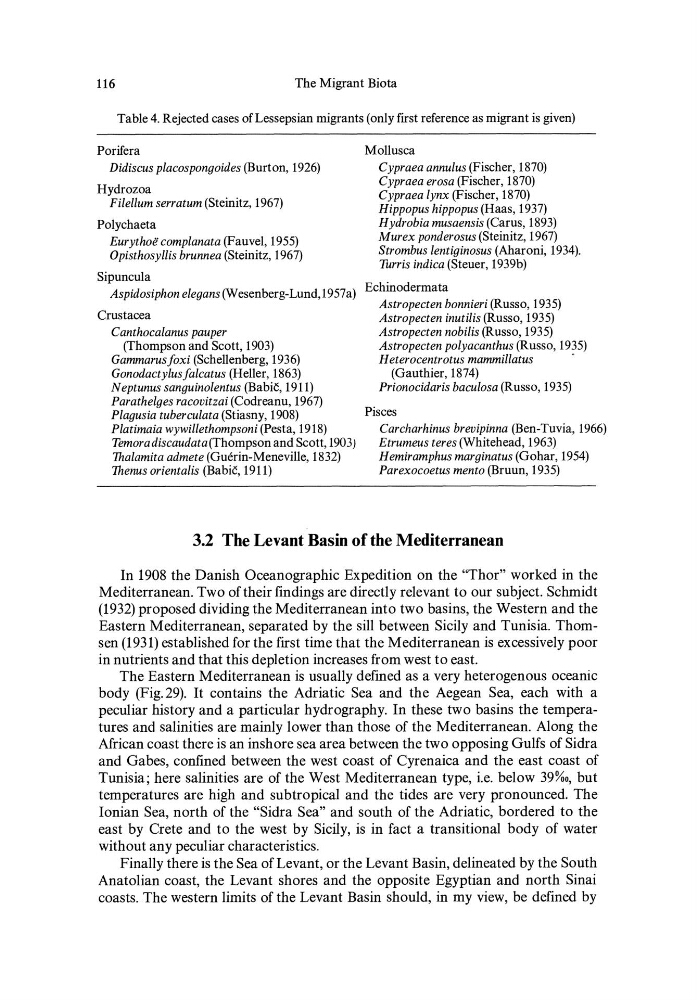
Table 4. Rejected cases of Lessepsian migrants (only first reference as migrant is given)
Porifera
Didiscus placospongoides (Burton, 1926)
Hydrozoa
Filellum serratum (Steinitz, 1967)
Polychaeta
Eurythoe complanata (Fauvel, 1955)
Opisthosyllis brunnea (Steinitz, 1967)
Mollusca
Cypraea annulus (Fischer, 1870)
Cypraea erosa (Fischer, 1870)
Cypraea lynx (Fischer, 1870)
Hippopus hippopus (Haas, 1937)
Hydrobia musaensis (Carus, 1893)
Murex ponderosus (Steinitz, 1967)
Strombus lentiginosus (Aharoni, 1934).
Turris indica (Steuer, 1939b)
Sipuncula
Aspidosiphon elegans (Wesenberg-Lund, 1957a) Echinodermata
Astropecten bonnieri (Russo, 1935)
Astropecten inutilis (Russo, 1935)
Astropecten nobilis (Russo, 1935)
Astropecten polyacanthus (Russo, 1935)
Crustacea
Canthocalanus pauper
(Thompson and Scott, 1903)
Gammarusfoxi (Schellenberg, 1936)
Gonodactylusfalcatus (Heller, 1863)
Neptunus sanguinolentus (Babic, 1911)
Parathelges racovitzai (Codreanu, 1967)
Plagusia tuberculata (Stiasny, 1908)
Platimaia wywillethompsoni (Pesta, 1918)
Temora discaudata(Thompson and Scott, 1903)
Thalamita admete (Guerin-MenevilIe, 1832)
Thenus orientalis (Babic, 1911)
Heterocentrotus mammillatus
.
(Gauthier, 1874)
Prionocidaris baculosa (Russo, 1935)
Pisces
Carcharhinus brevipinna (Ben-Tuvia, 1966)
Etrumeus teres (Whitehead, 1963)
Hemiramphus marginatus (Gohar, 1954)
Parexocoetus menta (Bruun, 1935)
3.2 The Levant Basin of the Mediterranean
In 1908 the Danish Oceanographic Expedition on the "Thor" worked in the
Mediterranean. Two oftheir findings are directly relevant to our subject. Schmidt
(1932) proposed dividing the Mediterranean into two basins, the Western and the
Eastern Mediterranean, separated by the sill between Sicily and Tunisia. Thomsen (1931) established for the first time that the Mediterranean is excessively poor
in nutrients and that this depletion increases from west to east.
The Eastern Mediterranean is usually defined as a very heterogenous oceanic
body (Fig.29). It contains the Adriatic Sea and the Aegean Sea, each with a
peculiar history and a particular hydrography. In these two basins the temperatures and salinities are mainly lower than those of the Mediterranean. Along the
African coast there is an inshore sea area between the two opposing Gulfs of Sidra
and Gabes, confined between the west coast of Cyrenaica and the east coast of
Tunisia; here salinities are of the West Mediterranean type, i.e. below 39%0, but
temperatures are high and subtropical and the ti des are very pronounced. The
Ionian Sea, north of the "Sidra Sea" and south of the Adriatic, bordered to the
east by Crete and to the west by Sicily, is in fact a transitional body of water
without any peculiar characteristics.
Finally there is the Sea ofLevant, or the Levant Basin, delineated by the South
Anatolian co ast, the Levant shores and the opposite Egyptian and north Sinai
coasts. The western limits of the Levant Basin should, in my view, be defined by
The Migrant Biota
Table 4. Rejected cases of Lessepsian migrants (only first reference as migrant is given)
Porifera
Didiscus placospongoides (Burton, 1926)
Hydrozoa
Filellum serratum (Steinitz, 1967)
Polychaeta
Eurythoe complanata (Fauvel, 1955)
Opisthosyllis brunnea (Steinitz, 1967)
Mollusca
Cypraea annulus (Fischer, 1870)
Cypraea erosa (Fischer, 1870)
Cypraea lynx (Fischer, 1870)
Hippopus hippopus (Haas, 1937)
Hydrobia musaensis (Carus, 1893)
Murex ponderosus (Steinitz, 1967)
Strombus lentiginosus (Aharoni, 1934).
Turris indica (Steuer, 1939b)
Sipuncula
Aspidosiphon elegans (Wesenberg-Lund, 1957a) Echinodermata
Astropecten bonnieri (Russo, 1935)
Astropecten inutilis (Russo, 1935)
Astropecten nobilis (Russo, 1935)
Astropecten polyacanthus (Russo, 1935)
Crustacea
Canthocalanus pauper
(Thompson and Scott, 1903)
Gammarusfoxi (Schellenberg, 1936)
Gonodactylusfalcatus (Heller, 1863)
Neptunus sanguinolentus (Babic, 1911)
Parathelges racovitzai (Codreanu, 1967)
Plagusia tuberculata (Stiasny, 1908)
Platimaia wywillethompsoni (Pesta, 1918)
Temora discaudata(Thompson and Scott, 1903)
Thalamita admete (Guerin-MenevilIe, 1832)
Thenus orientalis (Babic, 1911)
Heterocentrotus mammillatus
.
(Gauthier, 1874)
Prionocidaris baculosa (Russo, 1935)
Pisces
Carcharhinus brevipinna (Ben-Tuvia, 1966)
Etrumeus teres (Whitehead, 1963)
Hemiramphus marginatus (Gohar, 1954)
Parexocoetus menta (Bruun, 1935)
3.2 The Levant Basin of the Mediterranean
In 1908 the Danish Oceanographic Expedition on the "Thor" worked in the
Mediterranean. Two oftheir findings are directly relevant to our subject. Schmidt
(1932) proposed dividing the Mediterranean into two basins, the Western and the
Eastern Mediterranean, separated by the sill between Sicily and Tunisia. Thomsen (1931) established for the first time that the Mediterranean is excessively poor
in nutrients and that this depletion increases from west to east.
The Eastern Mediterranean is usually defined as a very heterogenous oceanic
body (Fig.29). It contains the Adriatic Sea and the Aegean Sea, each with a
peculiar history and a particular hydrography. In these two basins the temperatures and salinities are mainly lower than those of the Mediterranean. Along the
African coast there is an inshore sea area between the two opposing Gulfs of Sidra
and Gabes, confined between the west coast of Cyrenaica and the east coast of
Tunisia; here salinities are of the West Mediterranean type, i.e. below 39%0, but
temperatures are high and subtropical and the ti des are very pronounced. The
Ionian Sea, north of the "Sidra Sea" and south of the Adriatic, bordered to the
east by Crete and to the west by Sicily, is in fact a transitional body of water
without any peculiar characteristics.
Finally there is the Sea ofLevant, or the Levant Basin, delineated by the South
Anatolian co ast, the Levant shores and the opposite Egyptian and north Sinai
coasts. The western limits of the Levant Basin should, in my view, be defined by