

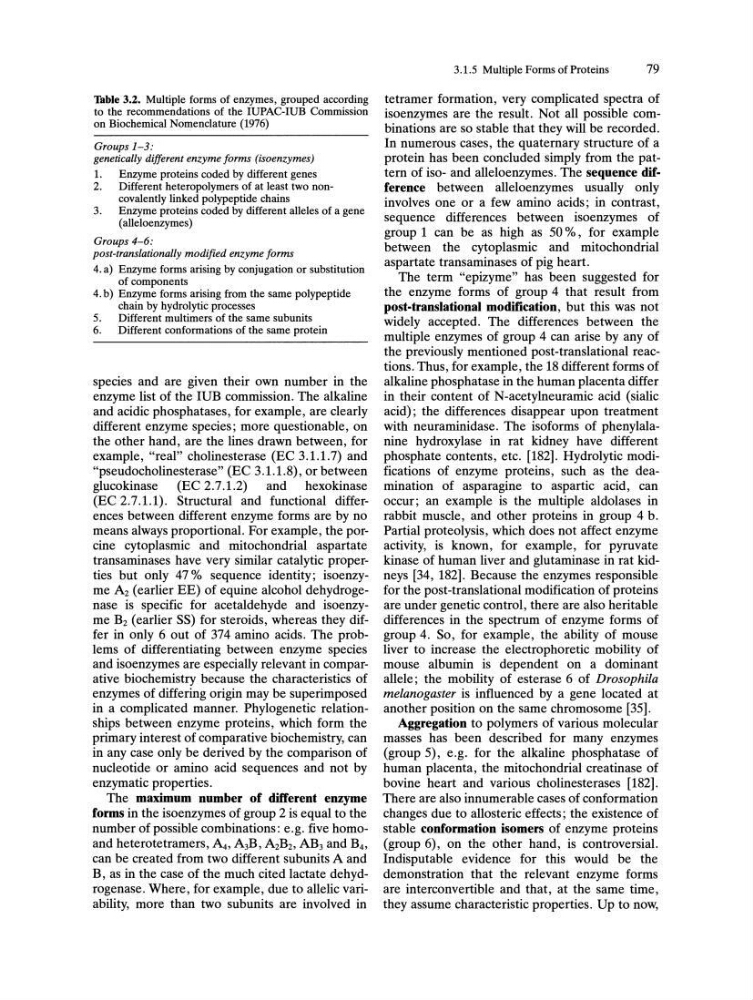
Table 3.2. Multiple forms of enzymes, grouped according
to the recommendations of the IUPAC-IUB Commission
on Biochemical Nomenclature (1976)
Groups 1-3:
genetically different enzyme forms (isoenzymes)
1.
Enzyme proteins coded by different genes
2.
Different heteropolymers of at least two noncovalently linked polypeptide chains
3.
Enzyme proteins coded by different alleles of a gene
(alleloenzymes)
Groups 4-6:
post-translationally modified enzyme forms
4. a) Enzyme forms arising by conjugation or substitution
of components
4. b) Enzyme forms arising from the same polypeptide
chain by hydrolytic processes
5.
Different multimers of the same subunits
6.
Different conformations of the same protein
species and are given their own number in the
enzyme list of the IUB commission. The alkaline
and acidic phosphatases, for example, are clearly
different enzyme species; more questionable, on
the other hand, are the lines drawn between, for
example, "real" cholinesterase (EC 3.1.1.7) and
"pseudocholinesterase" (EC 3.1.1.8), or between
glucokinase (EC 2.7.1.2) and hexokinase
(EC 2.7.1.1). Structural and functional differences between different enzyme forms are by no
means always proportional. For example, the porcine cytoplasmic and mitochondrial aspartate
transaminases have very similar catalytic properties but only 47 % sequence identity; isoenzyme A2 (earlier EE) of equine alcohol dehydrogenase is specific for acetaldehyde and isoenzyme B2 (earlier SS) for steroids, whereas they differ in only 6 out of 374 amino acids. The problems of differentiating between enzyme species
and isoenzymes are especially relevant in comparative biochemistry because the characteristics of
enzymes of differing origin may be superimposed
in a complicated manner. Phylogenetic relationships between enzyme proteins, which form the
primary interest of comparative biochemistry, can
in any case only be derived by the comparison of
nucleotide or amino acid sequences and not by
enzymatic properties.
The maximum number of different enzyme
forms in the isoenzymes of group 2 is equal to the
number of possible combinations: e.g. five homoand heterotetramers, A4, A3B, A2B2, AB3 and B4,
can be created from two different subunits A and
B, as in the case of the much cited lactate dehydrogenase. Where, for example, due to allelic variability, more than two subunits are involved in
3.1.5 Multiple Forms of Proteins
79
tetramer formation, very complicated spectra of
isoenzymes are the result. Not all possible combinations are so stable that they will be recorded.
In numerous cases, the quaternary structure of a
protein has been concluded simply from the pattern of iso- and alleloenzymes. The sequence difference between alleloenzymes usually only
involves one or a few amino acids; in contrast,
sequence differences between isoenzymes of
group 1 can be as high as 50 %, for example
between the cytoplasmic and mitochondrial
aspartate transaminases of pig heart.
The term "epizyme" has been suggested for
the enzyme forms of group 4 that result from
post-translational modification, but this was not
widely accepted. The differences between the
multiple enzymes of group 4 can arise by any of
the previously mentioned post-translational reactions. Thus, for example, the 18 different forms of
alkaline phosphatase in the human placenta differ
in their content of N-acetylneuramic acid (sialic
acid); the differences disappear upon treatment
with neuraminidase. The isoforms of phenylalanine hydroxylase in rat kidney have different
phosphate contents, etc. [182]. Hydrolytic modifications of enzyme proteins, such as the de amination of asparagine to aspartic acid, can
occur; an example is the multiple aldolases in
rabbit muscle, and other proteins in group 4 b.
Partial proteolysis, which does not affect enzyme
activity, is known, for example, for pyruvate
kinase of human liver and glutaminase in rat kidneys [34, 182]. Because the enzymes responsible
for the post-translational modification of proteins
are under genetic control, there are also heritable
differences in the spectrum of enzyme forms of
group 4. So, for example, the ability of mouse
liver to increase the electrophoretic mobility of
mouse albumin is dependent on a dominant
allele; the mobility of esterase 6 of Drosophila
melanogaster is influenced by a gene located at
another position on the same chromosome [35].
Aggregation to polymers of various molecular
masses has been described for many enzymes
(group 5), e.g. for the alkaline phosphatase of
human placenta, the mitochondrial creatinase of
bovine heart and various cholinesterases [182].
There are also innumerable cases of conformation
changes due to allosteric effects; the existence of
stable conformation isomers of enzyme proteins
(group 6), on the other hand, is controversial.
Indisputable evidence for this would be the
demonstration that the relevant enzyme forms
are interconvertible and that, at the same time,
they assume characteristic properties. Up to now,
to the recommendations of the IUPAC-IUB Commission
on Biochemical Nomenclature (1976)
Groups 1-3:
genetically different enzyme forms (isoenzymes)
1.
Enzyme proteins coded by different genes
2.
Different heteropolymers of at least two noncovalently linked polypeptide chains
3.
Enzyme proteins coded by different alleles of a gene
(alleloenzymes)
Groups 4-6:
post-translationally modified enzyme forms
4. a) Enzyme forms arising by conjugation or substitution
of components
4. b) Enzyme forms arising from the same polypeptide
chain by hydrolytic processes
5.
Different multimers of the same subunits
6.
Different conformations of the same protein
species and are given their own number in the
enzyme list of the IUB commission. The alkaline
and acidic phosphatases, for example, are clearly
different enzyme species; more questionable, on
the other hand, are the lines drawn between, for
example, "real" cholinesterase (EC 3.1.1.7) and
"pseudocholinesterase" (EC 3.1.1.8), or between
glucokinase (EC 2.7.1.2) and hexokinase
(EC 2.7.1.1). Structural and functional differences between different enzyme forms are by no
means always proportional. For example, the porcine cytoplasmic and mitochondrial aspartate
transaminases have very similar catalytic properties but only 47 % sequence identity; isoenzyme A2 (earlier EE) of equine alcohol dehydrogenase is specific for acetaldehyde and isoenzyme B2 (earlier SS) for steroids, whereas they differ in only 6 out of 374 amino acids. The problems of differentiating between enzyme species
and isoenzymes are especially relevant in comparative biochemistry because the characteristics of
enzymes of differing origin may be superimposed
in a complicated manner. Phylogenetic relationships between enzyme proteins, which form the
primary interest of comparative biochemistry, can
in any case only be derived by the comparison of
nucleotide or amino acid sequences and not by
enzymatic properties.
The maximum number of different enzyme
forms in the isoenzymes of group 2 is equal to the
number of possible combinations: e.g. five homoand heterotetramers, A4, A3B, A2B2, AB3 and B4,
can be created from two different subunits A and
B, as in the case of the much cited lactate dehydrogenase. Where, for example, due to allelic variability, more than two subunits are involved in
3.1.5 Multiple Forms of Proteins
79
tetramer formation, very complicated spectra of
isoenzymes are the result. Not all possible combinations are so stable that they will be recorded.
In numerous cases, the quaternary structure of a
protein has been concluded simply from the pattern of iso- and alleloenzymes. The sequence difference between alleloenzymes usually only
involves one or a few amino acids; in contrast,
sequence differences between isoenzymes of
group 1 can be as high as 50 %, for example
between the cytoplasmic and mitochondrial
aspartate transaminases of pig heart.
The term "epizyme" has been suggested for
the enzyme forms of group 4 that result from
post-translational modification, but this was not
widely accepted. The differences between the
multiple enzymes of group 4 can arise by any of
the previously mentioned post-translational reactions. Thus, for example, the 18 different forms of
alkaline phosphatase in the human placenta differ
in their content of N-acetylneuramic acid (sialic
acid); the differences disappear upon treatment
with neuraminidase. The isoforms of phenylalanine hydroxylase in rat kidney have different
phosphate contents, etc. [182]. Hydrolytic modifications of enzyme proteins, such as the de amination of asparagine to aspartic acid, can
occur; an example is the multiple aldolases in
rabbit muscle, and other proteins in group 4 b.
Partial proteolysis, which does not affect enzyme
activity, is known, for example, for pyruvate
kinase of human liver and glutaminase in rat kidneys [34, 182]. Because the enzymes responsible
for the post-translational modification of proteins
are under genetic control, there are also heritable
differences in the spectrum of enzyme forms of
group 4. So, for example, the ability of mouse
liver to increase the electrophoretic mobility of
mouse albumin is dependent on a dominant
allele; the mobility of esterase 6 of Drosophila
melanogaster is influenced by a gene located at
another position on the same chromosome [35].
Aggregation to polymers of various molecular
masses has been described for many enzymes
(group 5), e.g. for the alkaline phosphatase of
human placenta, the mitochondrial creatinase of
bovine heart and various cholinesterases [182].
There are also innumerable cases of conformation
changes due to allosteric effects; the existence of
stable conformation isomers of enzyme proteins
(group 6), on the other hand, is controversial.
Indisputable evidence for this would be the
demonstration that the relevant enzyme forms
are interconvertible and that, at the same time,
they assume characteristic properties. Up to now,