

582
15 Lipids
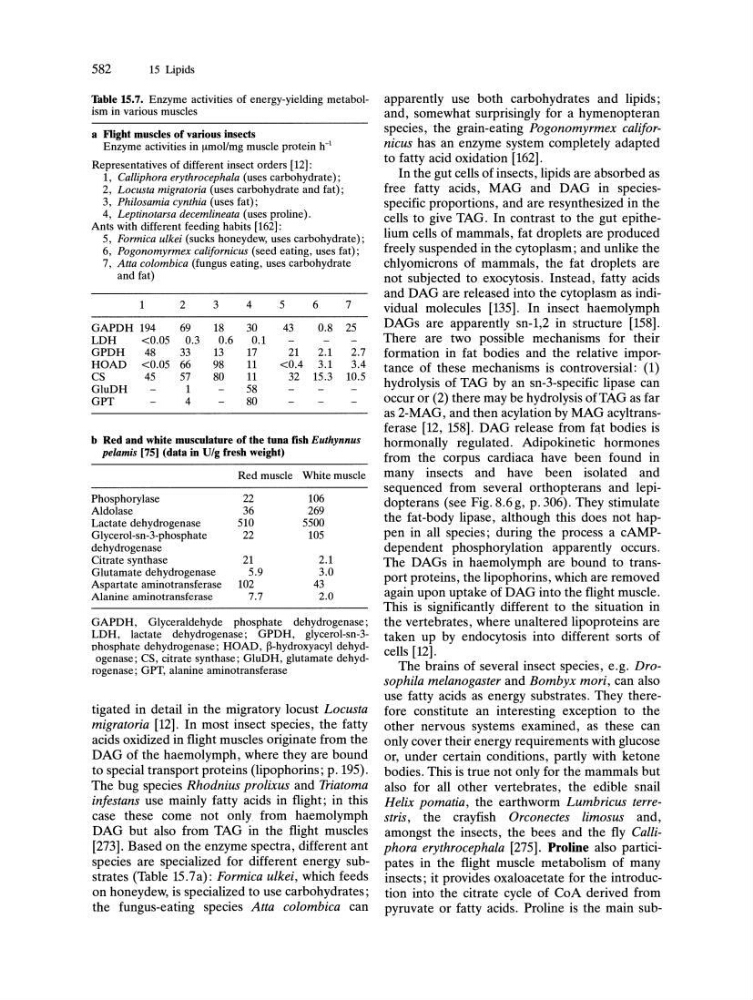
Table 15.7. Enzyme activities of energy-yielding metabolism in various muscles
a Flight muscles of various insects
Enzyme activities in !-tmol/mg muscle protein h- 1
Representatives of different insect orders [12]:
1, Calliphora erythrocephala (uses carbohydrate);
2, Locusta migratoria (uses carbohydrate and fat);
3, Philosamia cynthia (uses fat);
4, Leptinotarsa decemlineata (uses proline).
Ants with different feeding habits [162]:
5, Formica ulkei (sucks honeydew, uses carbohydrate);
6, Pogonomyrmex califomicus (seed eating, uses fat);
7, Atta colombica (fungus eating, uses carbohydrate
and fat)
1
2
3
4
5
6
7
GAPDH 194
69
18
30
43
0.8 25
LDH
<0.05 0.3
0.6
0.1
GPDH
48
33
13
17
21
2.1
2.7
HOAD <0.05 66
98
11
<0.4 3.1
3.4
CS
45
57
80
11
32 15.3 10.5
GluDH
1
58
GPT
4
80
b Red and white musculature of the tuna fish Euthynnus
pelamis [75] (data in U/g fresh weight)
Phosphorylase
Aldolase
Lactate dehydrogenase
Glycerol-sn-3-phosphate
dehydrogenase
Citrate synthase
Glutamate dehydrogenase
Aspartate aminotransferase
Alanine aminotransferase
Red muscle White muscle
22
36
510
22
21
5.9
102
7.7
106
269
5500
105
2.1
3.0
43
2.0
GAPDH, Glyceraldehyde phosphate dehydrogenase;
LDH, lactate dehydrogenase; GPDH, glycerol-sn-3phosphate dehydrogenase; HOAD, f3-hydroxyacyl dehydogenase; CS, citrate synthase; GluDH, glutamate dehydrogenase; G PT, alanine aminotransferase
tigated in detail in the migratory locust Locusta
migratoria [12]. In most insect species, the fatty
acids oxidized in flight muscles originate from the
DAG of the haemolymph, where they are bound
to special transport proteins (lipophorins; p.195).
The bug species Rhodnius prolixus and Triatoma
infestans use mainly fatty acids in flight; in this
case these come not only from haemolymph
DAG but also from TAG in the flight muscles
[273]. Based on the enzyme spectra, different ant
species are specialized for different energy substrates (Table 15.7 a): Formica ulkei, which feeds
on honeydew, is specialized to use carbohydrates;
the fungus-eating species Atta colombica can
apparently use both carbohydrates and lipids;
and, somewhat surprisingly for a hymenopteran
species, the grain-eating Pogonomyrmex calif ornicus has an enzyme system completely adapted
to fatty acid oxidation [162].
In the gut cells of insects, lipids are absorbed as
free fatty acids, MAG and DAG in speciesspecific proportions, and are resynthesized in the
cells to give TAG. In contrast to the gut epithelium cells of mammals, fat droplets are produced
freely suspended in the cytoplasm; and unlike the
chlyomicrons of mammals, the fat droplets are
not subjected to exocytosis. Instead, fatty acids
and DAG are released into the cytoplasm as individual molecules [135]. In insect haemolymph
DAGs are apparently sn-l,2 in structure [158].
There are two possible mechanisms for their
formation in fat bodies and the relative importance of these mechanisms is controversial: (1)
hydrolysis of TAG by an sn-3-specific lipase can
occur or (2) there may be hydrolysis of TAG as far
as 2-MAG, and then acylation by MAG acyltransferase [12, 158]. DAG release from f~t bodies is
hormonally regulated. Adipokinetic hormones
from the corpus cardiaca have been found in
many insects and have been isolated and
sequenced from several orthopterans and lepidopterans (see Fig. 8.6 g, p. 306). They stimulate
the fat-body lipase, although this does not happen in all species; during the process a cAMPdependent phosphorylation apparently occurs.
The DAGs in haemolymph are bound to transport proteins, the lipophorins, which are removed
again upon uptake of DAG into the flight muscle.
This is significantly different to the situation in
the vertebrates, where unaltered lipoproteins are
taken up by endocytosis into different sorts of
cells [12].
The brains of several insect species, e.g. Drosophila melanogaster and Bombyx mori, can also
use fatty acids as energy substrates. They therefore constitute an interesting exception to the
other nervous systems examined, as these can
only cover their energy requirements with glucose
or, under certain conditions, partly with ketone
bodies. This is true not only for the mammals but
also for all other vertebrates, the edible snail
Helix pomatia, the earthworm Lumbricus terrestris, the crayfish Orconectes limos us and,
amongst the insects, the bees and the fly Calliphora erythrocephala [275]. Proline also participates in the flight muscle metabolism of many
insects; it provides oxaloacetate for the introduction into the citrate cycle of eoA derived from
pyruvate or fatty acids. Proline is the main sub-