

2.7.5 Regulation of Transcription
41
a
c
Fibronectin gene
5'-c=Jr-------{ 7~5~n!£t II =J2~8~5 n~t=:::J1}1o~8~n!£t 11_--- 3'
mRNAs
-c=J~--------------------~~~----b
aA-Crystallin gene
5'---i[====}-----C~I~ns~e~rt=:J-------c=J_ 3'
CTGAGGT
AGCTCAT. ... CAAAGGC
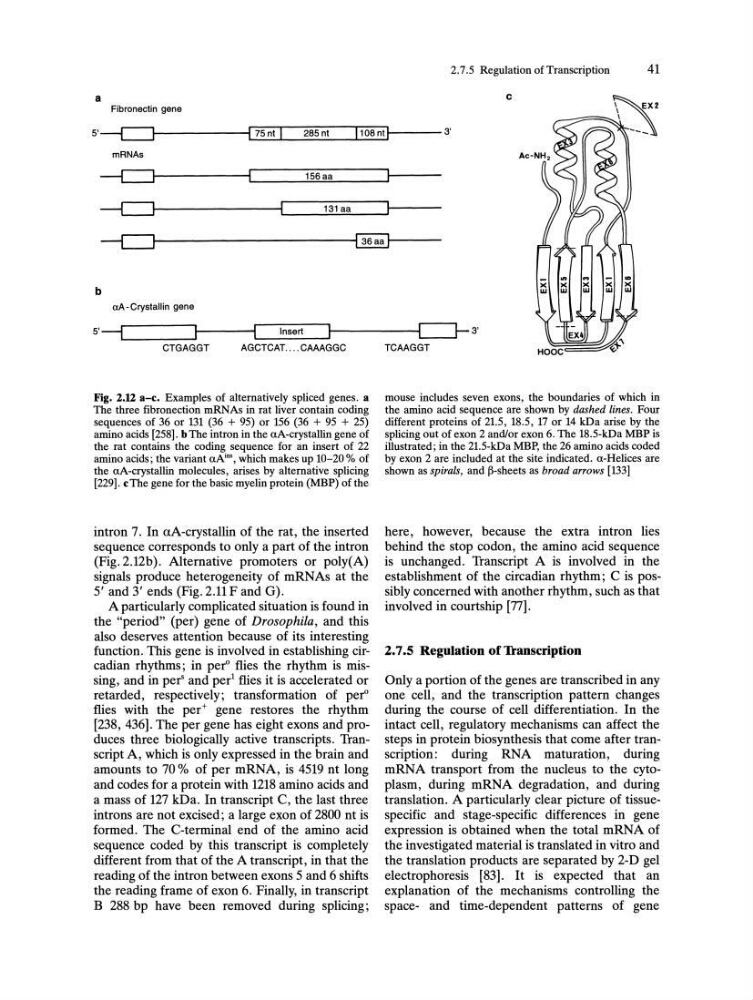
Fig. 2.U a-c. Examples of alternatively spliced genes. a
The three fibronection mRNAs in rat liver contain coding
sequences of 36 or 131 (36 + 95) or 156 (36 + 95 + 25)
amino acids [258]. b The intron in the aA-crystallin gene of
the rat contains the coding sequence for an insert of 22
amino acids; the variant aAins, which makes up 10-20 % of
the aA-crystallin molecules, arises by alternative splicing
[229]. c The gene for the basic myelin protein (MBP) of the
intron 7. In aA-crystallin of the rat, the inserted
sequence corresponds to only a part of the intron
(Fig.2.12b). Alternative promoters or poly(A)
signals produce heterogeneity of mRNAs at the
5' and 3' ends (Fig. 2.11 F and G).
A particularly complicated situation is found in
the "period" (per) gene of Drosophila, and this
also deserves attention because of its interesting
function. This gene is involved in establishing circadian rhythms; in per o flies the rhythm is missing, and in per s and perl flies it is accelerated or
retarded, respectively; transformation of per o
flies with the per+ gene restores the rhythm
[238,436]. The per gene has eight exons and produces three biologically active transcripts. Transcript A, which is only expressed in the brain and
amounts to 70 % of per mRNA, is 4519 nt long
and codes for a protein with 1218 amino acids and
a mass of 127 kDa. In transcript C, the last three
introns are not excised; a large exon of 2800 nt is
formed. The C-terminal end of the amino acid
sequence coded by this transcript is completely
different from that of the A transcript, in that the
reading of the intron between exons 5 and 6 shifts
the reading frame of exon 6. Finally, in transcript
B 288 bp have been removed during splicing;
TCAAGGT
mouse includes seven exons, the boundaries of which in
the amino acid sequence are shown by dashed lines. Four
different proteins of 21.5, 18.5, 17 or 14 kDa arise by the
splicing out of exon 2 and/or exon 6. The 18.5-kDa MBP is
illustrated; in the 21.5-kDa MBP, the 26 amino acids coded
by exon 2 are included at the site indicated. a-Helices are
shown as spirals, and ~-sheets as broad arrows [133]
here, however, because the extra intron lies
behind the stop codon, the amino acid sequence
is unchanged. Transcript A is involved in the
establishment of the circadian rhythm; C is possibly concerned with another rhythm, such as that
involved in courtship [77].
2.7.5 Regulation of Transcription
Only a portion of the genes are transcribed in any
one cell, and the transcription pattern changes
during the course of cell differentiation. In the
intact cell, regulatory mechanisms can affect the
steps in protein biosynthesis that come after transcription: during RNA maturation, during
mRNA transport from the nucleus to the cytoplasm, during mRNA degradation, and during
translation. A particularly clear picture of tissuespecific and stage-specific differences in gene
expression is obtained when the total mRNA of
the investigated material is translated in vitro and
the translation products are separated by 2-D gel
electrophoresis [83]. It is expected that an
explanation of the mechanisms controlling the
space- and time-dependent patterns of gene
41
a
c
Fibronectin gene
5'-c=Jr-------{ 7~5~n!£t II =J2~8~5 n~t=:::J1}1o~8~n!£t 11_--- 3'
mRNAs
-c=J~--------------------~~~----b
aA-Crystallin gene
5'---i[====}-----C~I~ns~e~rt=:J-------c=J_ 3'
CTGAGGT
AGCTCAT. ... CAAAGGC
Fig. 2.U a-c. Examples of alternatively spliced genes. a
The three fibronection mRNAs in rat liver contain coding
sequences of 36 or 131 (36 + 95) or 156 (36 + 95 + 25)
amino acids [258]. b The intron in the aA-crystallin gene of
the rat contains the coding sequence for an insert of 22
amino acids; the variant aAins, which makes up 10-20 % of
the aA-crystallin molecules, arises by alternative splicing
[229]. c The gene for the basic myelin protein (MBP) of the
intron 7. In aA-crystallin of the rat, the inserted
sequence corresponds to only a part of the intron
(Fig.2.12b). Alternative promoters or poly(A)
signals produce heterogeneity of mRNAs at the
5' and 3' ends (Fig. 2.11 F and G).
A particularly complicated situation is found in
the "period" (per) gene of Drosophila, and this
also deserves attention because of its interesting
function. This gene is involved in establishing circadian rhythms; in per o flies the rhythm is missing, and in per s and perl flies it is accelerated or
retarded, respectively; transformation of per o
flies with the per+ gene restores the rhythm
[238,436]. The per gene has eight exons and produces three biologically active transcripts. Transcript A, which is only expressed in the brain and
amounts to 70 % of per mRNA, is 4519 nt long
and codes for a protein with 1218 amino acids and
a mass of 127 kDa. In transcript C, the last three
introns are not excised; a large exon of 2800 nt is
formed. The C-terminal end of the amino acid
sequence coded by this transcript is completely
different from that of the A transcript, in that the
reading of the intron between exons 5 and 6 shifts
the reading frame of exon 6. Finally, in transcript
B 288 bp have been removed during splicing;
TCAAGGT
mouse includes seven exons, the boundaries of which in
the amino acid sequence are shown by dashed lines. Four
different proteins of 21.5, 18.5, 17 or 14 kDa arise by the
splicing out of exon 2 and/or exon 6. The 18.5-kDa MBP is
illustrated; in the 21.5-kDa MBP, the 26 amino acids coded
by exon 2 are included at the site indicated. a-Helices are
shown as spirals, and ~-sheets as broad arrows [133]
here, however, because the extra intron lies
behind the stop codon, the amino acid sequence
is unchanged. Transcript A is involved in the
establishment of the circadian rhythm; C is possibly concerned with another rhythm, such as that
involved in courtship [77].
2.7.5 Regulation of Transcription
Only a portion of the genes are transcribed in any
one cell, and the transcription pattern changes
during the course of cell differentiation. In the
intact cell, regulatory mechanisms can affect the
steps in protein biosynthesis that come after transcription: during RNA maturation, during
mRNA transport from the nucleus to the cytoplasm, during mRNA degradation, and during
translation. A particularly clear picture of tissuespecific and stage-specific differences in gene
expression is obtained when the total mRNA of
the investigated material is translated in vitro and
the translation products are separated by 2-D gel
electrophoresis [83]. It is expected that an
explanation of the mechanisms controlling the
space- and time-dependent patterns of gene