

408
12 Small Nitrogenous Compounds
Table 12.2. The osmoregulatory changes in the intracellular concentration of free amino acids in mmollkg water (ltmol!g
dry wt. in Bunodosoma, Bun)
Aca a
Lit b
Bal c
Bun d
Ala
2.4 ~ 80
17.7 ~ 3.9
1.2 ~ 16.3 ~ 24.7
6.2 ~ 13.2
~-Ala
1.5 ~ 41.9
Arg
0.1 ~ 0.5
6.3 ~ 5.3
1.5 ~
7.6 ~
5.7
Asp
0.1 ~ 2.2
0.9 ~ 1.9
0.3 ~
0.3 ~
2.1
6.6 ~ 14.1
GIu
0.4 ~ 4.9
4.0 ~ 2.4
1.5 ~
6.4 ~
9.1
7.2 ~ 24.2
Gly
0.4 ~ 4.1
9.0 ~ 5.5
0.9 ~ 29
~
19.5
12.5 ~ 10.8
His
0.1 ~ 0.6
Sp ~ 0.3
Sp ~
0.7 ~ tr
lIe
0.1 ~ 1.1
0
0
Sp ~
0.6 ~
0.7
Leu
0.2 ~ 1.8
0.8 ~ 1.0
0.1 ~
0.8 ~
1.4
Lys
0.3 ~ 1.1
tr
~
0.8
0.2 ~
1.4 ~
0.6
Met
0.1 ~ 0.8
0
0
Sp ~
0.6 ~ tr
Phe
0.1 ~ 0.6
0.4 ~ 4.1
0
~
0.2 ~
0
Pro
0.4 ~ 33
19.0 ~ 10.8
0.2 ~ 119
~
510
Ser
0.2 ~ 5.1
2.9 ~ 3.7
0.4 ~
3.7
) 7.6
Thr
0.2
3.1
1.0
2.1
0.1
1.1
~
~
~
~
Tyr
0.1 ~ 0.9
0.6 ~ 0.5
0
~
0.6 ~
0
Val
0.2 ~ 2.0
0.9 ~ 1.3
0.2 ~
1.6 ~
1.8
Taurin
40
~
22
0.5 ~ 16.6 ~
2.9
85.4 ~ 83.5
tr, trace
a Aca, Acanthamoeba castellani (Protozoa): amino acid-free medium with cane sugar increased from 40 to 500 mOsmol!
kg water [69].
b Lit, Littorina littorea (Gastropoda): muscles of animals from seawater and 50 % seawater [82].
C Bal, Balanus improvisus (Crustacea): thorax muscle from animals in media with 4, 1031 or 1877 mOsmollkg water [86].
d Bun, Bunodosoma cavernata (Cnidaria) after adaptation to a change in seawater composition from 2.6 to 4.0 % salt [124].
lobster, or in the rat [82]. The effect of enzyme
inhibitors on osmoregulation has been examined
during hyperosmotic stress in the isolated heart of
the mussel Modiolus demissus; the transaminase
inhibitors aminooxyacetic acid and L-cycloserine
could not prevent increases in the intracellular
amino acid concentration, but only produced certain shifts in the spectrum of additional amino
acids produced. The question also remains of the
origin of the nitrogen needed for the de novo
formation of the amino acids. In the prawn Macrobrachium rosenbergii, uptake of ammonia from
the medium increases during adaptation to
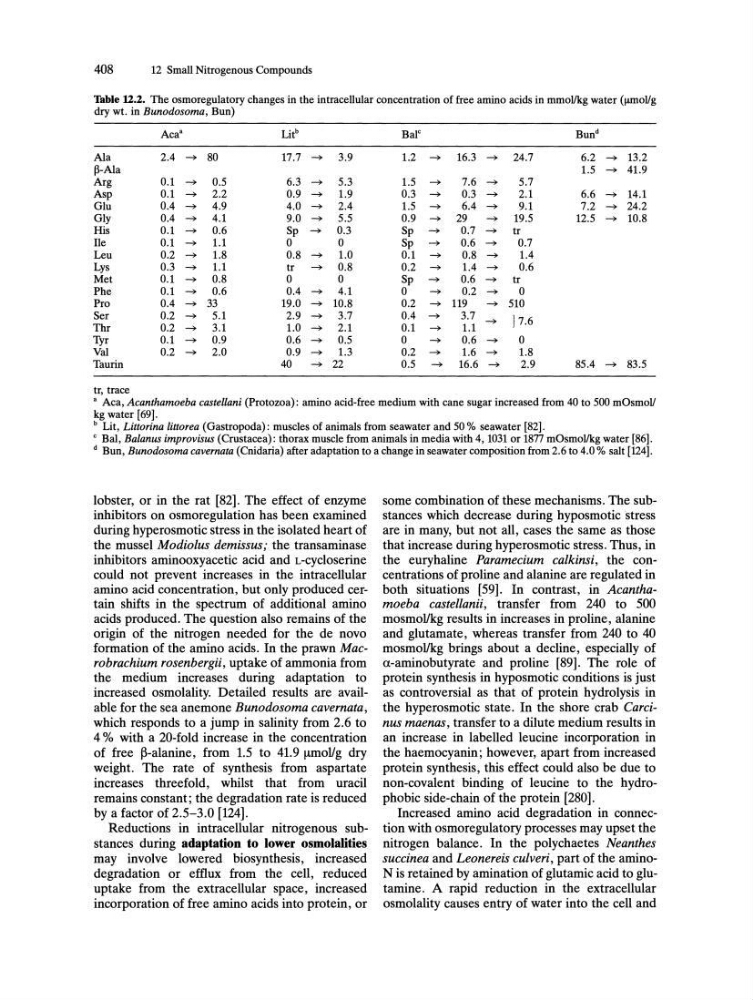
increased osmolality. Detailed results are available for the sea anemone Bunodosoma cavernata,
which responds to a jump in salinity from 2.6 to
4 % with a 20-fold increase in the concentration
of free ~-alanine, from 1.5 to 41.9 I-tmollg dry
weight. The rate of synthesis from aspartate
increases threefold, whilst that from uracil
remains constant; the degradation rate is reduced
by a factor of 2.5-3.0 [124].
Reductions in intracellular nitrogenous substances during adaptation to lower osmolalities
may involve lowered biosynthesis, increased
degradation or efflux from the cell, reduced
uptake from the extracellular space, increased
incorporation of free amino acids into protein, or
some combination of these mechanisms. The substances which decrease during hyposmotic stress
are in many, but not all, cases the same as those
that increase during hyperosmotic stress. Thus, in
the euryhaline Paramecium calkinsi, the concentrations of proline and alanine are regulated in
both situations [59]. In contrast, in Acanthamoeba castellanii, transfer from 240 to 500
mosmollkg results in increases in proline, alanine
and glutamate, whereas transfer from 240 to 40
mosmol/kg brings about a decline, especially of
a-aminobutyrate and proline [89]. The role of
protein synthesis in hyposmotic conditions is just
as controversial as that of protein hydrolysis in
the hyperosmotic state. In the shore crab Carcinus maenas, transfer to a dilute medium results in
an increase in labelled leucine incorporation in
the haemocyanin; however, apart from increased
protein synthesis, this effect could also be due to
non-covalent binding of leucine to the hydrophobic side-chain of the protein [280].
Increased amino acid degradation in connection with osmoregulatory processes may upset the
nitrogen balance. In the polychaetes Neanthes
succinea and Leonereis culveri, part of the aminoN is retained by amination of glutamic acid to glutamine. A rapid reduction in the extracellular
osmolality causes entry of water into the cell and
12 Small Nitrogenous Compounds
Table 12.2. The osmoregulatory changes in the intracellular concentration of free amino acids in mmollkg water (ltmol!g
dry wt. in Bunodosoma, Bun)
Aca a
Lit b
Bal c
Bun d
Ala
2.4 ~ 80
17.7 ~ 3.9
1.2 ~ 16.3 ~ 24.7
6.2 ~ 13.2
~-Ala
1.5 ~ 41.9
Arg
0.1 ~ 0.5
6.3 ~ 5.3
1.5 ~
7.6 ~
5.7
Asp
0.1 ~ 2.2
0.9 ~ 1.9
0.3 ~
0.3 ~
2.1
6.6 ~ 14.1
GIu
0.4 ~ 4.9
4.0 ~ 2.4
1.5 ~
6.4 ~
9.1
7.2 ~ 24.2
Gly
0.4 ~ 4.1
9.0 ~ 5.5
0.9 ~ 29
~
19.5
12.5 ~ 10.8
His
0.1 ~ 0.6
Sp ~ 0.3
Sp ~
0.7 ~ tr
lIe
0.1 ~ 1.1
0
0
Sp ~
0.6 ~
0.7
Leu
0.2 ~ 1.8
0.8 ~ 1.0
0.1 ~
0.8 ~
1.4
Lys
0.3 ~ 1.1
tr
~
0.8
0.2 ~
1.4 ~
0.6
Met
0.1 ~ 0.8
0
0
Sp ~
0.6 ~ tr
Phe
0.1 ~ 0.6
0.4 ~ 4.1
0
~
0.2 ~
0
Pro
0.4 ~ 33
19.0 ~ 10.8
0.2 ~ 119
~
510
Ser
0.2 ~ 5.1
2.9 ~ 3.7
0.4 ~
3.7
) 7.6
Thr
0.2
3.1
1.0
2.1
0.1
1.1
~
~
~
~
Tyr
0.1 ~ 0.9
0.6 ~ 0.5
0
~
0.6 ~
0
Val
0.2 ~ 2.0
0.9 ~ 1.3
0.2 ~
1.6 ~
1.8
Taurin
40
~
22
0.5 ~ 16.6 ~
2.9
85.4 ~ 83.5
tr, trace
a Aca, Acanthamoeba castellani (Protozoa): amino acid-free medium with cane sugar increased from 40 to 500 mOsmol!
kg water [69].
b Lit, Littorina littorea (Gastropoda): muscles of animals from seawater and 50 % seawater [82].
C Bal, Balanus improvisus (Crustacea): thorax muscle from animals in media with 4, 1031 or 1877 mOsmollkg water [86].
d Bun, Bunodosoma cavernata (Cnidaria) after adaptation to a change in seawater composition from 2.6 to 4.0 % salt [124].
lobster, or in the rat [82]. The effect of enzyme
inhibitors on osmoregulation has been examined
during hyperosmotic stress in the isolated heart of
the mussel Modiolus demissus; the transaminase
inhibitors aminooxyacetic acid and L-cycloserine
could not prevent increases in the intracellular
amino acid concentration, but only produced certain shifts in the spectrum of additional amino
acids produced. The question also remains of the
origin of the nitrogen needed for the de novo
formation of the amino acids. In the prawn Macrobrachium rosenbergii, uptake of ammonia from
the medium increases during adaptation to
increased osmolality. Detailed results are available for the sea anemone Bunodosoma cavernata,
which responds to a jump in salinity from 2.6 to
4 % with a 20-fold increase in the concentration
of free ~-alanine, from 1.5 to 41.9 I-tmollg dry
weight. The rate of synthesis from aspartate
increases threefold, whilst that from uracil
remains constant; the degradation rate is reduced
by a factor of 2.5-3.0 [124].
Reductions in intracellular nitrogenous substances during adaptation to lower osmolalities
may involve lowered biosynthesis, increased
degradation or efflux from the cell, reduced
uptake from the extracellular space, increased
incorporation of free amino acids into protein, or
some combination of these mechanisms. The substances which decrease during hyposmotic stress
are in many, but not all, cases the same as those
that increase during hyperosmotic stress. Thus, in
the euryhaline Paramecium calkinsi, the concentrations of proline and alanine are regulated in
both situations [59]. In contrast, in Acanthamoeba castellanii, transfer from 240 to 500
mosmollkg results in increases in proline, alanine
and glutamate, whereas transfer from 240 to 40
mosmol/kg brings about a decline, especially of
a-aminobutyrate and proline [89]. The role of
protein synthesis in hyposmotic conditions is just
as controversial as that of protein hydrolysis in
the hyperosmotic state. In the shore crab Carcinus maenas, transfer to a dilute medium results in
an increase in labelled leucine incorporation in
the haemocyanin; however, apart from increased
protein synthesis, this effect could also be due to
non-covalent binding of leucine to the hydrophobic side-chain of the protein [280].
Increased amino acid degradation in connection with osmoregulatory processes may upset the
nitrogen balance. In the polychaetes Neanthes
succinea and Leonereis culveri, part of the aminoN is retained by amination of glutamic acid to glutamine. A rapid reduction in the extracellular
osmolality causes entry of water into the cell and