

406
12 Small Nitrogenous Compounds
fluids is always so low that the values for free and
non-protein-bound amino acids hardly differ; on
the other hand, the value for total ninhydrinpositive material may be much higher. The concentration of free amino acids differs markedly
with the species and the tissue, and is usually
higher intracellularly than extracellularly. High
extracellular amino acid concentrations are found
in the haemolymph of many insects. The more
primitive groups of the dragonflies, cockroaches
and locusts, however, have relatively low concentrations of 25-50 mmolll; the highest values
of more than 120 mmolll are to be found in the
lepidopterans, where the difference between
intra- and extracellular fluids is minimal.
The spectrum of free amino acids in tissues and
body fluids has been investigated in many species. The introduction of paper chromatography,
which allowed amino acid analyses to be carried
out by the analytically inexperienced, released a
flood of investigations, mainly with taxonomic
goals. Reliable quantitative data, however, are
obtainable only by means of column or gas chromatography. Of the total free amino acids, the
non-essential amino acids alanine, glycine, proline, serine, glutamic acid and glutamine are
almost always in the majority, whereas asparagine, aspartic acid, cysteine and all the essential
amino acids are present at lower concentrations.
In contrast to the protein-bound amino acids, the
spectrum of free amino acids varies so widely
with the tissue and species that generalizations
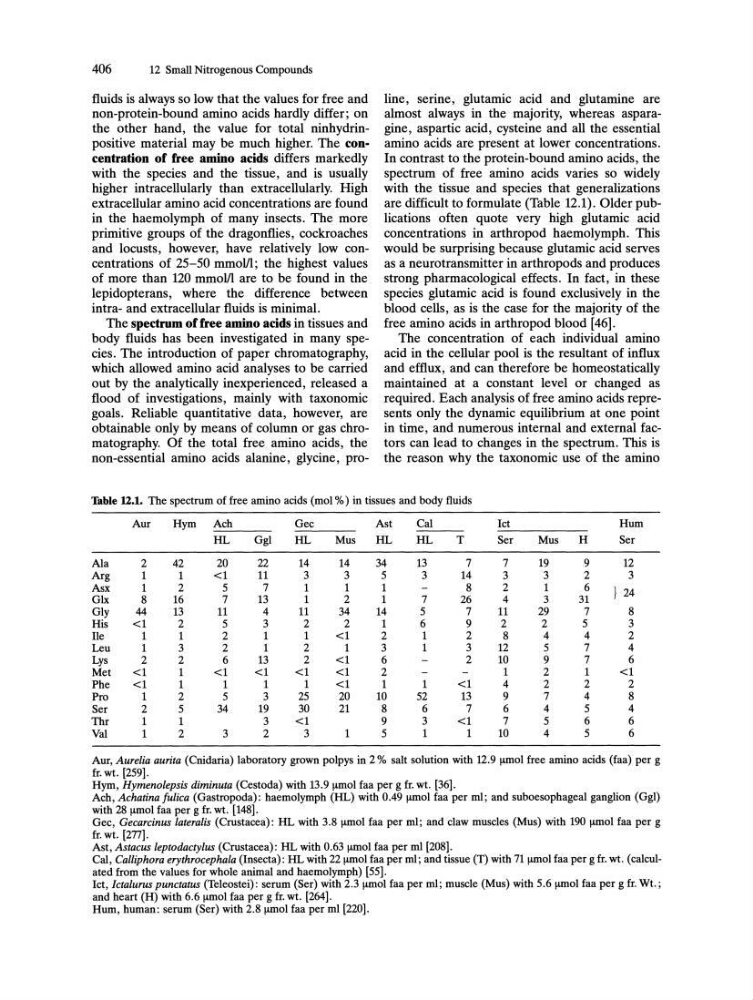
are difficult to formulate (Table 12.1). Older publications often quote very high glutamic acid
concentrations in arthropod haemolymph. This
would be surprising because glutamic acid serves
as a neurotransmitter in arthropods and produces
strong pharmacological effects. In fact, in these
species glutamic acid is found exclusively in the
blood cells, as is the case for the majority of the
free amino acids in arthropod blood [46].
The concentration of each individual amino
acid in the cellular pool is the resultant of influx
and efflux, and can therefore be homeostatically
maintained at a constant level or changed as
required. Each analysis of free amino acids represents only the dynamic equilibrium at one point
in time, and numerous internal and external factors can lead to changes in the spectrum. This is
the reason why the taxonomic use of the amino
Table 12.1. The spectrum of free amino acids (mol %) in tissues and body fluids
Aur
Hym
Ach
Gec
Ast
Cal
Iet
Hum
HL
Ggi
HL
Mus
HL
HL
T
Ser
Mus
H
Ser
Ala
2
42
20
22
14
14
34
13
7
7
19
9
12
Arg
1
1
<1
11
3
3
5
3
14
3
3
2
3
Asx
1
2
5
7
1
1
1
8
2
1
6
24
Glx
8
16
7
13
1
2
1
7
26
4
3
31
Gly
44
13
11
4
11
34
14
5
7
11
29
7
8
His
<1
2
5
3
2
2
1
6
9
2
2
5
3
lIe
1
1
2
1
1
<1
2
1
2
8
4
4
2
Leu
1
3
2
1
2
1
3
1
3
12
5
7
4
Lys
2
2
6
13
2
<1
6
2
10
9
7
6
Met
<1
1
<1
<1
<1
<1
2
1
2
1
<1
Phe
<1
1
1
1
1
<1
1
1
<1
4
2
2
2
Pro
1
2
5
3
25
20
10
52
13
9
7
4
8
Ser
2
5
34
19
30
21
8
6
7
6
4
5
4
Thr
1
1
3
<1
9
3
<1
7
5
6
6
Val
1
2
3
2
3
1
5
1
1
10
4
5
6
Aur, Aurelia aurita (Cnidaria) laboratory grown polpys in 2 % salt solution with 12.9 !tmol free amino acids (faa) per g
fro wt. [259].
Hym, Hymenolepsis diminuta (Cestoda) with 13.9 !tmol faa per g fro wt. [36].
Ach, Achatina fulica (Gastropoda): haemolymph (HL) with 0.49 !tmol faa per ml; and suboesophageal ganglion (GgI)
with 28 !tIDol faa per g fro wt. [148].
Gec, Gecarcinus lateralis (Crustacea): HL with 3.8 !tmol faa per ml; and claw muscles (Mus) with 190 !tmol faa per g
fro wt. [277].
Ast, Astacus leptodactylus (Crustacea): HL with 0.63 !tmol faa per ml [208].
Cal, Calliphora erythrocephala (Insecta): HL with 22 !tmol faa per ml; and tissue (T) with 71 !tIDol faa per g fro wt. (calculated from the values for whole animal and haemolymph) [55].
Iet, Ictalurus punctatus (Teleostei): serum (Ser) with 2.3 !tIDol faa per ml; muscle (Mus) with 5.6 !tmol faa per g fro Wt.;
and heart (H) with 6.6 !tIDol faa per g fro wt. [264].
Hum, human: serum (Ser) with 2.8 !tmol faa per ml [220].
12 Small Nitrogenous Compounds
fluids is always so low that the values for free and
non-protein-bound amino acids hardly differ; on
the other hand, the value for total ninhydrinpositive material may be much higher. The concentration of free amino acids differs markedly
with the species and the tissue, and is usually
higher intracellularly than extracellularly. High
extracellular amino acid concentrations are found
in the haemolymph of many insects. The more
primitive groups of the dragonflies, cockroaches
and locusts, however, have relatively low concentrations of 25-50 mmolll; the highest values
of more than 120 mmolll are to be found in the
lepidopterans, where the difference between
intra- and extracellular fluids is minimal.
The spectrum of free amino acids in tissues and
body fluids has been investigated in many species. The introduction of paper chromatography,
which allowed amino acid analyses to be carried
out by the analytically inexperienced, released a
flood of investigations, mainly with taxonomic
goals. Reliable quantitative data, however, are
obtainable only by means of column or gas chromatography. Of the total free amino acids, the
non-essential amino acids alanine, glycine, proline, serine, glutamic acid and glutamine are
almost always in the majority, whereas asparagine, aspartic acid, cysteine and all the essential
amino acids are present at lower concentrations.
In contrast to the protein-bound amino acids, the
spectrum of free amino acids varies so widely
with the tissue and species that generalizations
are difficult to formulate (Table 12.1). Older publications often quote very high glutamic acid
concentrations in arthropod haemolymph. This
would be surprising because glutamic acid serves
as a neurotransmitter in arthropods and produces
strong pharmacological effects. In fact, in these
species glutamic acid is found exclusively in the
blood cells, as is the case for the majority of the
free amino acids in arthropod blood [46].
The concentration of each individual amino
acid in the cellular pool is the resultant of influx
and efflux, and can therefore be homeostatically
maintained at a constant level or changed as
required. Each analysis of free amino acids represents only the dynamic equilibrium at one point
in time, and numerous internal and external factors can lead to changes in the spectrum. This is
the reason why the taxonomic use of the amino
Table 12.1. The spectrum of free amino acids (mol %) in tissues and body fluids
Aur
Hym
Ach
Gec
Ast
Cal
Iet
Hum
HL
Ggi
HL
Mus
HL
HL
T
Ser
Mus
H
Ser
Ala
2
42
20
22
14
14
34
13
7
7
19
9
12
Arg
1
1
<1
11
3
3
5
3
14
3
3
2
3
Asx
1
2
5
7
1
1
1
8
2
1
6
24
Glx
8
16
7
13
1
2
1
7
26
4
3
31
Gly
44
13
11
4
11
34
14
5
7
11
29
7
8
His
<1
2
5
3
2
2
1
6
9
2
2
5
3
lIe
1
1
2
1
1
<1
2
1
2
8
4
4
2
Leu
1
3
2
1
2
1
3
1
3
12
5
7
4
Lys
2
2
6
13
2
<1
6
2
10
9
7
6
Met
<1
1
<1
<1
<1
<1
2
1
2
1
<1
Phe
<1
1
1
1
1
<1
1
1
<1
4
2
2
2
Pro
1
2
5
3
25
20
10
52
13
9
7
4
8
Ser
2
5
34
19
30
21
8
6
7
6
4
5
4
Thr
1
1
3
<1
9
3
<1
7
5
6
6
Val
1
2
3
2
3
1
5
1
1
10
4
5
6
Aur, Aurelia aurita (Cnidaria) laboratory grown polpys in 2 % salt solution with 12.9 !tmol free amino acids (faa) per g
fro wt. [259].
Hym, Hymenolepsis diminuta (Cestoda) with 13.9 !tmol faa per g fro wt. [36].
Ach, Achatina fulica (Gastropoda): haemolymph (HL) with 0.49 !tmol faa per ml; and suboesophageal ganglion (GgI)
with 28 !tIDol faa per g fro wt. [148].
Gec, Gecarcinus lateralis (Crustacea): HL with 3.8 !tmol faa per ml; and claw muscles (Mus) with 190 !tmol faa per g
fro wt. [277].
Ast, Astacus leptodactylus (Crustacea): HL with 0.63 !tmol faa per ml [208].
Cal, Calliphora erythrocephala (Insecta): HL with 22 !tmol faa per ml; and tissue (T) with 71 !tIDol faa per g fro wt. (calculated from the values for whole animal and haemolymph) [55].
Iet, Ictalurus punctatus (Teleostei): serum (Ser) with 2.3 !tIDol faa per ml; muscle (Mus) with 5.6 !tmol faa per g fro Wt.;
and heart (H) with 6.6 !tIDol faa per g fro wt. [264].
Hum, human: serum (Ser) with 2.8 !tmol faa per ml [220].